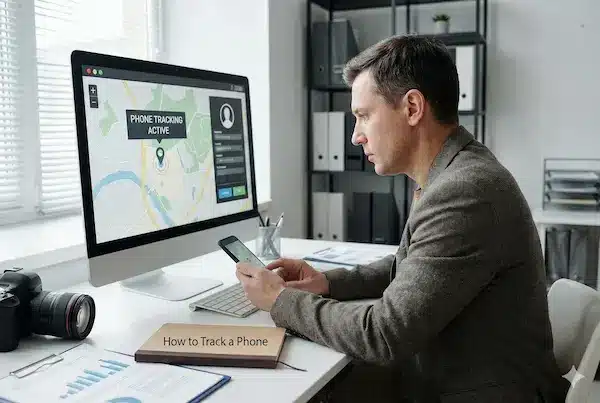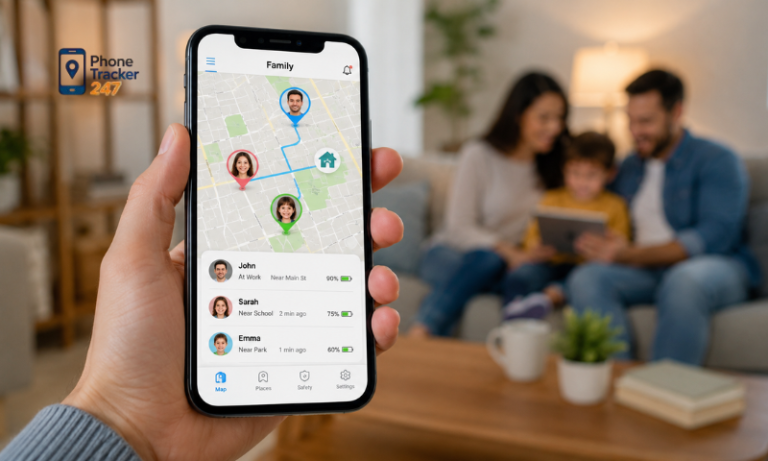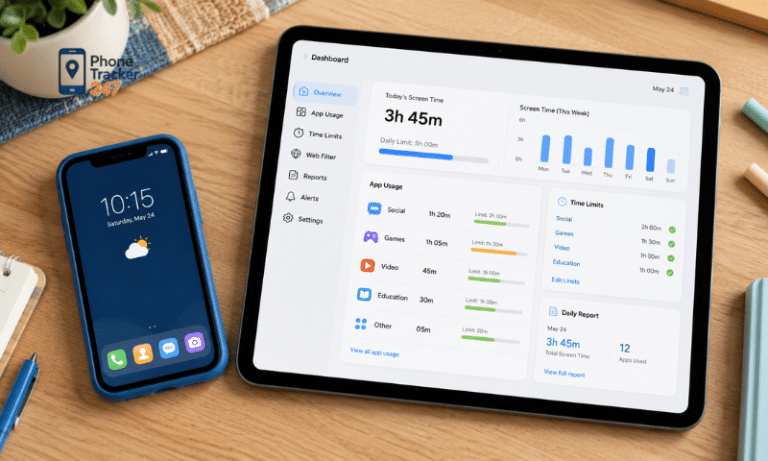
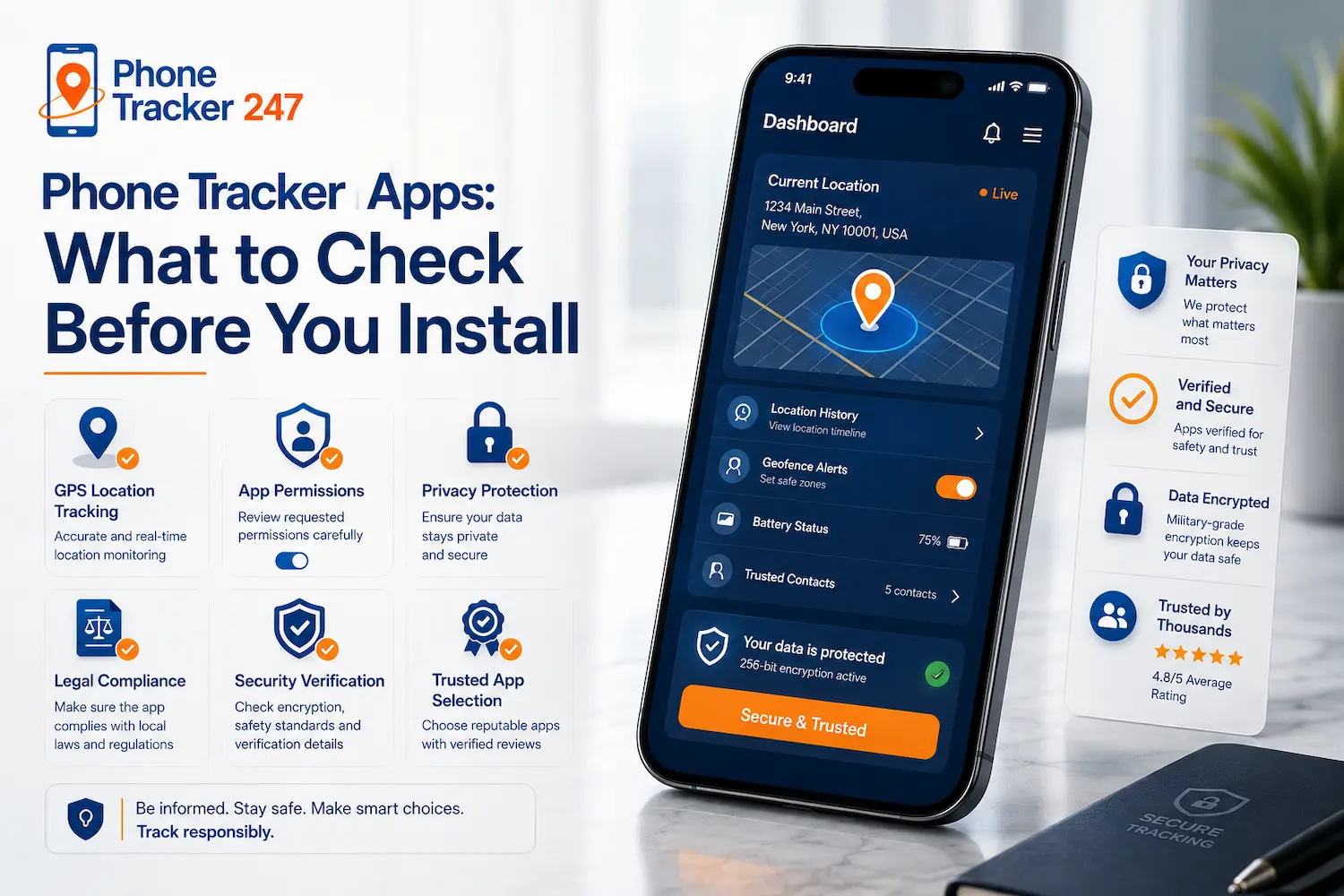
Phone tracker apps are becoming increasingly popular thanks to their ability to track device locations, support child monitoring, employee management, or help recover lost phones. However, not all apps are safe and reliable. Before installing one, users need to clearly understand important factors such as access permissions, security levels, legality, and the credibility of the developer. The article below from PhoneTracker247 will help you know what to check before installing phone tracker apps to avoid risks and ensure the safety of your personal data.
How Phone Tracking Apps Work
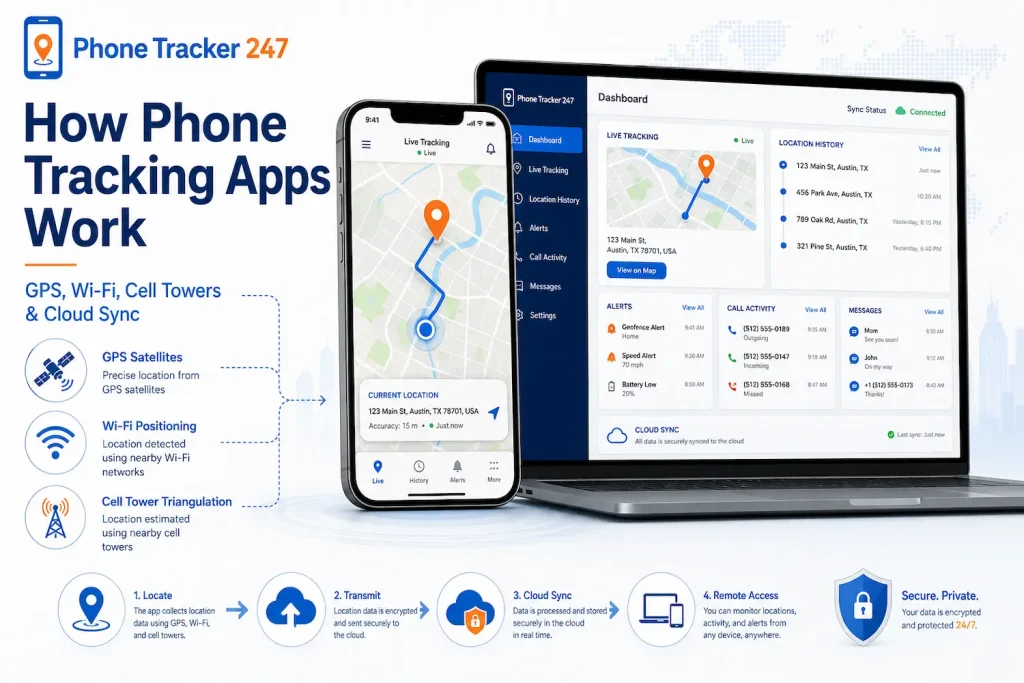
Phone tracking apps use a combination of modern technologies to determine and update a device’s location in real time. Once installed, they operate in the background and send location data to an online dashboard that users can access from another device. Understanding this process helps users evaluate both performance and privacy implications.
Key ways phone tracking apps work:
- GPS technology: Uses satellite signals to pinpoint the exact location of a device with high accuracy.
- Mobile network data: Relies on cellular towers to estimate location when GPS is weak or unavailable.
- Internet connectivity: Continuously transmits location data to a secure online dashboard for real-time monitoring.
- Background operation: Runs silently in the background to ensure uninterrupted tracking.
- Wi-Fi and cellular triangulation: Improves accuracy in indoor or densely populated areas by using nearby network signals.
- Geofencing feature: Allows users to set virtual boundaries and receive alerts when a device enters or leaves a specific area.
Because these apps require continuous access to location data and system permissions, it is important to understand how they function to ensure both effective use and protection of personal privacy.
Permissions You Should Check Before Installing
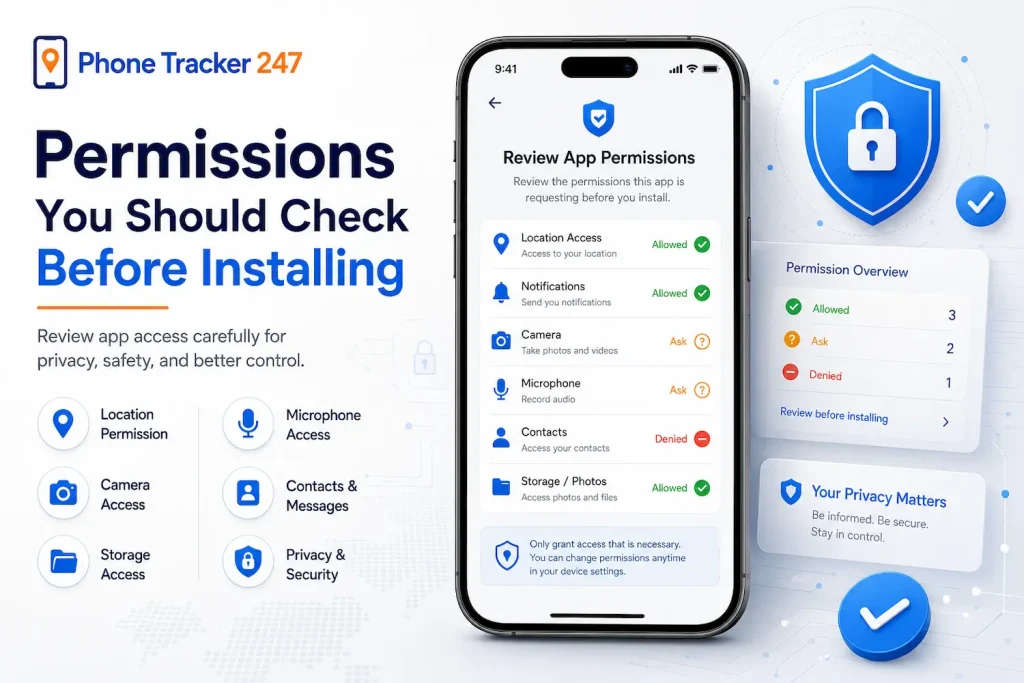
Before installing any phone tracker app, it is essential to carefully review the permissions it requests. These permissions define the level of access the application has to your device, including sensitive personal data. In many cases, excessive permissions are a warning sign of potential privacy risks or data misuse. Understanding each permission type helps users make safer and more informed decisions.
Location Access
Location access is the core function of any phone tracking app. However, the level of access matters significantly.
- Why it is needed: Enables real-time GPS tracking and location updates.
- Risk factor: Continuous “always allow” access may lead to constant monitoring even when not necessary.
- Best practice: Prefer apps that allow “while using the app” or provide clear controls for limiting tracking periods.
Uncontrolled location access can lead to over-tracking and potential privacy invasion if misused.
Contacts and Call Logs
Some phone tracker apps request access to contacts and call history to provide more detailed monitoring features.
- Why it is requested: Used in parental control or employee monitoring features.
- Potential concern: This data is highly sensitive and can reveal personal relationships and communication patterns.
- Best practice: Only grant access if the feature is truly necessary and clearly explained.
If an app does not justify why it needs this data, it should be considered a red flag.
See more: How an App Can Track a Phone Safely and Accurately
Messages and Media Files
Access to messages, photos, videos, and files is among the most sensitive permissions an app can request.
- Why it is requested: Some apps offer full monitoring dashboards for parents or employers.
- Risk factor: This opens the door to deep privacy exposure, including personal conversations and private content.
- Best practice: Avoid granting this permission unless absolutely required and legally justified.
Apps requesting media access without a clear purpose should be carefully evaluated or avoided.
Background Activity and Data Usage
Phone tracking apps often need to run in the background, but this should be controlled and transparent.
- Why it is needed: Ensures continuous tracking and real-time updates.
- Risk factor: Excessive background activity can drain battery, consume mobile data, and collect information without clear notice.
- Best practice: Monitor battery usage and restrict background activity if the app behaves unusually.
A well-designed app should balance functionality with resource efficiency.
When installing any phone tracking app, users should always follow the principle of minimum necessary permissions. This means granting only the access required for the app to function properly and denying anything that seems unnecessary or overly invasive. By carefully reviewing permissions, users can significantly reduce privacy risks and maintain better control over their personal data.
Legal Factors When Using Tracking Apps
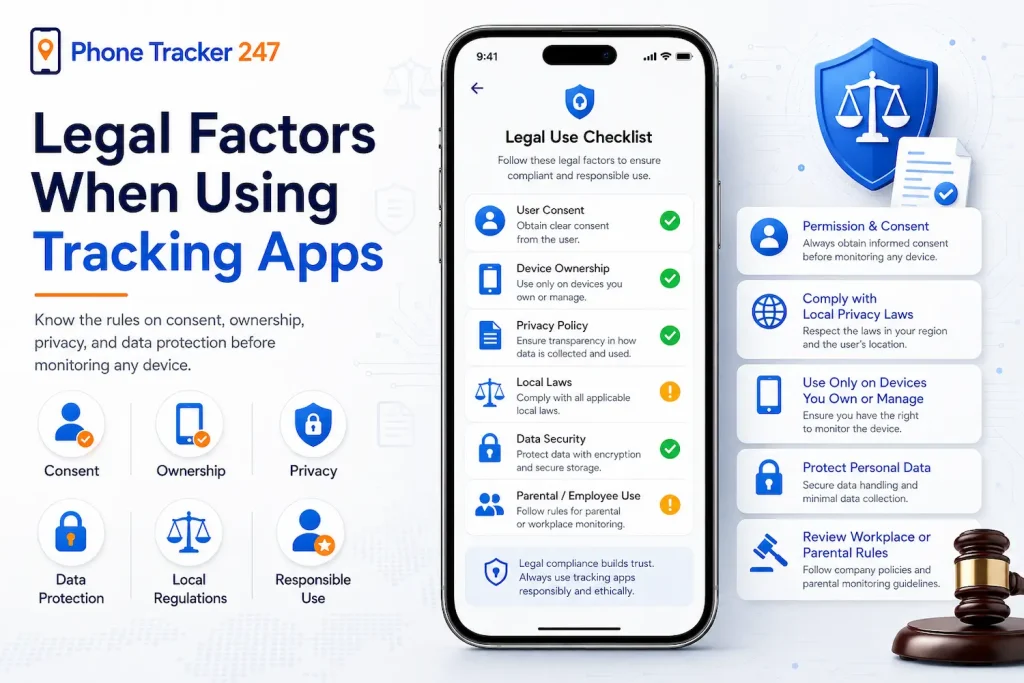
The use of phone tracking applications is regulated by privacy and surveillance laws, which can vary depending on the country or region. In most cases, tracking someone’s device without their knowledge or explicit consent is considered illegal and may lead to serious consequences.
Important legal considerations include:
- Consent requirement: In most jurisdictions, you must obtain clear and explicit permission before tracking another person’s device. Unauthorized tracking can violate privacy laws.
- Parental monitoring exceptions: Parents are generally permitted to track the devices of their minor children to ensure safety and responsible usage.
- Workplace usage: Employers may monitor company-owned devices, but employees must be informed in advance, and the scope of monitoring should be clearly defined.
- Data protection laws: Improper collection, storage, or use of tracking data may violate data privacy regulations and result in legal penalties or fines.
Understanding these legal boundaries is essential to ensure that tracking apps are used responsibly, ethically, and in compliance with applicable laws.
See more: Phone Tracking App: Features, Benefits, and Legal Use Cases
How to Choose a Safe Phone Tracking App
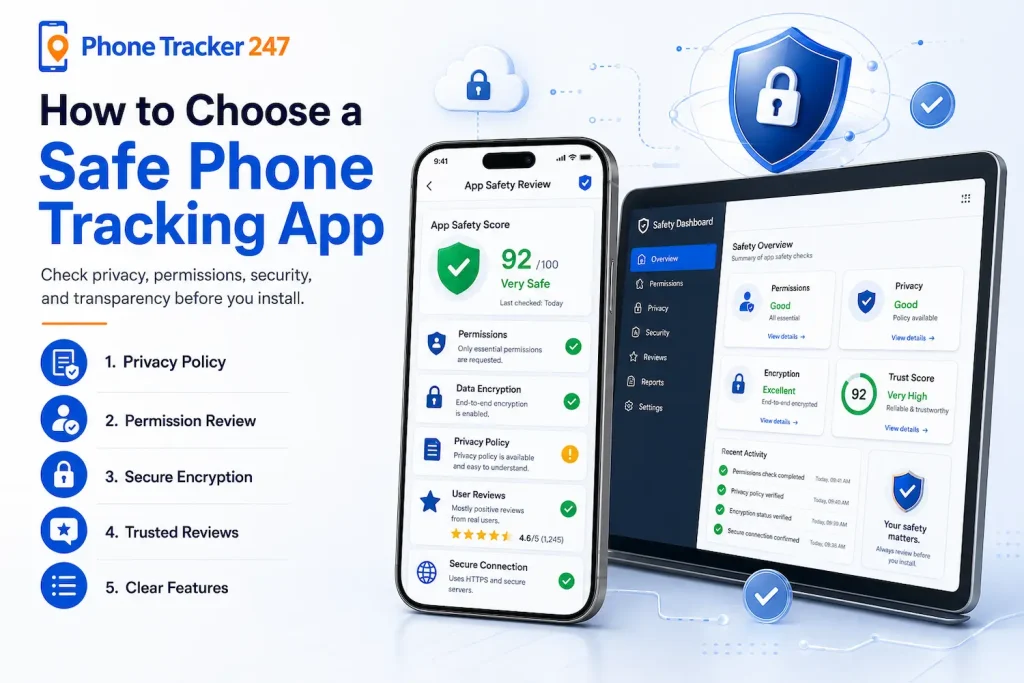
Selecting a reliable phone tracker app is essential to ensure both security and performance. Not all apps on the market are trustworthy, so careful evaluation is necessary before installation or use.
Here are key factors to consider:
- Developer reputation: Choose apps from well-known or verified developers with a proven track record of reliability and security.
- User reviews and ratings: Check feedback on official app stores to identify common issues, bugs, or privacy concerns reported by other users.
- Security features: Look for applications that provide strong data encryption and robust privacy protection to safeguard user information.
- Transparency: A trustworthy app should clearly explain what data it collects, how it is used, and whether it is shared with third parties.
- Official availability: Prefer apps listed on trusted platforms such as Google Play or the Apple App Store, as they usually follow stricter security policies.
Avoid applications that request unnecessary or excessive permissions, as well as those that do not provide a clear privacy policy or terms of use.
FAQs – Phone Tracker Apps
1. What should I check before installing a phone tracker app?
Check legality, consent, privacy policy, permissions, features, pricing, and customer support.
2. Are phone tracker apps legal to install?
Yes, if used with consent, device ownership, or proper legal authorization.
3. Why are app permissions important?
Permissions show what data the app can access, such as location, contacts, messages, or activity.
4. Should I read the privacy policy first?
Yes, it explains how your tracking data is collected, stored, shared, and protected.
5. Can a phone tracker app be unsafe?
Yes, unsafe apps may collect too much data, hide fees, or lack proper security.
6. What features should I look for?
Look for GPS tracking, location history, alerts, secure dashboard access, and privacy controls.
7. Should I choose a free phone tracker app?
Be careful. Free apps may have limited features, weak security, or unclear data practices.
8. How do I know if a phone tracker app is trustworthy?
Check reviews, company transparency, support options, security features, and clear pricing.
9. Can I install a tracker app on someone else’s phone?
Only with clear consent or legal authority. Unauthorized tracking may violate privacy laws.
10. What is the safest way to use a phone tracker app?
Use it openly, follow local laws, protect login details, and monitor only authorized devices.
Conclusion
Phone tracking apps can be highly useful tools for improving safety, managing devices, and ensuring peace of mind. However, their effectiveness depends heavily on how carefully they are chosen and used. Understanding how they work, reviewing permissions, respecting legal boundaries, and selecting a trustworthy app are all essential steps to avoid risks.
If you are planning to install a phone tracker app, take time to evaluate your options carefully before making a decision. Choosing the right app not only ensures better performance but also protects your personal data and privacy in the long run.
For daily updates, subscribe to PhoneTracker’s blog!
We may also be found on Facebook!