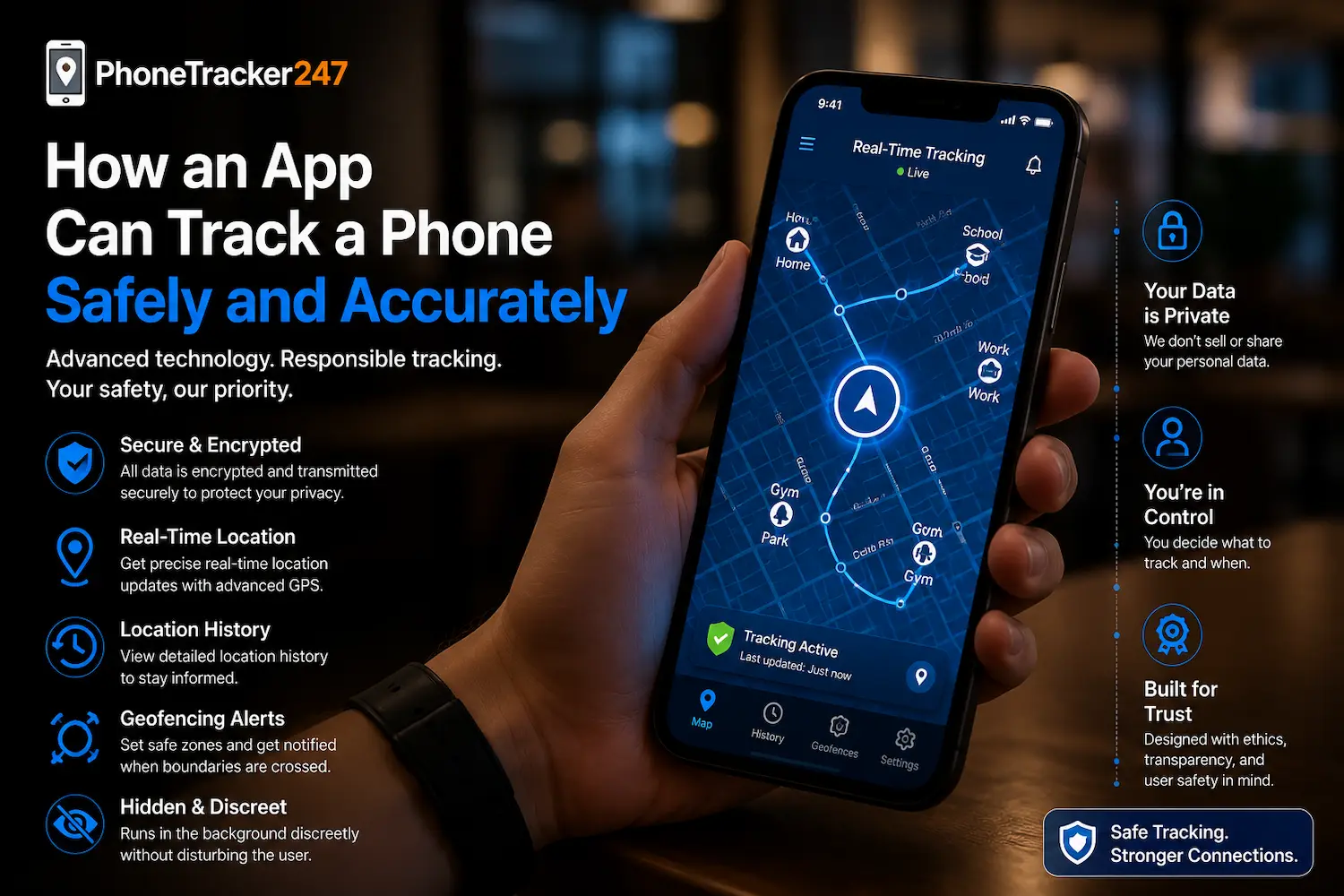
In today’s digital world, the demand for safe and accurate phone tracking is increasing, especially among parents, businesses, and individuals concerned about security. With modern mobile technology, many apps now support real-time location tracking while still protecting user privacy and data. However, understanding How an App Can Track a Phone Safely and Accurately is important to choose the right solution and avoid potential risks. In this article, PhoneTracker247 will briefly explain how these apps work and the key factors that ensure both accuracy and security.
Key technologies used in phone tracking apps
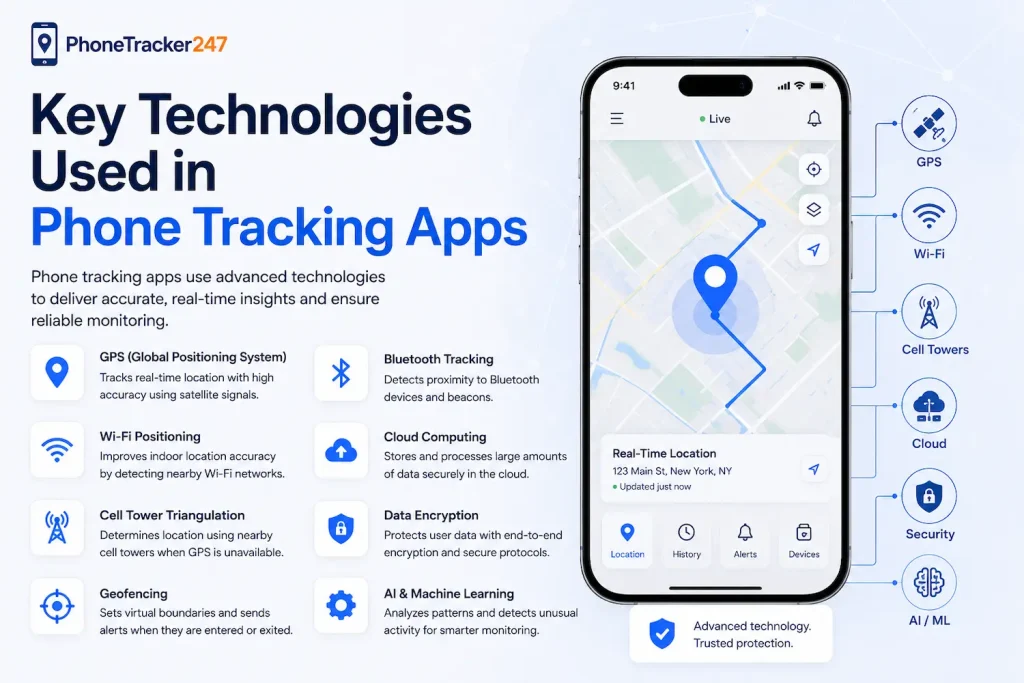
Phone tracking applications use a combination of advanced technologies to determine a device’s location with high accuracy. Each technology plays an important role in ensuring real-time tracking that is both stable and reliable across different environments.
- GPS (Global Positioning System): GPS is the core technology behind most tracking apps. It connects to satellites to provide highly accurate outdoor location data, often within a few meters.
- Wi-Fi positioning: When GPS signals are weak or unavailable (such as indoors), Wi-Fi positioning helps improve accuracy by scanning nearby wireless networks and comparing them with known locations.
- Cell tower triangulation: This method estimates a device’s location based on signals from nearby mobile towers. Although less precise than GPS, it is very useful in areas with limited satellite coverage.
- Mobile sensors: Modern smartphones include sensors like accelerometers and gyroscopes. These help tracking apps analyze movement patterns and improve location continuity during motion.
By intelligently combining these technologies, phone tracking applications can deliver more consistent, accurate, and real-time location data across different usage conditions.
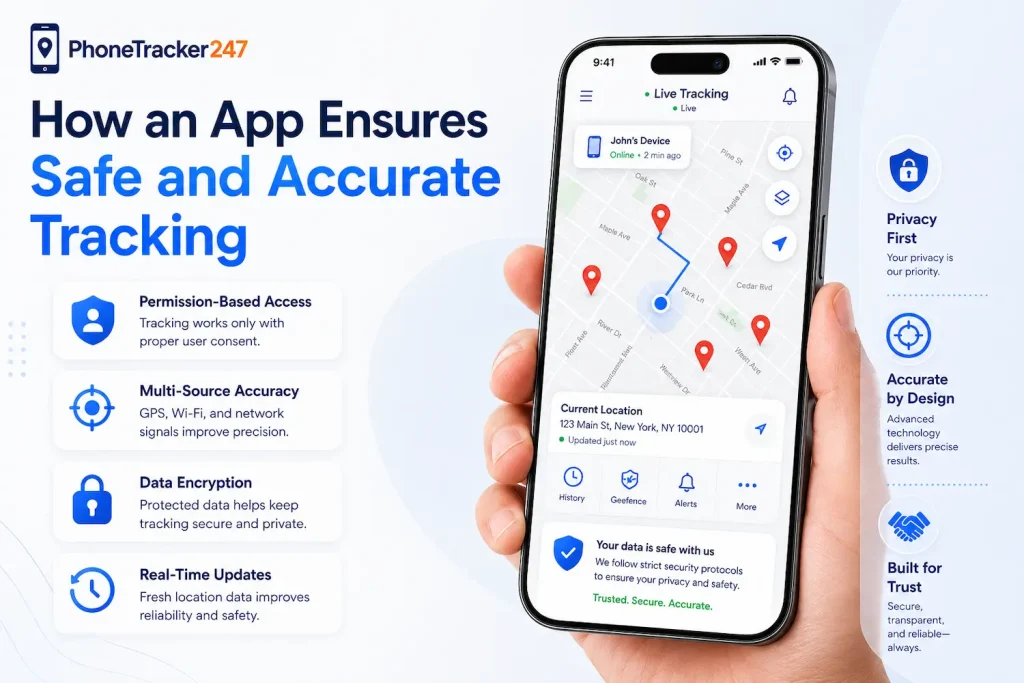
How an app ensures safe and accurate tracking
To achieve both high precision and strong user protection, modern phone tracking applications are built on a combination of advanced security architectures and intelligent data processing systems. These systems work together to balance accuracy, real-time performance, and privacy compliance, which are the three core requirements of any reliable tracking solution today.
Below is a deeper analysis of the key mechanisms involved:
Encrypted data transmission
Data encryption is the first and most critical layer of protection in any tracking system.
- Location data is encrypted using secure protocols (such as SSL/TLS) before leaving the device
- Even if data is intercepted during transmission, it remains unreadable to unauthorized parties
- Encryption ensures end-to-end protection between the device, servers, and user dashboard
This mechanism is essential because location data is highly sensitive. Without encryption, it could be exploited for unauthorized surveillance or tracking. In practice, strong encryption also builds user trust and ensures compliance with global data protection standards such as GDPR-like frameworks.
User permission control
Permission control is the foundation of ethical and legal tracking.
- Tracking only activates after explicit user consent is granted
- Users are given control over what data is shared and for how long
- Permissions can be modified or revoked at any time through device settings
From a system design perspective, this ensures that tracking apps operate within a consent-based model, preventing misuse or silent tracking. It also helps applications comply with privacy laws and platform policies from operating systems like iOS and Android.
See more: Phone Tracking App: Features, Benefits, and Legal Use Cases
Real-time updates
Real-time tracking is achieved through continuous data synchronization between the device and backend servers.
- Location data is refreshed at short intervals or continuously streamed
- Modern apps use optimized polling or push-based updates to reduce latency
- Movement history is reconstructed to provide a smooth tracking experience
This mechanism is especially important in time-sensitive scenarios such as child safety, fleet management, or emergency response. However, achieving real-time accuracy requires balancing battery consumption, network stability, and data precision, which is why advanced optimization algorithms are often used.
Server verification systems
Server-side verification plays a key role in ensuring data integrity and accuracy.
- Incoming location data is cross-checked against multiple signals (GPS, Wi-Fi, network data)
- Anomalies such as sudden jumps or impossible movements are filtered out
- Redundant or inconsistent data points are corrected or discarded
This process helps eliminate errors caused by weak signals, spoofing attempts, or device malfunctions. In advanced systems, machine learning models may also be used to predict and smooth location paths for more realistic tracking behavior.
Overall perspective
When combined, these mechanisms form a layered architecture that ensures phone tracking applications are:
- Accurate: by combining multiple positioning technologies
- Secure: through encryption and controlled access
- Reliable: with server-side validation and error filtering
- Compliant: with privacy and data protection standards
This balance between precision and safety is what defines a high-quality tracking system in modern mobile applications.
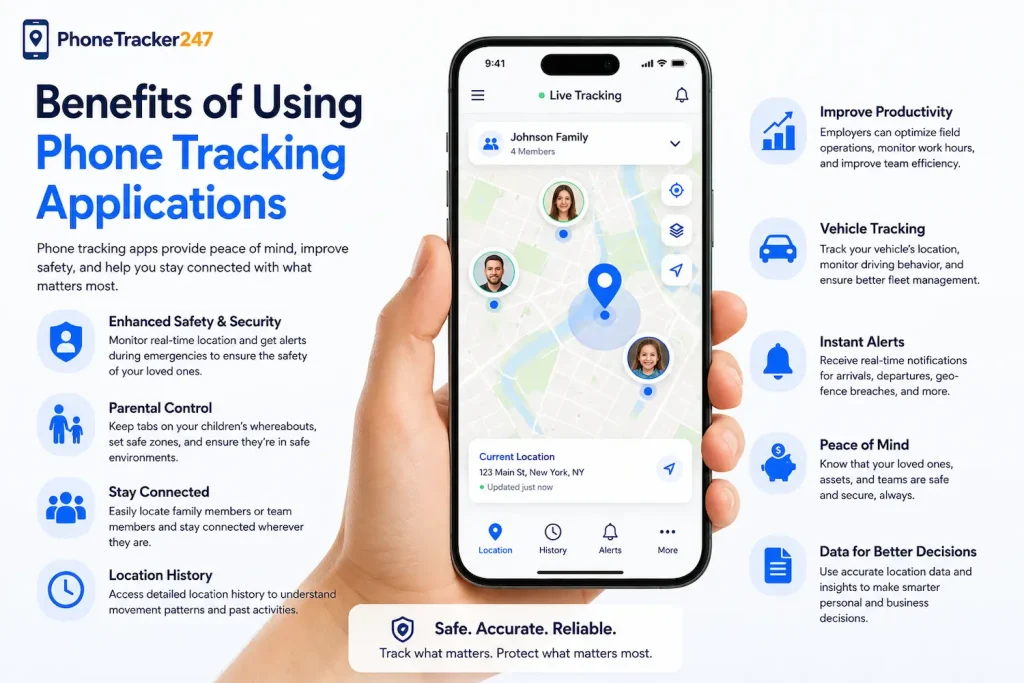
Benefits of using phone tracking applications
Phone tracking applications offer a wide range of practical benefits for both personal and professional use, making them an increasingly popular tool in today’s digital lifestyle.
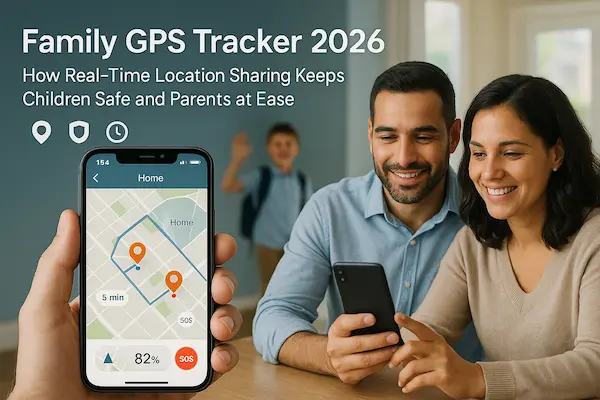
- Family safety: Parents can easily monitor the real-time location of their children, helping ensure their safety and quickly respond in case of emergencies.
- Business management: Companies can track work devices and field employees more efficiently, improving productivity, route optimization, and operational control.
- Device recovery: In case a phone is lost or stolen, tracking apps significantly increase the chances of locating and recovering the device quickly.
- Emergency support: Users can instantly share their live location with family, friends, or emergency services, which is especially useful in urgent or dangerous situations.
Overall, phone tracking apps provide greater convenience, security, and peace of mind by offering better control over device location in real time.
See more: What Is a Phone Tracker App? Complete Guide for Families and Businesses
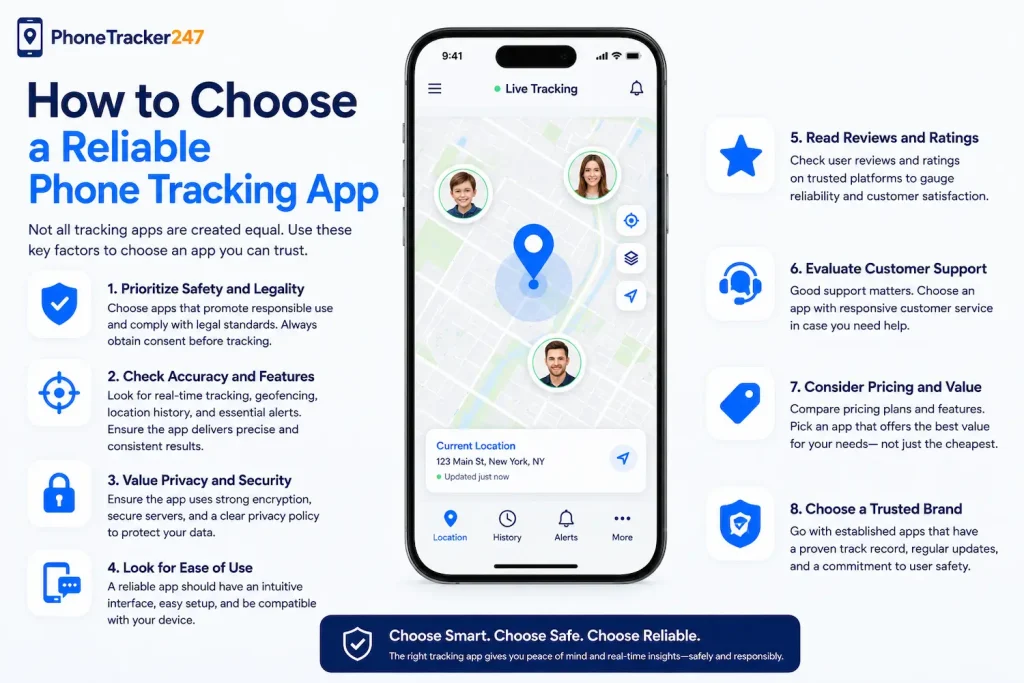
How to choose a reliable phone tracking app
Choosing the right phone tracking application is essential to ensure both accurate performance and strong privacy protection. With many options available on the market, users should carefully evaluate key factors before making a decision.
- Check app reputation: Always choose apps from trusted developers with positive user reviews and a proven track record. A good reputation often reflects reliability and consistent performance.
- Prioritize privacy policies: A reliable app should clearly explain how user data is collected, stored, and used. Transparency in privacy policies is crucial to ensure data security and user trust.
- Look for real-time accuracy: The application should provide fast and stable location updates with minimal delay to ensure accurate tracking in real time.
- Ensure multi-device support: For families or businesses, it is important that the app supports multiple devices under one account for easier management and monitoring.
- Avoid hidden fees: Choose apps with clear and transparent pricing structures to avoid unexpected charges during usage.
Overall, a reliable phone tracking app should maintain a balance between accuracy, security, privacy, and ease of use to deliver the best user experience.
FAQs – How an App Can Track a Phone Safely and Accurately
1. How can an app track a phone accurately?
An app tracks a phone by using GPS, Wi-Fi signals, cell towers, and mobile sensors.
2. Is phone tracking accurate in real time?
Yes, reliable apps can update location in real time or near real time.
3. What technology helps phone tracking apps work?
Main technologies include GPS, Wi-Fi positioning, cell tower triangulation, and device sensors.
4. Can a phone tracker work indoors?
Yes, indoor tracking often uses Wi-Fi signals and nearby network data.
5. Is phone tracking safe?
It can be safe when the app uses encryption, permission control, and secure data handling.
6. Does phone tracking require permission?
Yes, ethical phone tracking should require clear user consent or legal authorization.
7. How does an app protect tracking data?
It protects data through encrypted transmission, secure servers, and controlled access.
8. Can tracking apps show wrong locations?
Yes, weak GPS, poor network, or signal interference can affect accuracy.
9. Who can use phone tracking apps?
Parents, families, businesses, and individuals can use them for safety and device management.
10. How do I choose a reliable phone tracking app?
Choose an app with clear privacy policies, real-time accuracy, strong security, and transparent pricing.
Conclusion
Phone tracking technology has become an essential tool in modern life, offering both safety and convenience when used responsibly. Understanding how these systems work helps users make informed decisions and choose solutions that are both accurate and secure.
If you are looking for a reliable way to monitor device location, make sure to choose a trusted application that prioritizes privacy and real-time accuracy.
For daily updates, subscribe to PhoneTracker’s blog!
We may also be found on Facebook!