As children gain access to smartphones and the internet at an increasingly young age, many parents are searching for How to Track Child Phone Usage as a way to keep their children safe. However, monitoring a child too closely can make them feel that they are not trusted and may negatively affect family relationships. In this article, PhoneTracker247 will share balanced and practical ways to monitor your child’s phone usage, helping parents protect their children from potential online risks while still respecting their privacy and encouraging responsible digital habits.
How to Track Child Phone Usage Without Over-Monitoring
Tracking a child’s phone usage should focus on guidance, safety, and healthy digital habits rather than constant control. Parents do not need to monitor every message, search, or interaction to protect their children effectively. A balanced approach combines clear rules, open communication, appropriate parental controls, and regular conversations about online behavior.
By choosing age-appropriate monitoring methods, parents can reduce online risks while still giving children enough privacy and independence to develop responsible technology habits.
Set Clear Expectations Before Monitoring
Before using any monitoring method, parents should explain why phone supervision is necessary. Children are generally more likely to accept parental monitoring when they understand that its purpose is protection rather than punishment or distrust.
Parents should discuss important expectations such as:
- Why screen time should be balanced with schoolwork, sleep, exercise, and family activities.
- Which apps, games, and social platforms are appropriate for the child’s age.
- What personal information should never be shared online.
- Why children should avoid communicating with unknown people.
- When parents may review screen time, app activity, or other phone usage information.
- What situations may require parents to become more involved in the child’s digital activity.
Setting these expectations together helps children understand the boundaries in advance. As a result, phone monitoring becomes a shared family safety practice rather than something that feels secretive or restrictive.
Focus on Screen Time Instead of Reading Every Message
Some parents believe that checking every private message is the safest way to understand what their child is doing online. However, excessive monitoring of personal conversations may damage trust and encourage children to hide their digital activities.
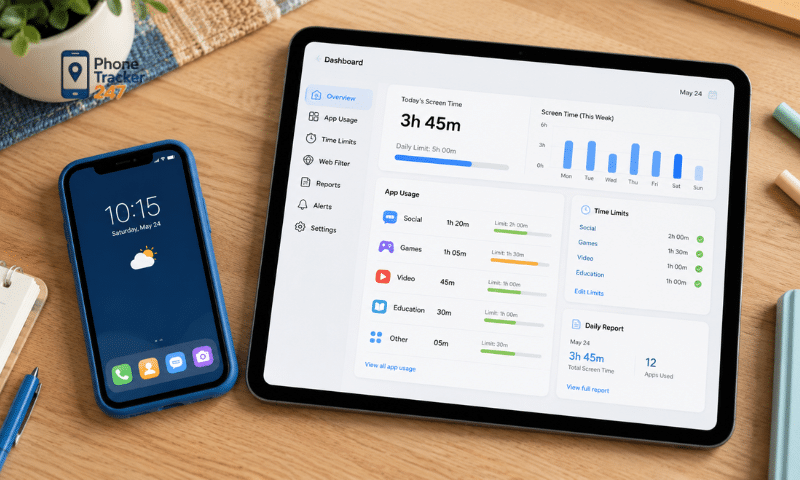
Instead of reading every conversation, parents can focus on broader usage patterns, including:
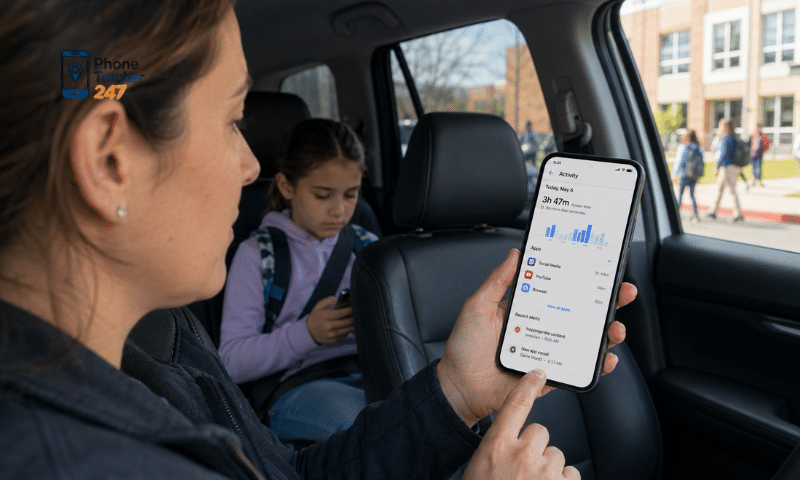
- Total daily screen time.
- The apps used most frequently.
- The amount of time spent on social media, games, or entertainment apps.
- Newly downloaded applications.
- Sudden changes in screen time or app usage.
- Unusual increases in phone activity, especially late at night.
These patterns can often provide enough information to identify potential concerns. For example, if a child suddenly spends much more time online or begins using unfamiliar apps, parents can start an open conversation before taking more intrusive steps.
Use Parental Control Features Wisely
Most modern smartphones and digital devices include parental control features that can help families manage phone usage without constantly checking a child’s private activities. When used appropriately, these tools can create safer digital boundaries while allowing children to maintain a reasonable level of independence.
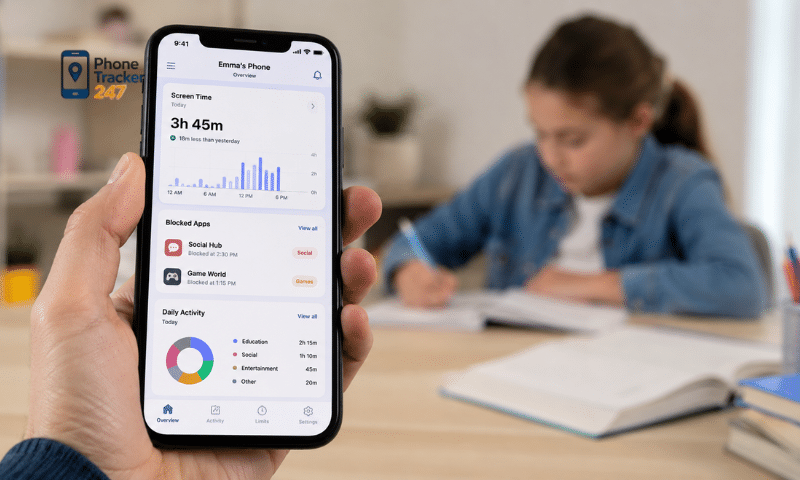
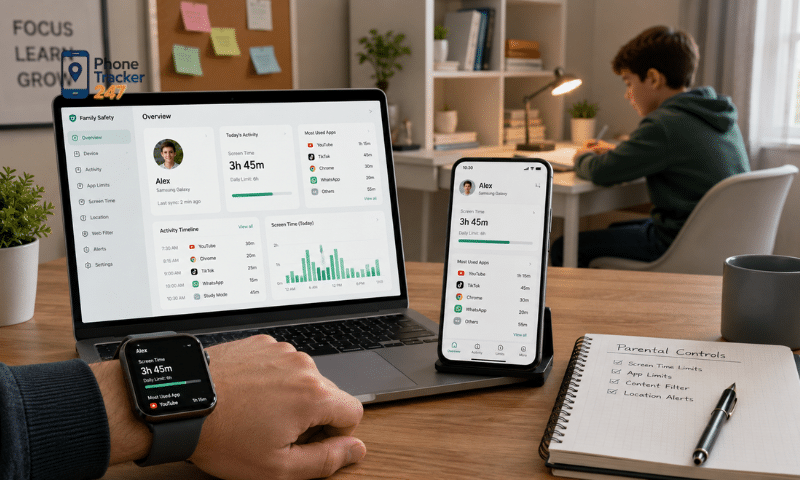
Useful parental control features may include:
- Daily screen time limits.
- Individual app usage limits.
- Screen time and app activity reports.
- Age-appropriate content filtering.
- Website restrictions.
- App download or purchase approval.
- Bedtime or downtime restrictions.
- Controls for games, videos, and other digital content.
Parents should adjust these settings according to the child’s age, maturity, and digital experience. The goal is not to block everything, but to gradually teach children how to manage technology responsibly on their own.
See more: Parental Control App vs Phone Tracker App: Which One Fits Your Family?
Review Phone Usage Together
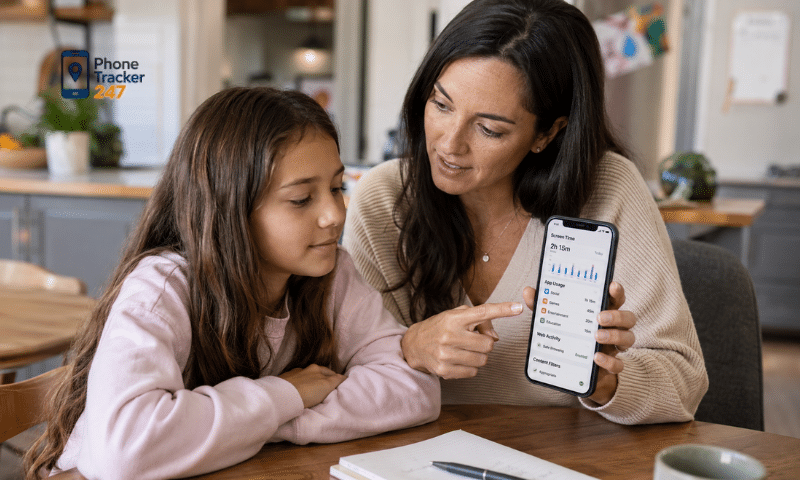
Monitoring is often more effective when parents involve their children in the process. Instead of silently checking usage reports, families can regularly review phone activity together and use the information as the starting point for a conversation.
During these discussions, parents can ask about:
- Which apps the child enjoys using most.
- How much time they think they spend on their phone each day.
- Whether their screen time feels balanced with other activities.
- Whether they have seen disturbing or inappropriate content.
- Whether anyone online has made them feel uncomfortable.
- Whether any current phone rules should be adjusted.
- What they can do to improve their digital habits.
Reviewing phone usage together helps children see monitoring as a form of support rather than surveillance. It also creates opportunities for children to talk openly about online experiences and makes it easier for parents to identify problems before they become more serious.
How to Balance Protection and Your Child’s Privacy
Finding the right balance between protecting children and respecting their privacy is one of the biggest challenges parents face in the digital age. Children need guidance and protection from online risks, but they also need enough personal space to develop independence, confidence, and responsible decision-making skills.
The key is to adjust the level of supervision based on the child’s age, maturity, and online behavior. Rather than relying on constant surveillance, parents can combine reasonable monitoring with trust, communication, and clear family rules.
Adjust Monitoring Based on Age
The amount of monitoring a child needs should change as they grow. Younger children usually require closer supervision because they may not fully understand online risks or recognize potentially dangerous situations.
Parents can adjust monitoring according to factors such as:
- The child’s age and maturity level.
- Their ability to recognize unsafe or inappropriate content.
- Their understanding of online privacy and personal information.
- Their experience with social media, messaging apps, and online games.
- Their ability to follow agreed family rules.
- Any previous problems involving unsafe online behavior.
As children become more responsible, parents can gradually reduce direct monitoring and give them greater independence. Teenagers, in particular, are often more receptive to guidance when they feel trusted rather than constantly watched.
Respect Private Conversations
Privacy is an important part of building trust between parents and children. Unless there are clear signs that a child may be in danger, routinely reading private messages, emails, or social media conversations can feel intrusive and may damage communication.
Parents should generally avoid checking private conversations unless there are warning signs such as:
- Sudden changes in mood or behavior.
- Signs of cyberbullying or online harassment.
- Communication with unknown adults or suspicious contacts.
- Secretive behavior combined with unusual phone activity.
- Exposure to harmful or inappropriate content.
- Concerns about threats, exploitation, or other serious safety risks.
Giving children a reasonable amount of private space helps them develop independence while reinforcing the idea that parents are available when support is needed. Respecting privacy can also make children more willing to speak honestly when something goes wrong online.
See more: Best Phone Tracking App for Parents: Features, Safety, and How to Choose
Encourage Open Communication
Open communication is often one of the most effective ways to protect children online. Children are more likely to ask for help when they know they can talk to their parents without immediately being punished or losing access to their devices.
Parents should create regular opportunities to discuss topics such as:
- Cyberbullying and online harassment.
- Interactions with strangers online.
- Protecting personal and private information.
- Online scams and suspicious links.
- Responsible social media use.
- Inappropriate or disturbing online content.
- What to do when an online interaction feels uncomfortable or unsafe.
These conversations should be calm and supportive rather than judgmental. When children feel comfortable sharing their online experiences, parents can often understand potential risks more effectively than through constant monitoring alone.
Review Family Rules Regularly
Digital habits can change quickly as children grow and begin using new apps, games, social networks, and online services. For this reason, family technology rules should not remain fixed forever.
Parents should regularly review areas such as:
- Daily screen time limits.
- Which apps and platforms are allowed.
- Rules for using devices before bedtime.
- Privacy and account settings.
- App download and purchase permissions.
- Expectations for communicating with strangers.
- When parents may review phone usage.
- How monitoring should change as the child becomes more responsible.
Reviewing family rules every few months gives parents an opportunity to make sure the boundaries still match the child’s age, maturity, and online activities. It also allows children to participate in the discussion, helping digital safety rules feel fair, practical, and easier to follow.
Common Mistakes Parents Should Avoid
Even when parents have good intentions, certain monitoring habits can create unnecessary tension, weaken trust, or make parental supervision less effective. The goal of monitoring should be to protect children and guide them toward healthier digital behavior, not to control every aspect of their online lives. To maintain a balanced approach, parents should avoid several common mistakes:
- Secretly Installing Monitoring Apps: Installing tracking or monitoring tools without telling your child may seriously damage trust if they discover them later. Whenever possible, explain why monitoring is necessary, what information may be reviewed, and how the tools are intended to support their safety.
- Monitoring Every Activity: Trying to check every message, search, app, or social media interaction can quickly become overwhelming for parents and stressful for children. Instead of watching everything, focus on broader warning signs such as unusual screen time, unfamiliar apps, sudden behavioral changes, or potentially risky online activity.
- Using Monitoring as Punishment: Parental controls should not be introduced only after a child makes a mistake. Using monitoring as a punishment can cause children to associate digital safety tools with distrust or discipline. It is more effective to treat monitoring as part of an ongoing family strategy for responsible technology use.
- Ignoring Offline Relationships: No monitoring app can replace regular conversations and quality time between parents and children. Maintaining a supportive relationship makes children more comfortable discussing uncomfortable online experiences, cyberbullying, suspicious contacts, or other concerns before they become more serious.
- Never Updating Family Rules: Monitoring methods should change as children grow older and become more responsible. Rules that are suitable for an eight-year-old may be too restrictive for a teenager. Parents should regularly review screen time limits, app permissions, privacy expectations, and monitoring practices to ensure they remain appropriate.
Avoiding these mistakes can make parental monitoring more effective while preserving trust within the family. When supervision is transparent, flexible, and supported by open communication, children are more likely to develop responsible digital habits and seek help when they encounter problems online.
Conclusion
Learning How to Track Child Phone Usage does not mean watching every click or reading every conversation. The most effective approach combines reasonable parental controls, open communication, mutual trust, and age-appropriate guidance. By focusing on education rather than excessive surveillance, parents can help children build healthy digital habits while staying safe online.
Looking for a smarter way to monitor your child’s phone responsibly? Choose a trusted parental control solution that helps you manage screen time, review app usage, and protect your child’s online safety while respecting their growing independence.
Frequently Asked Questions (FAQs)
1. How can I track my child’s phone usage?
Use a parental control app to monitor screen time, apps, and device activity.
2. Can I see how much time my child spends on apps?
Yes. Most parental control apps provide detailed app usage reports.
3. Can I set screen time limits?
Yes. You can set daily limits and schedule device-free hours.
4. Can I block inappropriate apps?
Yes. Many apps let parents block or restrict selected apps.
5. Can I monitor my child’s browsing history?
Yes. Supported parental control apps can track browsing activity.
6. Can I track my child’s location too?
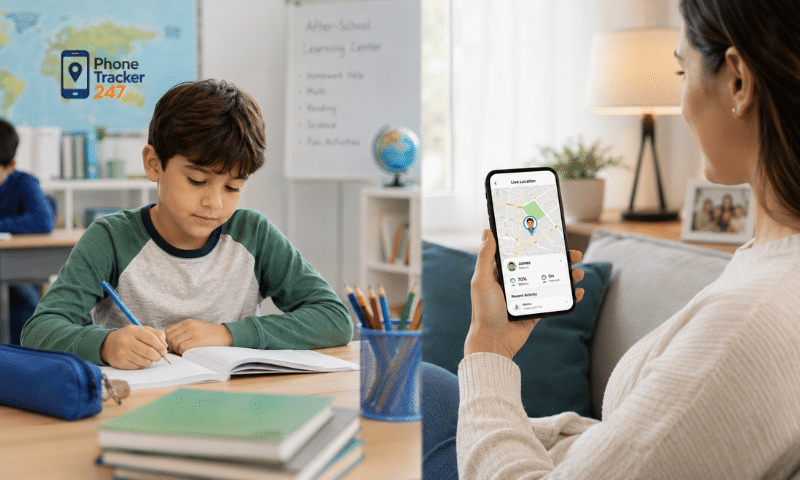
Yes. Many apps combine screen time monitoring with live GPS tracking.
7. Does my child need an internet connection?
Yes. Most monitoring features require an internet connection.
8. Is it legal to monitor my child’s phone?
Yes, when you are the parent or legal guardian and comply with local laws.
9. Can I monitor multiple children’s devices?
Yes. Many parental control apps support multiple devices under one account.
10. Why should parents track phone usage?
To encourage healthy digital habits and help protect children from online risks.