If you are wondering how phone tracking helps protect children online and offline, the answer goes beyond simply knowing where a child is. When used responsibly, phone tracking can help parents respond more quickly to safety concerns, from checking a child’s location during school trips to identifying unusual situations when they cannot be reached. Tools such as PhoneTracker247 can support parents in staying connected without relying on constant surveillance. This article explains how phone tracking can contribute to child safety, when it is most useful, and how parents can use it responsibly while respecting privacy and trust.
Situations Where Phone Tracking Can Be Most Useful
Phone tracking can be especially valuable when parents need quick information about a child’s location or safety. Instead of monitoring continuously, families can use tracking during situations where knowing the child’s location has a clear practical purpose.
Phone tracking may be useful when a child:
- Travels to school alone.
- Uses public transportation.
- Returns home later than expected.
- Attends extracurricular activities away from home.
- Visits an unfamiliar place.
- Goes on a school trip or family trip.
- Cannot be reached by phone.
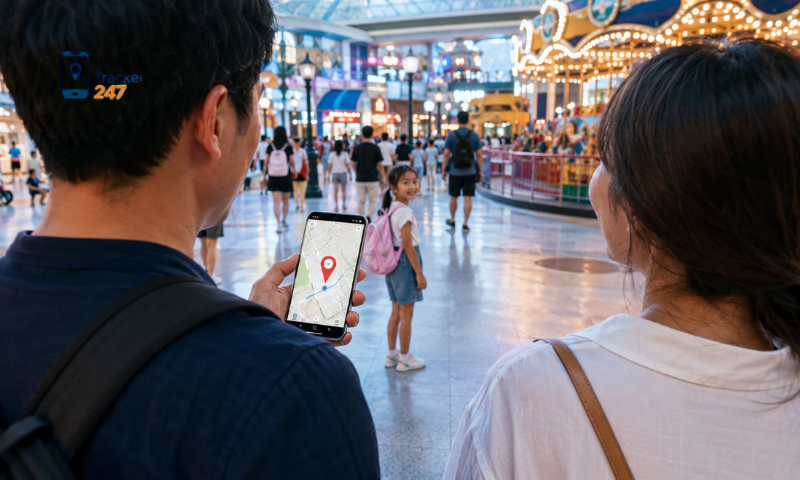
- Gets separated from family members in a crowded area.
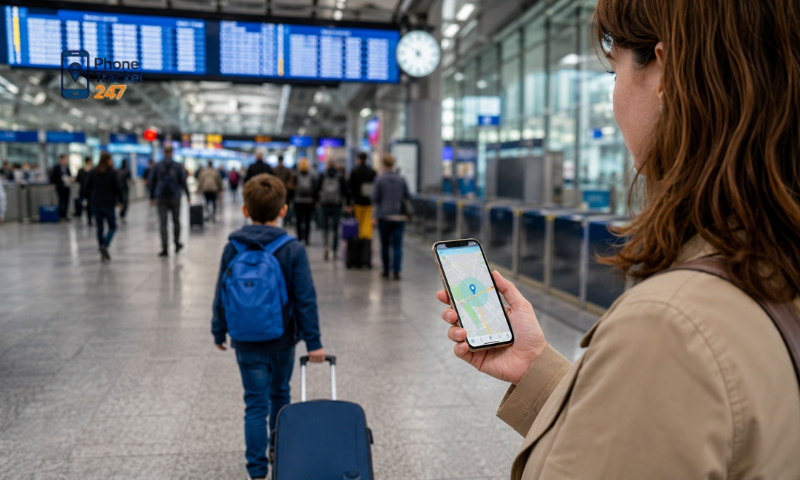
Tracking may also provide reassurance during emergencies. For example, location information can help parents determine where to start looking when a child cannot be contacted.
The key is to use phone tracking when there is a genuine safety need rather than checking a child’s location simply out of curiosity.
Key Features Parents Should Prioritize
A useful family tracking tool should make it easier for parents to respond to important situations without encouraging unnecessary surveillance. Instead of choosing an app simply because it offers many monitoring options, parents should focus on features that directly support safety, communication, and responsible supervision.
Real-Time Location
Real-time location can help parents see where a child’s device is when immediate information is needed. This can be especially useful during travel, unexpected delays, or situations where the child cannot be contacted.
It may be useful when:
- A child is traveling alone.
- They are late arriving home.
- Parents cannot reach them.
- They become separated from the family.
- They are visiting an unfamiliar place.
- There is an emergency or safety concern.
Parents should use real-time tracking when there is a clear reason to check rather than repeatedly monitoring a child’s location throughout the day. Used this way, the feature can provide reassurance without becoming intrusive.
Location History
Location history can provide additional context when parents need to understand where a device has recently been. It may be helpful when a child’s schedule changes unexpectedly or when parents want to confirm that an agreed journey was completed safely.
It may help parents:
- Confirm whether a child reached an expected destination.
- Review a recent journey.
- Understand an unexpected delay.
- Check recent movements during a genuine safety concern.
- Verify whether a child followed an agreed route.
- Review travel details after a school or family trip.
Location history should have a clear purpose. It should not become a tool for reviewing every movement simply because the information is available.
Arrival and Departure Alerts
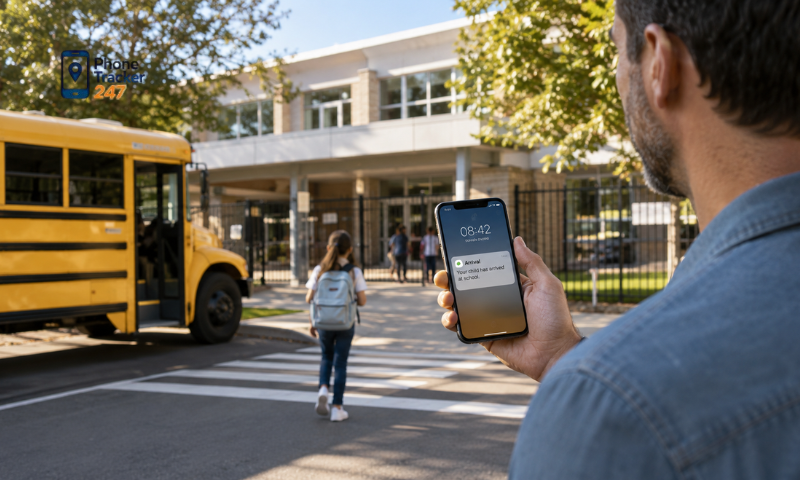
Location alerts can provide useful updates without requiring parents to continuously watch a map. These notifications are especially helpful for predictable locations that form part of a child’s daily routine.
Parents may choose to receive alerts when their child:
- Arrives at school.
- Leaves an extracurricular activity.
- Reaches home.
- Arrives at an agreed meeting point.
- Leaves a regular pickup location.
- Reaches a destination during a trip.
These notifications can give parents peace of mind while allowing children to continue their routines with greater independence. They also reduce the need for repeated manual location checks.
See more: Parental Control Text Messages: What Parents Can Monitor
Emergency Location Support
A good family tracking tool should also be useful when something unexpected happens. In an emergency, parents may need quick access to reliable location information so they can decide what action to take.
Emergency location features may be helpful when:
- A child becomes lost.
- The child cannot be reached by phone.
- The family becomes separated in a crowded place.
- A planned journey takes much longer than expected.
- Parents need to confirm the last known location of a device.
This type of feature should be used as a safety resource rather than as a reason for constant monitoring.
Device Status Information
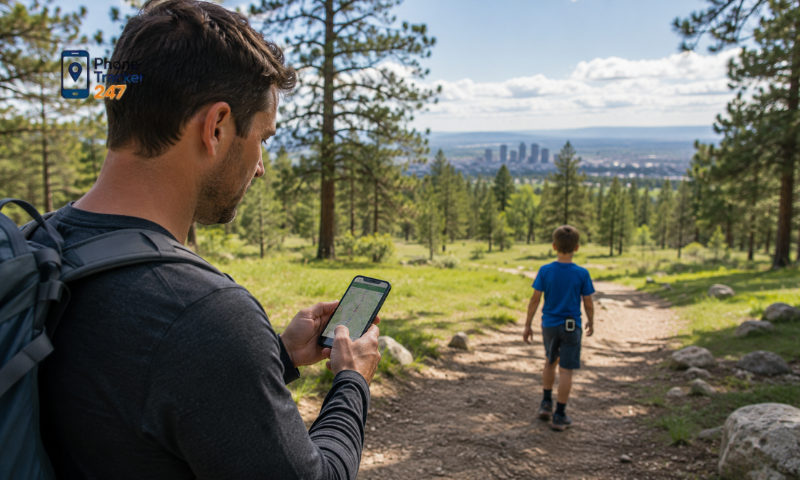
Knowing whether a device is available can help parents understand why location information may be missing or delayed. For example, a phone may be offline, powered off, or temporarily unable to update its location.
Useful device information may include:
- Whether the device is online.
- Whether location sharing is active.
- Whether location information has recently updated.
- Whether the phone can currently connect to the service.
- The last available location update.
This context can help parents avoid making assumptions when a location does not appear immediately.
Simple and Transparent Controls
Parents should understand exactly which tracking features are active, when they are being used, and what information is being collected. Complicated settings can make it harder to manage family tracking responsibly.
A family tracking tool should offer:
- Easy-to-understand settings.
- Simple location controls.
- Clear information about active tracking.
- Straightforward account management.
- Appropriate privacy controls.
- Easy access to important safety features.
- Clear options for changing or disabling monitoring settings.
A solution such as PhoneTracker247 should be used with clear family rules so children understand why location information is being shared and when parents may check it.
Privacy and Data Protection
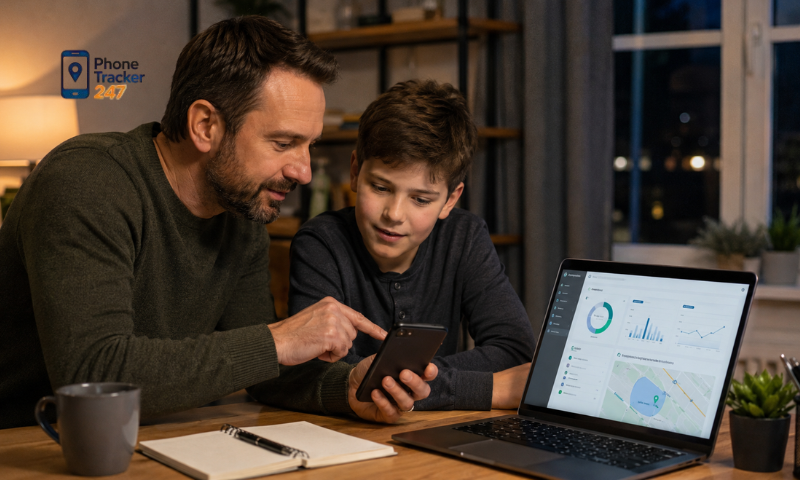
Safety features are important, but parents should also consider how a tracking service handles personal information. Location data can be sensitive, so families should understand how it is collected, used, and managed.
Before choosing a tool, consider:
- What type of data the service collects.
- Why that information is required.
- Whether unnecessary permissions are requested.
- How account access is protected.
- Whether privacy settings are clearly explained.
- Whether parents can manage or remove information when appropriate.
A trustworthy tracking solution should support family safety without encouraging unnecessary access to private information.
Age-Appropriate Tracking Options
The right level of monitoring can change as a child grows older. Younger children may need more structured supervision, while teenagers may benefit from greater independence and more limited location sharing.
Parents should look for tools that allow them to:
- Adjust tracking based on age and maturity.
- Reduce supervision as children become more responsible.
- Use tracking only during specific situations.
- Review family rules regularly.
- Disable features that are no longer necessary.
This flexibility helps families use tracking as a temporary safety support rather than permanent surveillance.
Overall, the best tracking features are those that help parents respond to genuine safety concerns while preserving trust. PhoneTracker247 can be most useful when parents choose only the features they actually need, explain how they are being used, and adjust monitoring as their child becomes more independent.
See more: How to Track My Daughters Phone for Safety and Peace of Mind
How to Use Phone Tracking Without Over-Monitoring
Phone tracking can support child safety, but excessive monitoring may damage trust. Parents should set boundaries before using tracking technology and adjust those boundaries as children become older and more independent.
A responsible approach includes:
- Explain why tracking is used: Tell your child that the goal is safety rather than constant supervision.
- Define when location can be checked: For example, when the child is traveling alone, late, or cannot be reached.
- Avoid checking out of curiosity: Having access to location information does not mean parents need to use it continuously.
- Give children more independence over time: Reduce monitoring as they demonstrate responsible behavior.
- Review tracking rules together: Family expectations should change as the child grows.
- Do not rely entirely on technology: Call or message your child before assuming something is wrong.
Parents should also remember that location information may sometimes be delayed or inaccurate because of connectivity, device settings, or other technical factors.
Tracking works best when it supports communication rather than replacing it.
How PhoneTracker247 Can Support Family Safety
PhoneTracker247 can be part of a broader family safety strategy by helping parents stay informed about a child’s device location when appropriate.
Parents may use PhoneTracker247 in situations such as:
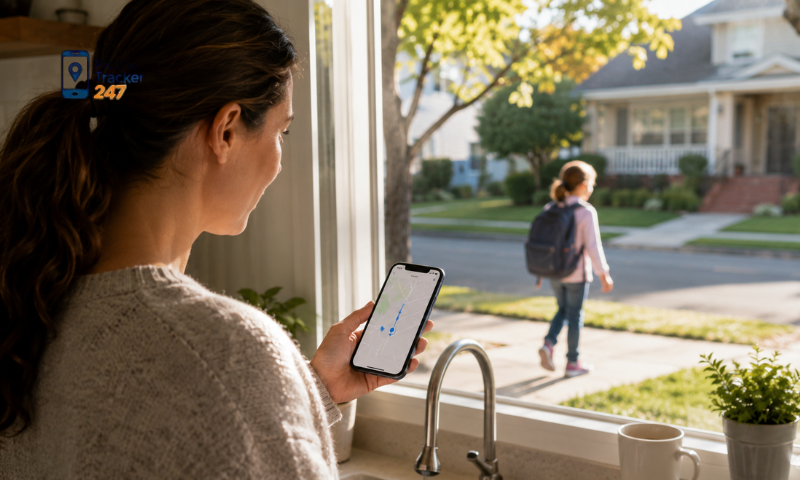
- Monitoring a child’s journey to or from school.
- Checking location during independent travel.
- Confirming that a child has reached an expected destination.
- Staying connected during family or school trips.
- Responding when a child cannot be contacted.
- Locating a device during an unexpected situation.
However, technology alone cannot protect children from every online or offline risk.
Parents should combine PhoneTracker247 with open conversations about online safety, strangers, suspicious messages, responsible smartphone use, and what children should do when they feel uncomfortable or unsafe.
The app should also only be used on devices that parents are legally authorized to monitor. Clear communication about what is being tracked can help prevent location monitoring from becoming secret surveillance.
When used responsibly, PhoneTracker247 can provide an additional layer of reassurance while allowing parents and children to maintain trust.
Conclusion
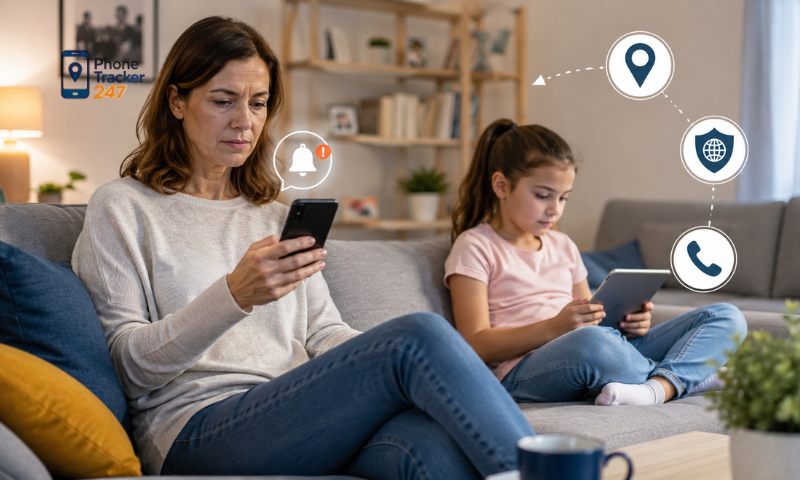
Phone tracking can help protect children during everyday travel, unfamiliar journeys, emergencies, and other situations where parents need reliable location information. The most effective approach is not constant monitoring but purposeful tracking supported by clear family rules. With PhoneTracker247, parents can stay connected with their children while keeping safety, transparency, and privacy in mind.
Use PhoneTracker247 as part of a responsible family safety plan — stay informed when it matters while giving your child the independence they need to grow.
Frequently Asked Questions (FAQs)
1. Why is protecting children online important?
It helps prevent cyberbullying, scams, predators, and harmful content.
2. What are the biggest online risks for children?
Cyberbullying, online predators, scams, inappropriate content, and privacy threats.
3. How can parents keep children safe online?
Set family rules, educate children, and use parental control tools.
4. What is parental monitoring?
It helps parents monitor online activity and identify potential risks early.
5. Can parental control apps block harmful websites?
Yes. Many apps can filter or block unsafe websites and content.
6. How does location tracking improve child safety?
It helps parents know where their child is and receive emergency alerts.
7. Should parents talk to children about online safety?
Yes. Open communication builds trust and safer online habits.
8. Is it okay to monitor a child’s device?
Yes, when done transparently and for safety rather than control.
9. What signs may indicate online danger?
Sudden secrecy, mood changes, withdrawal, or unusual online behavior.
10. What is the best way to protect children online?
Combine education, family rules, parental controls, and regular conversations.