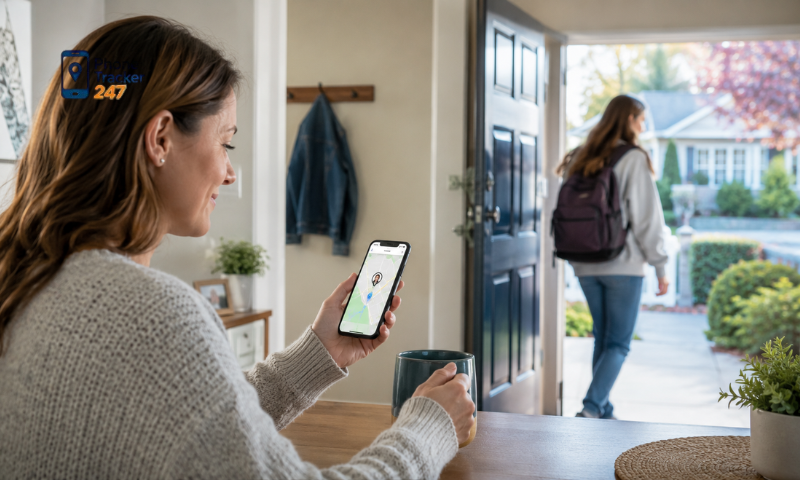
If you are wondering, “How to Track My Daughters Phone for Safety and Peace of Mind”, the key is not only knowing where your daughter is but also tracking her in a transparent, reasonable, and privacy-respecting way. Using location-sharing tools or family safety apps can give parents greater peace of mind when their daughter goes to school, goes out, travels alone, or cannot be reached. In this article, PhoneTracker247 will guide you through safe ways to track your daughter’s phone, what information parents should monitor, and how to balance protection with trust.
Safe and Appropriate Ways to Track Your Daughter’s Phone
Tracking your daughter’s phone can help you feel more confident when she travels alone, goes to school, attends activities, or returns home late. However, the method you choose should focus on safety, transparency, and age-appropriate supervision rather than constant surveillance.
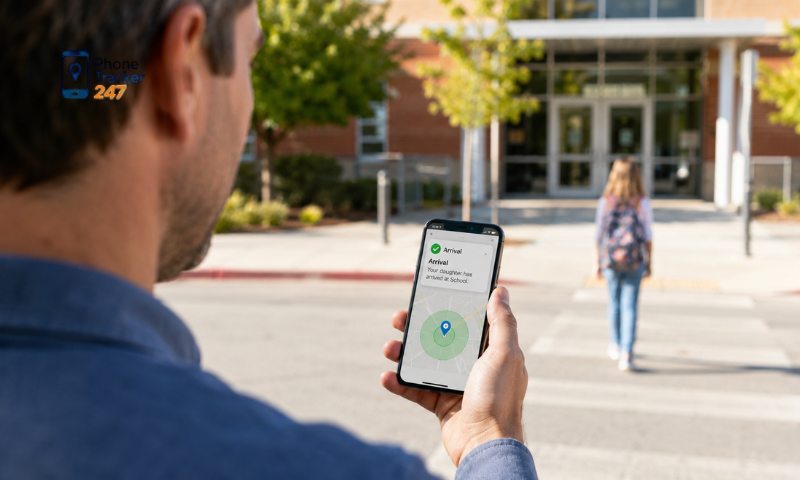
Use Built-In Location Sharing
Built-in tools are often the simplest option because they are integrated directly into the phone’s operating system and designed for family use.
Parents can consider:
- Find My on iPhone to share and view location within the Apple ecosystem.
- Google Family Link on compatible Android devices for supervised family location sharing.
- Location notifications to know when a child arrives at or leaves an agreed place.
These tools are suitable for families that want basic location tracking without adding another app.
Use a Family Tracking App
A dedicated family tracking app can be useful for parents who want to manage location information in one place. Solutions such as PhoneTracker247 can support family safety when used transparently and with proper authorization.
A tracking app may be useful when your daughter:
- Travels to school alone.
- Uses public transportation.
- Attends activities away from home.
- Returns home later than expected.
- Visits an unfamiliar location.
- Cannot be reached for a period of time.
The goal should be to confirm that she is safe, not to monitor every movement throughout the day.
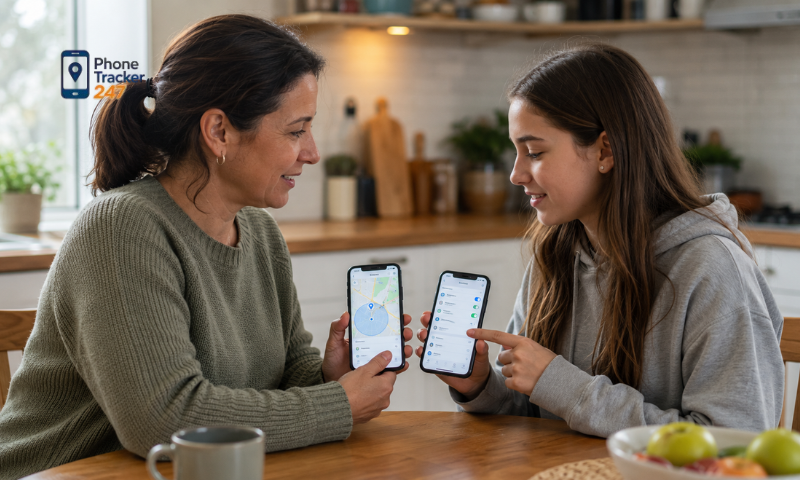
Use Voluntary Location Sharing
For older children and teenagers, voluntary location sharing can create a better balance between safety and independence.
Parents may ask their daughter to share her location when she:
- Travels alone.
- Goes on a school trip.
- Attends a large event.
- Comes home late.
- Visits a new or unfamiliar area.
This approach gives teenagers more involvement in the process and can make tracking feel like a safety agreement rather than surveillance.
Set Up Arrival and Departure Alerts
Parents do not always need to check a live map. Arrival and departure alerts can provide useful updates automatically.
You may want notifications when your daughter:
- Arrives at school.
- Leaves an extracurricular activity.
- Reaches home.
- Arrives at a planned meeting point.
These alerts can provide peace of mind while reducing the need for frequent location checks.
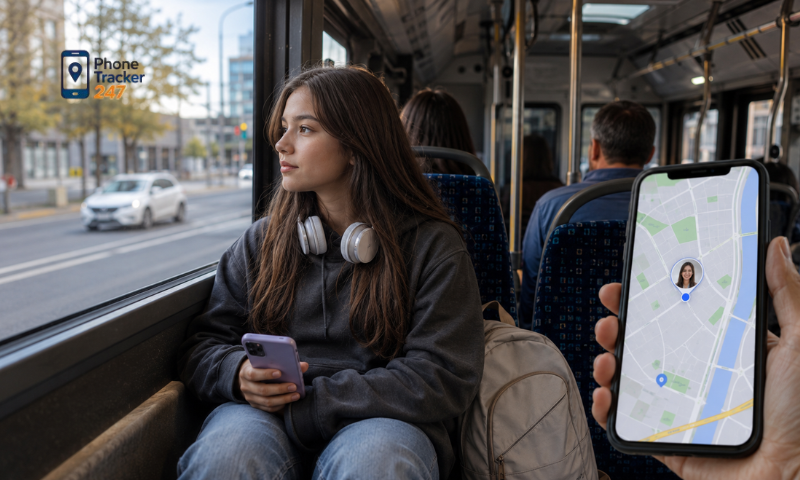
Use Location Tracking in Emergencies
Location tracking can be especially valuable in situations where your daughter cannot be contacted or becomes separated from the family.
It may help when:
- Her phone calls or messages go unanswered.
- She gets lost in an unfamiliar area.
- The family becomes separated during travel.
- There is a genuine safety concern.
In these situations, tools such as PhoneTracker247 can support parents in locating their child more quickly, provided the device is legally authorized for monitoring.
The best tracking method depends on your daughter’s age, independence, and daily routine. Whatever option you choose, explain why tracking is being used and keep the focus on safety rather than control.
See more: How Do I Track My Sons Phone Legally and Responsibly?
Features to Prioritize When Choosing a Tracking Tool
Not every tracking tool offers the same level of usefulness, privacy, or control. Parents should focus on features that directly support family safety without collecting more information than necessary.
Real-Time Location
Real-time location can help parents know where their daughter is when she is traveling alone, returning home late, or cannot be contacted.
This feature is especially useful when she:
- Travels to school alone.
- Uses public transportation.
- Visits an unfamiliar area.
- Returns home later than expected.
- Cannot be reached by phone.
Real-time tracking should be used for specific safety needs rather than constant monitoring throughout the day.
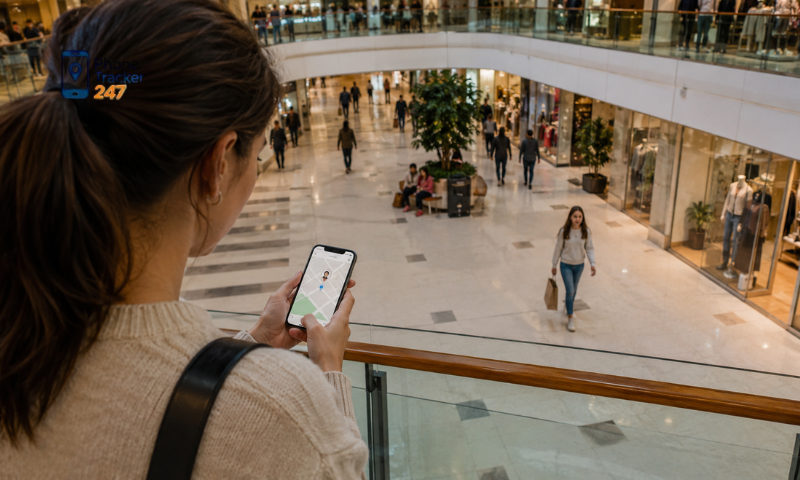
Location History
Location history can help parents confirm whether their daughter reached an expected destination or followed an agreed route.
It may be useful for:
- Reviewing a recent trip.
- Confirming arrival at school or home.
- Checking travel during an emergency.
- Understanding where the device was recently located.
Parents should use location history carefully and only when it serves a clear safety purpose.
Location Alerts
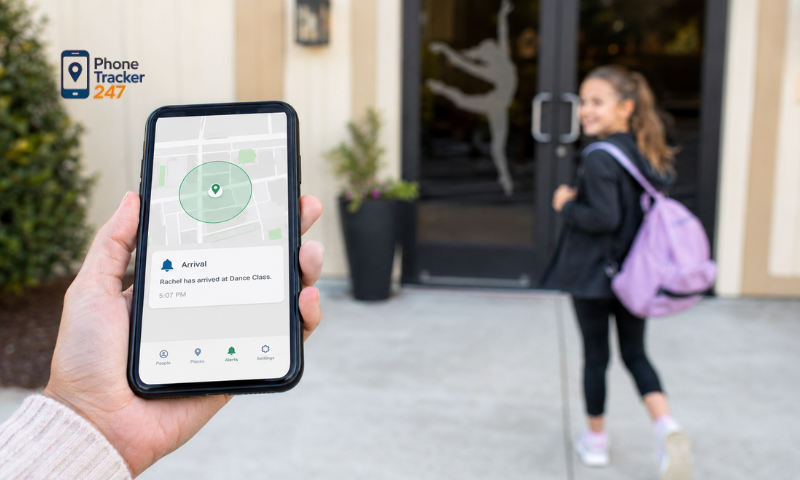
Arrival and departure alerts can reduce the need to repeatedly check a live map. Parents can receive notifications when their daughter reaches or leaves important locations.
Useful alerts may include:
- Arriving at school.
- Leaving an extracurricular activity.
- Reaching home.
- Arriving at an agreed meeting point.
- Leaving an unfamiliar location.
These notifications can provide reassurance while allowing children greater independence.
Easy-to-Use Controls
A tracking tool should make it easy for parents to understand what information is being monitored and how tracking features are managed.
Look for:
- Simple location controls.
- Clear tracking settings.
- Easy access to important safety features.
- Straightforward account management.
- Transparent information about active monitoring.
With PhoneTracker247, parents should establish clear family rules so everyone understands when and why location tracking is being used.
Privacy and Security
Privacy should be an important consideration when selecting any family tracking solution. Parents should understand what information the service collects and how that data is handled.
Before choosing a tool, consider:
- What personal data is collected.
- Why the information is needed.
- How location data is protected.
- Whether unnecessary permissions are requested.
- Whether the service clearly explains its privacy practices.
The best tracking tool should support your daughter’s safety while avoiding unnecessary access to private information. Solutions such as PhoneTracker247 should be used responsibly, transparently, and only on devices you are authorized to monitor.
See more: Child GPS Tracker: Safety Features Parents Should Know
How to Set Tracking Rules Without Becoming Overprotective
Location tracking works better when everyone understands the rules. Instead of checking your daughter’s phone whenever you feel worried, establish specific situations in which tracking is appropriate.
Families can agree that parents may check location when:
- She is traveling alone.
- She is returning home later than expected.
- She is visiting an unfamiliar location.
- She cannot be reached by phone.
- She is attending a large or crowded event.
- There is a genuine emergency.
Parents should also avoid checking location simply because the technology makes it possible.
As your daughter becomes older and demonstrates greater responsibility, consider reducing the level of monitoring. For example, a younger child may use continuous family location sharing, while an older teenager may only share her location during certain trips.
When using PhoneTracker247, creating these rules in advance can make location tracking feel like a family safety measure rather than a form of constant control.
How to Balance Safety and Your Daughter’s Privacy
Parents naturally want to protect their children, but privacy also becomes increasingly important as children grow older. The goal is to find a balance between knowing enough to respond to safety concerns and giving your daughter appropriate independence.
A responsible approach includes:
- Explain the purpose of tracking: Tell your daughter that the goal is to make sure she is safe, not to monitor every movement.
- Avoid unnecessary monitoring: Do not check her location every few minutes without a specific reason.
- Respect private conversations: Location monitoring does not automatically justify reading messages, social media chats, or personal notes.
- Give more independence over time: Reduce supervision as your daughter becomes older and demonstrates responsible behavior.
- Review the rules together: Discuss whether current tracking settings are still necessary and appropriate.
- Talk before making assumptions: Location information can occasionally be delayed or inaccurate, so contact your daughter before assuming something is wrong.
Open communication is often more valuable than technology alone. PhoneTracker247 can support family safety, but it should complement trust and communication rather than replace them.
Conclusion
Tracking your daughter’s phone can provide greater safety and peace of mind when it is done responsibly. Choose a trusted location-sharing solution, establish clear rules, and monitor only the information that is genuinely necessary. PhoneTracker247 can help parents stay connected with their daughters during school trips, daily travel, unfamiliar journeys, and other situations where location information may be useful.
Use PhoneTracker247 responsibly, communicate openly with your daughter, and make safety and trust the foundation of family location tracking.
Frequently Asked Questions (FAQs)
1. How can I track my daughter’s phone?
Use a parental control app with your daughter’s knowledge and consent when appropriate.
2. Can I see my daughter’s real-time location?
Yes. GPS tracking provides live location updates.
3. Can I view my daughter’s location history?
Yes. Most parental control apps store recent location history.
4. Will I receive alerts when she leaves school?
Yes. Geofencing can notify you when she enters or exits safe zones.
5. Can I track my daughter’s Android phone remotely?
Yes. After setup and pairing, you can monitor the device remotely.
6. Does the app work 24/7?
Yes. It continuously updates location while the phone is connected.
7. Can I find my daughter’s lost phone?
Yes. Live GPS tracking helps locate a lost or misplaced device.
8. Is it legal to track my daughter’s phone?
Generally yes, when you are the parent or legal guardian and comply with applicable laws.
9. Does the app require internet access?
Yes. GPS and an internet connection are needed for live tracking.
10. Why should parents track their child’s phone?
To improve safety, respond quickly in emergencies, and provide peace of mind.