Choosing the right tracking technology can make a significant difference in safety, convenience, and peace of mind. Whether you want to locate lost items, monitor a child’s whereabouts, or track a phone in real time, understanding the difference between tracking technologies is critical. This is where the comparison bluetooth tracker vs gps tracker becomes essential.
Although both solutions aim to help users locate objects or people, they are built on very different technologies and serve very different purposes. In this in-depth guide, we’ll break down how each tracker works, compare their strengths and weaknesses, and help you decide which option fits your needs—especially if you’re considering a phone tracking app.
What Is a Bluetooth Tracker?
Bluetooth trackers are often the first solution people think of when they lose small personal items. Before comparing bluetooth tracker vs gps tracker, it’s important to understand how Bluetooth-based tracking works and what it’s designed for.
How Bluetooth Trackers Work
Bluetooth trackers rely on short-range wireless communication. Once paired with a smartphone app, the tracker sends signals that allow the phone to estimate its location.
Key characteristics:
- Operates via Bluetooth Low Energy (BLE)
- Requires proximity to a paired device
- Often uses crowd-sourced networks to update last known location
Because Bluetooth signals are limited in range, this technology is best suited for close-proximity tracking.
Typical Use Cases for Bluetooth Trackers
Bluetooth trackers are ideal for:
- Finding lost keys, wallets, or bags
- Locating items inside a home or office
- Reminder alerts when you leave items behind
In these scenarios, the bluetooth tracker vs gps tracker debate usually leans in favor of Bluetooth due to simplicity and cost.
Limitations of Bluetooth Trackers
Despite their convenience, Bluetooth trackers have clear drawbacks:
- Limited range (usually 30–100 meters)
- No true real-time tracking
- Ineffective once the item moves far away
- Relies heavily on nearby devices
These limitations become especially apparent when comparing bluetooth tracker vs gps tracker for safety or long-distance tracking.
What Is a GPS Tracker?
Unlike Bluetooth devices, GPS trackers are built for long-distance and real-time monitoring. To fully evaluate bluetooth tracker vs gps tracker, you need to understand why GPS technology is widely used in safety, logistics, and phone tracking apps.
How GPS Trackers Work
GPS trackers receive signals from satellites to determine precise location. This data is then transmitted via mobile networks or Wi-Fi to an app or web dashboard.
Key components:
- GPS satellites for location calculation
- Cellular data or Wi-Fi for transmission
- Cloud-based tracking platforms
This system allows continuous monitoring, making GPS ideal for dynamic tracking scenarios.
Common Applications of GPS Trackers
GPS trackers are widely used for:
- Phone tracking apps
- Child and family safety
- Vehicle and fleet management
- Elderly care and asset tracking
When evaluating bluetooth tracker vs gps tracker, GPS clearly dominates in professional and safety-critical applications.
Limitations of GPS Trackers
While powerful, GPS trackers also have trade-offs:
- Higher battery consumption
- Requires internet or cellular signal
- Often involves subscription costs
Still, for users who prioritize accuracy and range, these downsides are often acceptable in the bluetooth tracker vs gps tracker comparison.
Table 1: Bluetooth Tracker vs GPS Tracker
| Feature | Bluetooth Tracker | GPS Tracker |
|---|---|---|
| Best for | Finding nearby items (keys, wallet, bag) | Tracking moving people, pets, vehicles over distance |
| Typical tracking range | Short range (usually tens of meters, varies by environment) | Long range (city-to-city, as long as it has signal/power) |
| Location accuracy | Good when you are close; depends on signal strength | Strong outdoors; depends on GPS + network conditions |
| Indoor performance | Often better indoors for “near me” finding | Can be weaker indoors (GPS signal may degrade) |
| Real-time tracking | Limited (proximity-based) | Yes (continuous or periodic updates) |
| Works without cellular plan | Yes | Usually no (many models rely on cellular data/SIM or service plans) |
| Battery life | Often months to 1+ year | Often days to weeks (varies by update frequency) |
| Device size | Very small, lightweight | Typically larger (needs bigger battery and antenna) |
| Ongoing costs | Usually no subscription | Often subscription/service fees (model dependent) |
| Privacy risk if misused | Lower, but still possible | Higher, due to persistent location history and real-time tracking |
| Ideal environments | Home, office, airport baggage areas | Outdoor travel, commuting, field work, road trips |
| Typical price | Lower upfront | Higher upfront, plus possible monthly cost |
Bluetooth Tracker vs GPS Tracker: Key Differences
At a glance, Bluetooth and GPS trackers may seem similar, but their performance differs dramatically. This section breaks down the most important differences to help you clearly compare bluetooth tracker vs gps tracker.
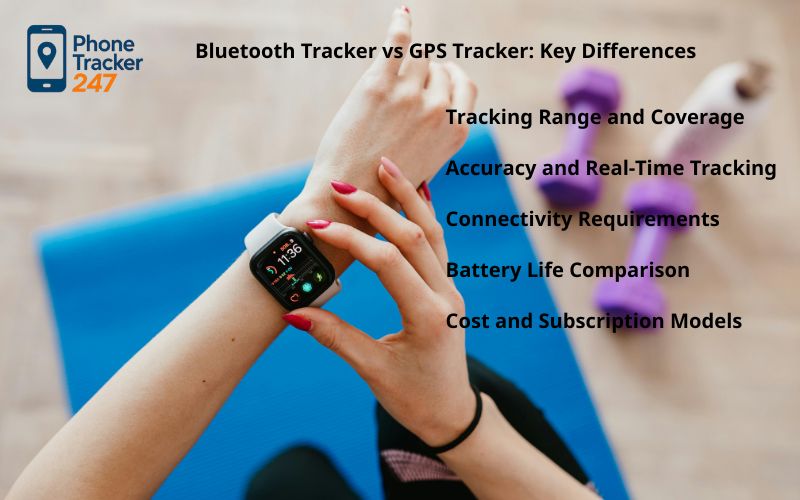
Tracking Range and Coverage
This is the most important distinction in the bluetooth tracker vs gps tracker debate.
- Bluetooth tracker: Limited to short-range communication
- GPS tracker: Works globally as long as there’s signal coverage
If the object or person can move far away, GPS is the only viable option.
Accuracy and Real-Time Tracking
- Bluetooth provides approximate proximity-based location
- GPS offers precise, real-time coordinates
For real-time location tracking, GPS clearly outperforms Bluetooth.
Connectivity Requirements
- Bluetooth trackers depend on nearby smartphones
- GPS trackers rely on satellites and cellular networks
This independence makes GPS far more reliable in emergencies.
Battery Life Comparison
- Bluetooth trackers consume less power and last months or years
- GPS trackers require more frequent charging
Battery life is one area where Bluetooth has an edge in the bluetooth tracker vs gps tracker discussion.
Cost and Subscription Models
- Bluetooth trackers usually involve a one-time purchase
- GPS trackers often include monthly or yearly subscriptions
However, subscriptions typically unlock advanced features such as location history and geofencing.
Bluetooth Tracker vs GPS Tracker: Feature Comparison Table
Sometimes the fastest way to understand bluetooth tracker vs gps tracker is by seeing their features side by side. The table below highlights the most critical differences that affect real-world usage.
Side-by-Side Comparison Overview
| Feature | Bluetooth Tracker | GPS Tracker |
| Range | Short-distance | Global |
| Real-time tracking | No | Yes |
| Accuracy | Approximate | High |
| Internet required | No | Yes |
| Best use case | Lost items | Phone, people, vehicles |
This table highlights why the bluetooth tracker vs gps tracker decision depends heavily on your tracking goals.
Which Tracker Is Better for Different Needs?
Not all tracking needs are the same. Choosing between bluetooth tracker vs gps tracker depends heavily on what or who you want to track and how far it can move.
Best Tracker for Lost Items (Keys, Wallets, Bags)
Bluetooth trackers are perfect for personal belongings you frequently misplace at home or work. Their simplicity and long battery life make them ideal for everyday items.
Best Tracker for Phone Tracking and Safety
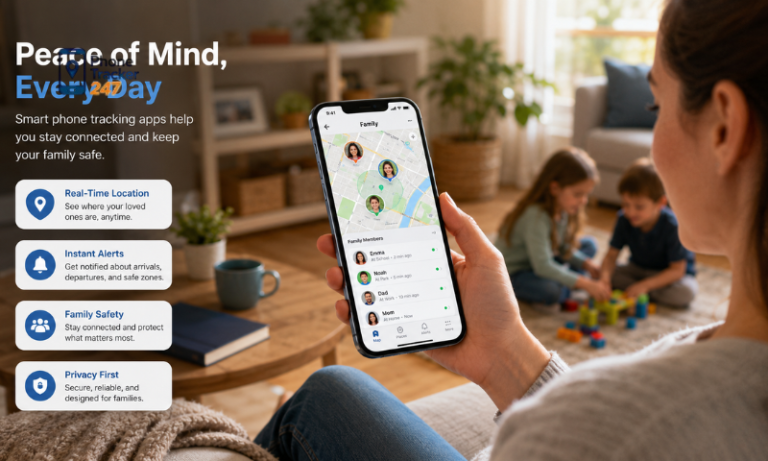
When comparing bluetooth tracker vs gps tracker for phone monitoring, GPS trackers or GPS-based phone tracking apps are the clear winner. Bluetooth simply cannot provide remote access or live updates.
Best Tracker for Children and Family Monitoring
Parents need reliable, real-time updates and alerts. GPS trackers allow:
- Live location tracking
- Safe-zone (geofencing) alerts
- Location history review
Bluetooth trackers fall short in these critical safety scenarios. Beyond child safety, GPS tracking is increasingly important for families caring for older adults. Seniors with memory decline or health conditions may wander unexpectedly, making real-time location access critical. In these situations, using a dedicated GPS locator for elderly allows caregivers to receive live location updates, set safe-zone alerts, and respond quickly if a loved one moves outside familiar areas.
Best Tracker for Vehicles and Assets
For moving assets, vehicles, or deliveries, GPS tracking is essential. Bluetooth lacks the range and reliability needed for continuous monitoring.
Bluetooth Trackers vs GPS Trackers for Phone Tracking Apps
When it comes to phone monitoring, the gap between Bluetooth and GPS becomes even clearer. This section explains why bluetooth tracker vs gps tracker is not an equal comparison in the context of phone tracking apps.
Why Bluetooth Is Not Enough for Phone Monitoring
Bluetooth technology cannot support:
- Remote tracking
- Location history
- Emergency alerts
This makes Bluetooth unsuitable when evaluating bluetooth tracker vs gps tracker for phone tracking apps.
Why GPS-Based Phone Tracking Apps Are More Reliable
GPS phone tracking apps provide:
- Real-time GPS location tracking
- Geofencing notifications
- Multi-device access
- Detailed movement reports
These features are crucial for modern safety-focused tracking solutions.
Privacy, Security, and Legal Considerations
Tracking technology involves sensitive location data, so privacy and legality cannot be ignored. Whether you choose Bluetooth or GPS, understanding these factors is essential when comparing bluetooth tracker vs gps tracker.
Bluetooth trackers store minimal data and operate locally. GPS trackers, however, collect and transmit location data, making encryption and secure storage essential.
When using any tracking solution:
- Obtain consent from the tracked person
- Follow local and international privacy laws
- Use parental or employer monitoring responsibly
Responsible usage is critical, regardless of the bluetooth tracker vs gps tracker choice. It’s also common for users to search questions such as how do you track a phone without them knowing, often without realizing the legal implications. In practice, phone tracking should only be conducted with clear consent—such as parental monitoring of a child’s device or tracking a phone you personally own—and always in compliance with local privacy and data protection laws.
When Should You Choose a GPS Phone Tracking App Instead?
In many modern scenarios, a GPS phone tracking app can replace physical trackers entirely. If you’re still unsure about bluetooth tracker vs gps tracker, this section will clarify when apps are the better option.
Scenarios Where Apps Outperform Physical Trackers
A GPS phone tracking app is often better when:
- Tracking a lost or stolen phone
- Monitoring family members remotely
- Managing emergencies or travel safety
Apps eliminate the need for extra hardware while offering advanced features.
Key Features to Look for in a GPS Phone Tracking App
When choosing a solution, prioritize:
- Real-time GPS tracking
- Geofencing alerts
- Cross-platform compatibility
- Secure data protection
These features make GPS apps a superior option in the bluetooth tracker vs gps tracker comparison.
Final Verdict: Bluetooth Tracker vs GPS Tracker
After reviewing all technical and practical aspects, it’s time to draw a clear conclusion. This final comparison of bluetooth tracker vs gps tracker will help you make a confident decision.
Choose a Bluetooth tracker if:
- You only need short-range item tracking
- Battery life and simplicity matter most
- You want a low-cost solution
Choose a GPS tracker if:
- You need real-time location updates
- Tracking people, phones, or vehicles
- Safety and accuracy are priorities
The bluetooth tracker vs gps tracker debate ultimately comes down to range, reliability, and purpose. Bluetooth excels in simplicity, while GPS dominates in power and versatility.
FAQs – bluetooth tracker vs gps tracker
1. What’s the key difference between Bluetooth and GPS trackers?
Bluetooth finds items nearby. GPS tracks location over long distances.
2. Is GPS always more accurate?
Usually outdoors, yes. Indoors, Bluetooth can be more reliable at close range.
3. Do GPS trackers need a subscription?
Often yes, especially for real-time tracking and alerts.
4. How far does a Bluetooth tracker work?
Typically tens of meters, less with walls or crowds.
5. Which is better for kids safety?
GPS for live location and geofencing. Bluetooth is mainly for nearby.
6. Which is better for pets?
GPS for pets that roam. Bluetooth works only when they stay close.
7. Do trackers work indoors?
Bluetooth usually works well indoors. GPS may struggle inside buildings.
8. What should I check before buying?
Range, battery life, total cost, app reliability, and privacy settings.
Final Thoughts
Understanding the true differences between bluetooth tracker vs gps tracker helps you avoid costly mistakes and choose the right solution for your needs.
While both technologies serve different purposes, the bluetooth tracker vs gps tracker comparison shows that GPS remains the most effective option for continuous and remote tracking. If you’re looking to better understand how GPS phone tracking works in real-world scenarios, for more information, Phone Tracker 247 provides detailed insights and practical tracking solutions.
For more information:
Website: phonetracker247.com
Facebook: https://www.facebook.com/phonetracker247
Email: contact@phonetracker247.com