A GPS Tracker for Kids helps parents monitor their children’s location and improve safety in everyday life. However, many families wonder whether a smartphone tracking app or a dedicated wearable GPS device is the better choice. Each option has its own advantages and limitations in terms of accuracy, convenience, cost, and safety features. In this article, PhoneTracker247 compares phone-based and wearable GPS Tracker for Kids solutions to help you choose the best option for your family.
How Does a GPS Tracker for Kids Phone App Work?
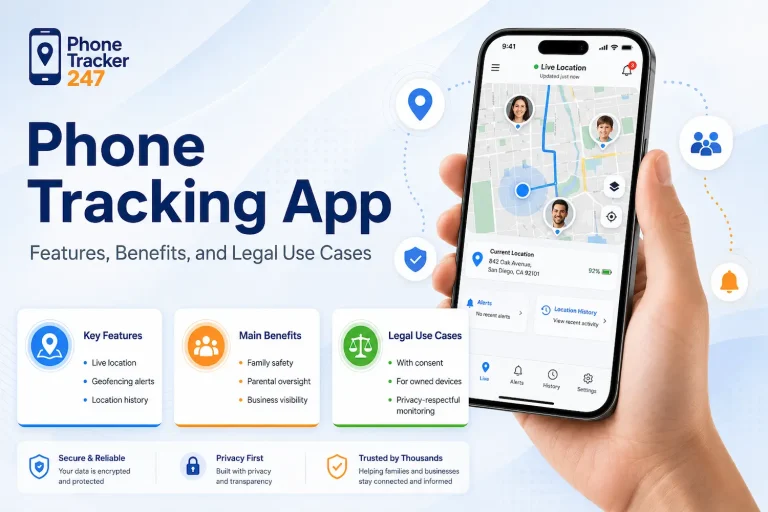
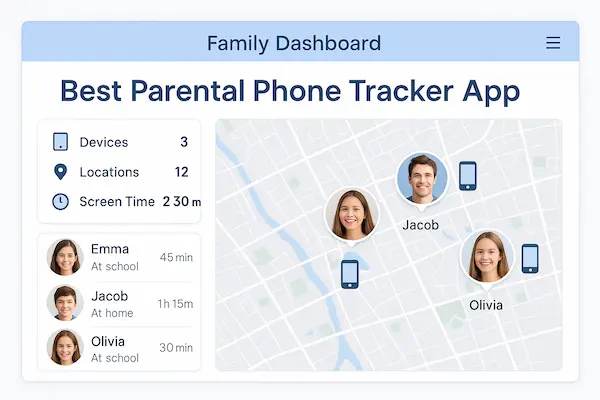
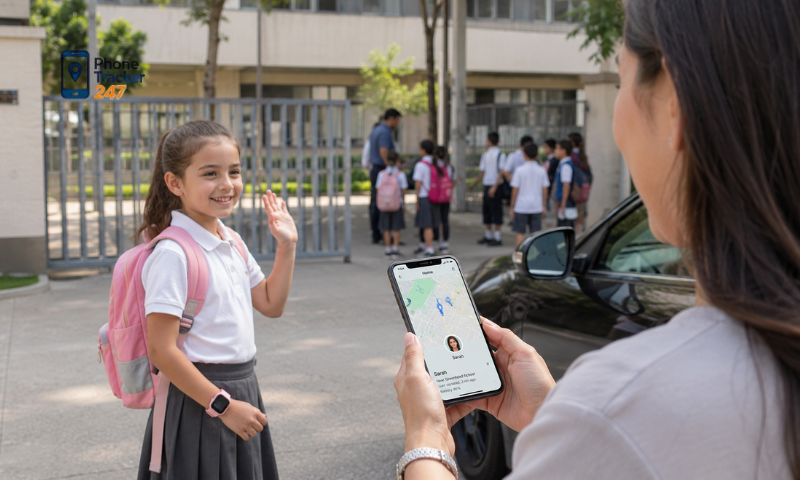
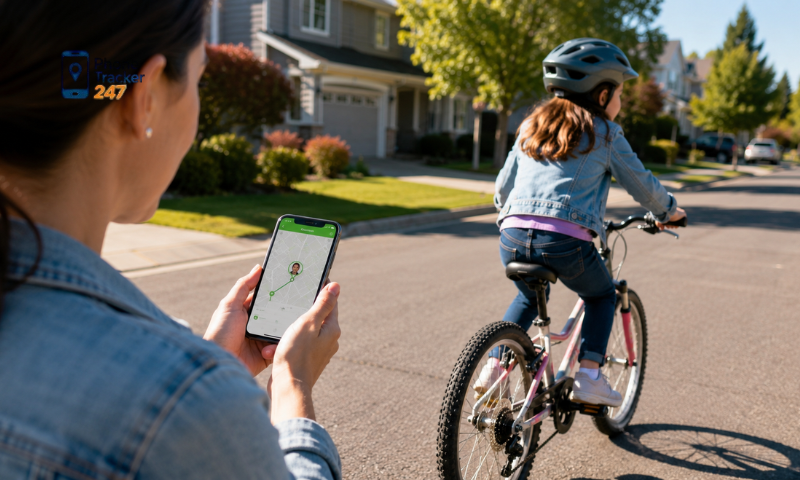
A GPS Tracker for Kids phone app uses the smartphone’s built-in GPS together with Wi-Fi and mobile network signals to determine the device’s location. Once the tracking app is installed and connected between the child’s phone and the parent’s device, location information can be synchronized so parents can view their child’s position directly on a digital map.
Depending on the app, common safety features may include:
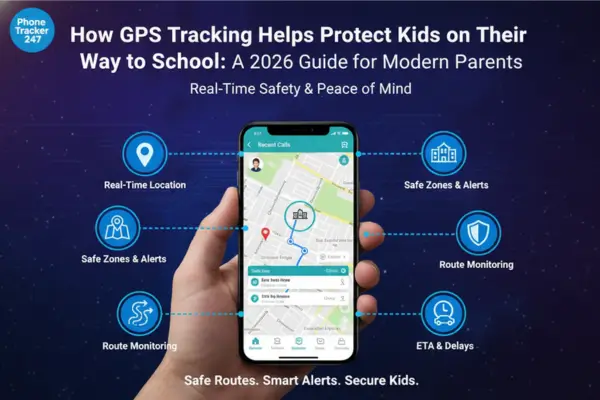
- Real-time location tracking: View the child’s current location on a map.
- Location history: Review places the child has previously visited.
- Geofencing alerts: Receive notifications when the child enters or leaves a predefined safe area.
- Family location sharing: Allow authorized family members to view the child’s location.
- Low battery notifications: Alert parents when the child’s phone battery is running low.
- SOS emergency alerts: Enable the child to quickly send an emergency notification in supported apps.
- Device usage monitoring: Some applications also provide tools for monitoring smartphone activity.
A GPS tracking app can be particularly useful for children who already carry a smartphone to school, extracurricular activities, or outdoor events, giving parents an additional way to stay informed about their location.
How Does a GPS Wearable Device for Kids Work?
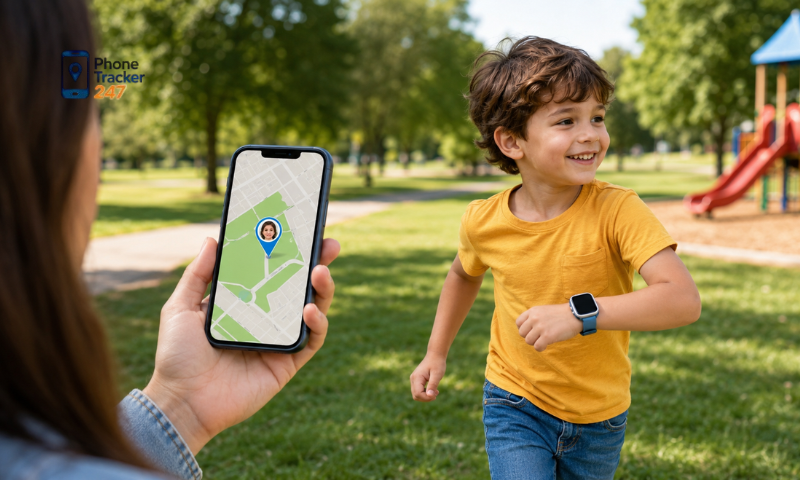
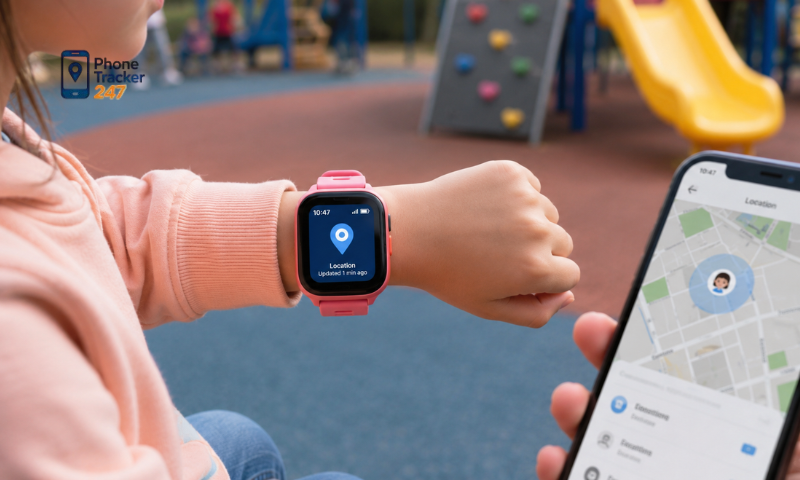
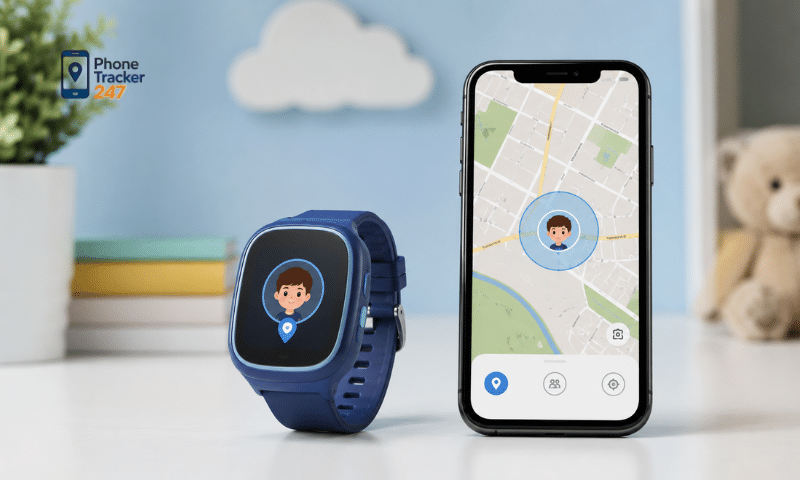
A GPS wearable device for kids is usually a smartwatch or wristband equipped with built-in GPS, mobile network connectivity, and its own battery. The device sends location data directly to a parent’s connected app, allowing parents to monitor their child without requiring the child to carry a smartphone.
Common features of GPS wearables for kids may include:
- Real-time GPS tracking: Allows parents to view the child’s current location.
- SOS emergency button: Enables the child to quickly send an emergency alert.
- Two-way voice calling: Allows communication between the child and approved contacts.
- Geofencing alerts: Notifies parents when the child enters or leaves a predefined safe zone.
- Removal alerts: Some devices can notify parents if the wearable is taken off.
- Activity tracking: Records daily steps, movement, or distance traveled.
- Child-friendly design: Many models are water-resistant, durable, and easy for children to operate.
GPS wearables are especially suitable for younger children who do not yet use smartphones. However, many devices require a SIM card and an active mobile data plan to maintain location tracking and communication features.
GPS Tracker for Kids: Phone App or Wearable Device – Which One Should You Choose?
Both smartphone tracking apps and GPS wearable devices can help parents monitor their child’s location and improve day-to-day safety. However, the two solutions work differently and are suited to different age groups, routines, and family needs.
A phone-based GPS tracker is usually more flexible because it uses a device the child already owns, while a GPS wearable provides a more dedicated tracking solution with fewer distractions. Before deciding, parents should consider not only tracking accuracy but also battery life, ease of use, communication features, cost, and the child’s level of independence.
See more: How to Track Child Phone Usage Without Over-Monitoring
Choose a Phone App If
A GPS tracking app is usually a practical choice when the child already has a smartphone and carries it regularly. Parents can use the existing device for location monitoring without purchasing additional hardware.
A phone app may be suitable when:
- The child already uses a smartphone every day.
- You want to avoid purchasing another tracking device.
- You need real-time location tracking and location history.
- You want features such as screen time control or device management.
- You prefer to manage several parental control features within one app.
- The child is responsible enough to keep the smartphone charged.
- The child regularly brings the phone to school, extracurricular activities, or social events.
Another advantage is that many phone tracking apps can combine location monitoring with broader parental control tools. Depending on the application, parents may also be able to manage app usage, review screen time, receive safety alerts, or create location-based notifications.
However, this solution depends heavily on the smartphone. If the battery runs out, the phone is turned off, location permissions are disabled, or the child leaves the device behind, tracking may become unavailable.
For these reasons, phone apps are generally more suitable for older children and teenagers who already use smartphones responsibly.
Choose a GPS Wearable If
A GPS wearable device may be a better option for younger children who do not yet need a smartphone. Because the tracker is worn on the wrist, it is often easier for children to carry throughout the day.
Parents may consider a GPS wearable when:
- The child is still too young to own a smartphone.
- You want the tracking device to remain attached to the child.
- You need a dedicated SOS emergency button.
- You want simple two-way communication with approved contacts.
- You want to minimize screen time and unrestricted internet access.
- You prefer a device designed mainly for location tracking and safety.
- The child frequently participates in outdoor activities, school trips, or crowded events.
Many GPS watches for kids are designed with simple interfaces, durable materials, and water-resistant construction. Some models also allow parents to create safe zones, receive alerts when the child leaves a designated area, or monitor whether the device has been removed.
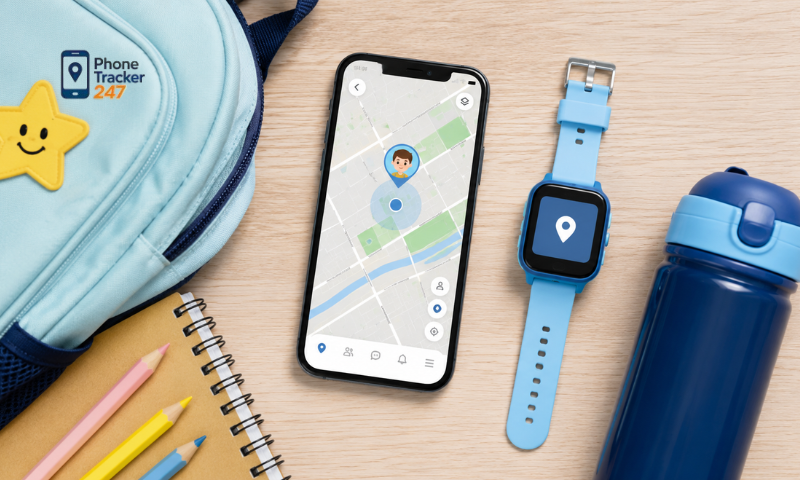
Unlike a smartphone, a wearable usually offers fewer entertainment features, which can help reduce distraction during school or daily activities.
However, parents should also consider that many GPS wearables require a SIM card, mobile data connection, or monthly subscription to provide real-time tracking and communication.
GPS wearables are therefore often more suitable for preschool and elementary school children who need basic communication and location monitoring without having full access to a smartphone.
Compare Tracking Accuracy and Coverage
Location accuracy is one of the most important factors when choosing any GPS Tracker for Kids. Both phone apps and wearable devices usually combine GPS with Wi-Fi and cellular network information to determine location.
Parents should compare:
- Outdoor GPS accuracy.
- Indoor location performance.
- Location update frequency.
- Mobile network coverage.
- Wi-Fi-assisted positioning.
- Performance in crowded or urban environments.
Smartphones may sometimes provide stronger positioning performance because they contain more advanced sensors and connectivity technologies. However, dedicated wearables can still provide reliable tracking when properly connected to GPS and mobile networks.
Keep in mind that no GPS tracking solution provides perfect accuracy in every environment. Buildings, underground areas, weak mobile signals, and dense urban structures can all affect location results.

Consider Battery Life and Charging Frequency
Battery performance directly affects how reliably parents can track their child. A device that frequently runs out of power may become ineffective during important situations.
When comparing options, consider:
- Average battery life.
- GPS update frequency.
- Mobile data usage.
- Screen usage.
- Calling features.
- Low battery notifications.
- Charging time.
A smartphone may require daily charging, especially when GPS, mobile data, and other apps are used frequently. Some GPS wearables can offer longer battery life because they have fewer applications and functions running in the background.
Parents should choose a solution that fits the child’s daily routine and make charging part of a consistent habit.
Compare Safety and Emergency Features
Location tracking is only one part of child safety. Additional emergency features can make a significant difference depending on the child’s age and daily activities.
Useful safety features may include:
- SOS emergency alerts.
- Geofencing notifications.
- Real-time location sharing.
- Location history.
- Two-way voice calling.
- Trusted contact lists.
- Low battery alerts.
- Device removal notifications.
GPS wearables often provide dedicated SOS buttons that younger children can easily press in an emergency. Phone apps may offer more advanced monitoring and communication tools but can require several steps to access.
Parents should prioritize features that their child can easily understand and use when needed.
See more: Parental Control App vs Phone Tracker App: Which One Fits Your Family?
Consider Cost and Subscription Fees
The total cost of a GPS tracking solution can vary significantly between phone apps and wearable devices.
Parents should evaluate:
- Initial hardware cost.
- App subscription fees.
- SIM card costs.
- Monthly mobile data plans.
- Premium feature subscriptions.
- Replacement or repair expenses.
A phone app may have a lower initial cost because it uses an existing smartphone. However, some advanced parental control apps require monthly or annual subscriptions.
GPS wearables usually require an upfront device purchase, and some also require a separate mobile plan or subscription for GPS tracking and communication.
Looking at the total long-term cost can help parents choose a solution that fits their budget.
Consider Your Child’s Age and Daily Routine
The most suitable GPS tracker often depends on the child’s maturity and lifestyle.
For example:
- Younger children may benefit from a simple GPS smartwatch.
- Elementary school children may need basic tracking and SOS functions.
- Older children may prefer smartphone-based location sharing.
- Teenagers may benefit from less intrusive tracking tools combined with clear family safety rules.
Parents should also think about where the child spends most of the day, whether they travel independently, and whether they participate in sports, extracurricular activities, or school trips.
Choosing a tracker that fits naturally into the child’s routine makes it more likely that the device will actually be carried and used consistently.
Factors to Consider Before Making a Decision
Before selecting a GPS Tracker for Kids, parents should compare both options based on practical tracking, communication, and safety needs.
Important factors include:
- Location tracking accuracy.
- Indoor and outdoor tracking performance.
- Battery life and charging frequency.
- Device durability.
- Ease of use.
- Initial purchase cost.
- Monthly subscription or data fees.
- Geofencing capabilities.
- Location history.
- SOS emergency features.
- Communication options.
- Low battery notifications.
- Privacy and data protection settings.
Parents should also check whether the child is comfortable using the device and understands what to do in an emergency.
There is no one-size-fits-all GPS tracking solution. A phone app is often more practical for older children who already use smartphones, while GPS wearables may be better suited to younger children who need a simpler and more dedicated safety device. The best choice ultimately depends on the child’s age, daily habits, level of independence, family budget, and the safety features parents consider most important.
Conclusion
A GPS Tracker for Kids is a valuable tool that helps parents monitor their children’s location and provides greater peace of mind. If your child already uses a smartphone, a GPS tracking app may offer an affordable solution with a wide range of parental management features. On the other hand, a GPS wearable device is often a better choice for younger children thanks to its independent operation and child-focused safety features.
Choose the GPS Tracker for Kids solution that best matches your child’s age, daily routine, and your family’s needs to enhance safety while respecting your child’s privacy and ensuring a comfortable user experience.
Frequently Asked Questions (FAQs)
1. What is a GPS tracker for kids?
A GPS tracker helps parents monitor their child’s real-time location for added safety.
2. How does a kids GPS tracker work?
It uses GPS, Wi-Fi, and cellular networks to provide accurate location updates.
3. Can I track my child’s location in real time?
Yes. Most GPS trackers provide live location tracking 24/7.
4. Does it show location history?
Yes. You can review your child’s recent routes and travel history.
5. Can I create safe zones?
Yes. Geofencing alerts notify you when your child enters or leaves designated areas.
6. Does a kids GPS tracker require internet?
Yes. GPS and an internet connection are needed for live tracking.
7. Can I track more than one child?
Yes. Most parental control apps support multiple devices under one account.
8. Is using a GPS tracker for kids legal?
Yes, when used by parents or legal guardians in compliance with local laws.
9. Can a GPS tracker help find a lost child?
Yes. Real-time location and emergency alerts help parents respond quickly.
10. Who should use a GPS tracker for kids?
Parents and guardians who want extra peace of mind and improved child safety.