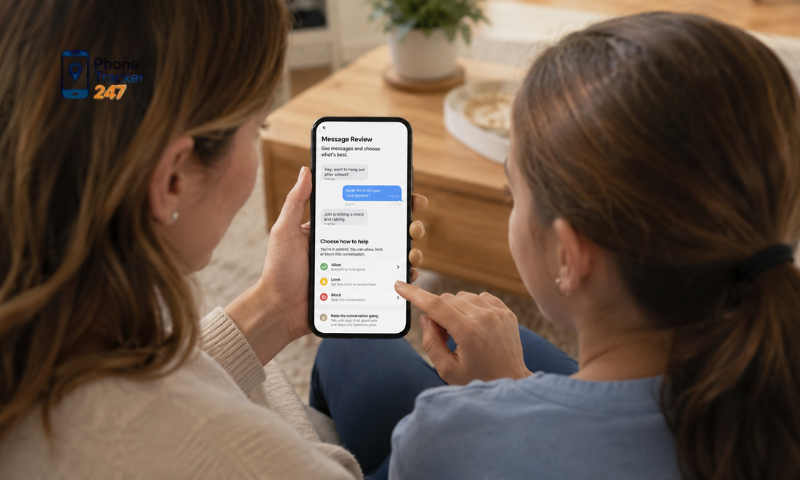
Text messages are one of the most private forms of communication on a child’s phone. Therefore, parents should carefully balance safety and privacy when using parental control text messages tools. In some situations, parents may want to know who their child is communicating with, whether they are receiving concerning messages, or if they are at risk of scams, cyberbullying, or contact from strangers. In this article, PhoneTracker247 explains what parents can and cannot monitor, the limitations they should be aware of, and how to use text message monitoring tools responsibly, transparently, and with respect for a child’s privacy.
What Content Should Parents Avoid Over-Monitoring?
Using parental control text messages tools does not mean parents need to read every conversation their child has. Excessive monitoring can affect trust, especially as children grow older and need more personal space.
Parents should be cautious about constantly checking:
- Everyday conversations with friends.
- Harmless private jokes or casual chats.
- Personal conversations that are unrelated to safety.
- Messages with classmates about school or hobbies.
- Private thoughts shared with trusted friends.
- Every incoming and outgoing message without a clear reason.
The goal should be to identify genuine safety concerns rather than monitor normal social interactions. With tools such as PhoneTracker247, parents should establish a clear reason for supervision before using any message-related monitoring feature.
Safe and Appropriate Ways to Monitor Your Child’s Messages
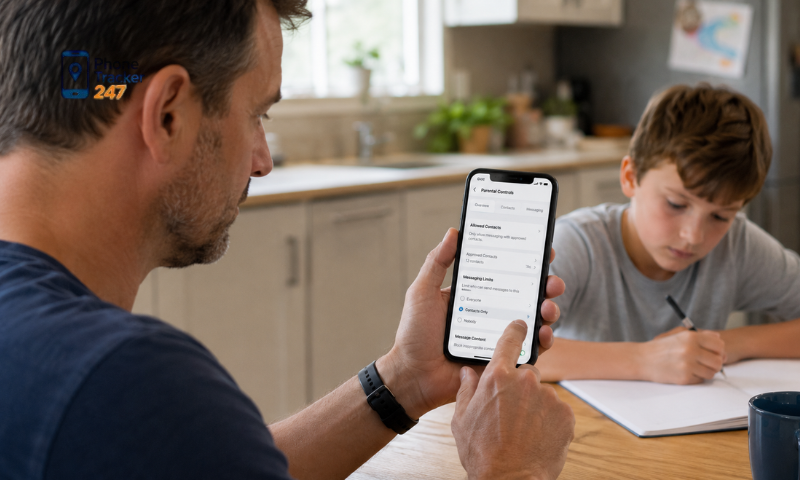
Message supervision should focus on safety, transparency, and age-appropriate boundaries. Parents can combine parental-control tools with open communication instead of relying on secret monitoring. The goal is to help children avoid harmful interactions while still giving them enough privacy to build trust and independence.
Use Built-In Parental Controls
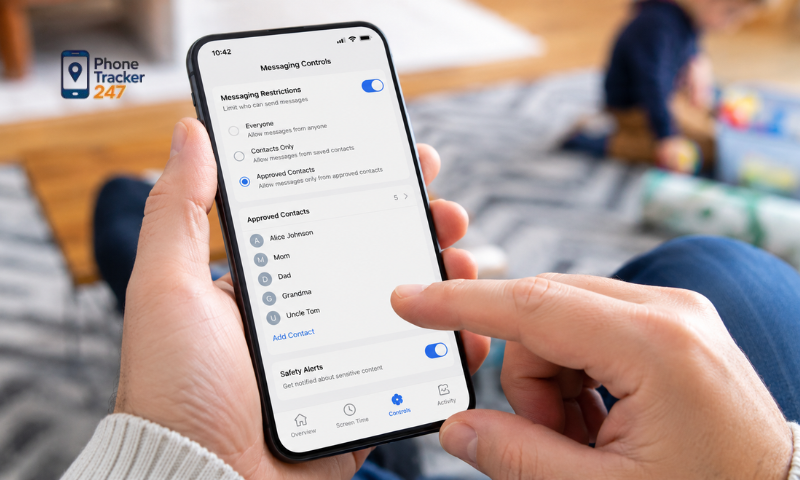
Many smartphones provide family-management features that help parents control communication, app access, and device usage without reading every message directly.
Parents may use these tools to:
- Manage who a younger child can communicate with.
- Restrict unknown contacts where supported.
- Set screen-time limits.
- Manage messaging and social media app access.
- Limit app downloads or purchases.
- Review family safety settings together.
- Create age-appropriate device rules.
Built-in parental controls are especially useful for younger children who are just beginning to use smartphones. They provide basic supervision while reducing the need for parents to constantly inspect private conversations.
Use a Trusted Parental Control App
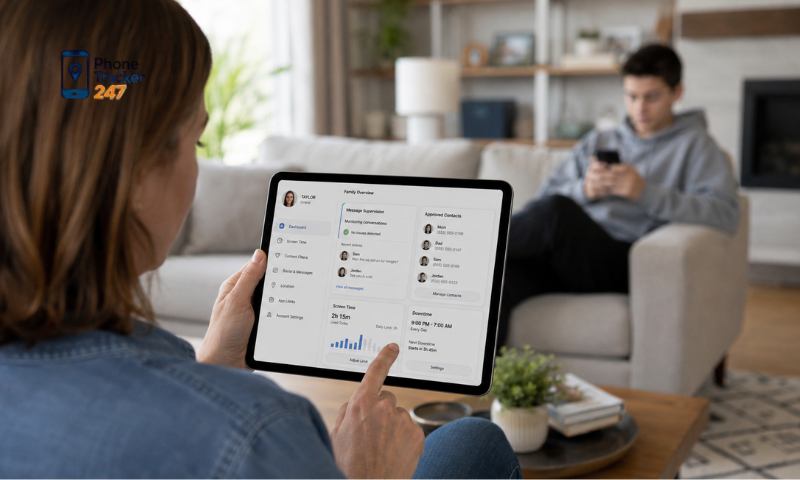
A dedicated parental-control solution can provide additional tools for families that need more structured supervision. PhoneTracker247 can be used as part of a broader family safety approach when parents have the proper authorization to monitor the device.
Parents may use monitoring tools to:
- Identify potential safety concerns.
- Support younger children who are new to messaging.
- Respond to suspicious communication.
- Reinforce agreed family rules.
- Help children recognize unsafe online behavior.
- Check for repeated contact from unknown people.
- Respond when there are signs of cyberbullying or harassment.
Before using any monitoring feature, parents should explain what is being supervised and why. This makes the process more transparent and helps children understand that the purpose is protection, not unlimited access to their private life.
Focus on Warning Signs Rather Than Every Message
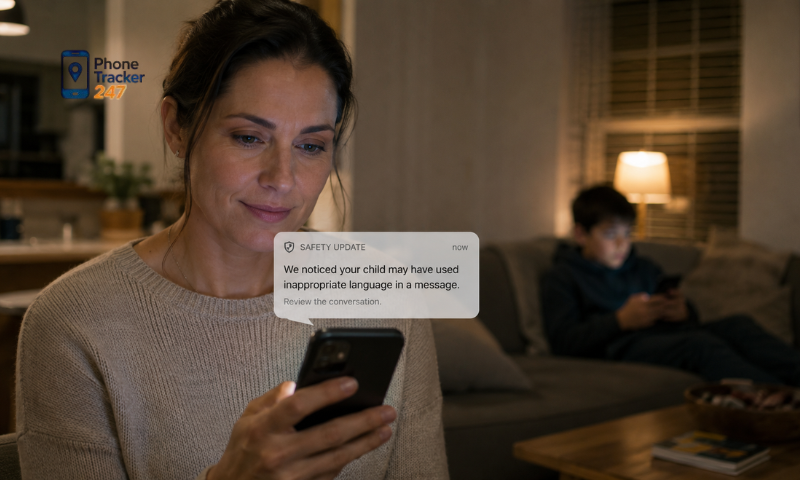
Parents do not need to read every conversation to keep their children safe. A better approach is to pay attention to changes in behavior or other warning signs that may suggest a problem.
Possible warning signs include:
- Suddenly hiding the phone when a parent enters the room.
- Becoming upset after receiving messages.
- Receiving frequent messages from unknown contacts.
- Avoiding school or social activities.
- Deleting conversations unusually often.
- Receiving repeated calls or messages late at night.
- Becoming unusually anxious about notifications.
These signs do not always mean something is wrong, but they may be a reason to start a calm conversation. Monitoring should be based on a genuine concern rather than curiosity.
See more: How to Track My Daughters Phone for Safety and Peace of Mind
Talk About Messaging Risks
Technology alone cannot protect children from every online risk. Parents should also teach them how to recognize suspicious, manipulative, or inappropriate communication.
Discuss issues such as:
- Messages from unknown people.
- Requests for personal information.
- Suspicious links or scams.
- Online bullying or harassment.
- Pressure to send private photos.
- Threatening or uncomfortable conversations.
- Requests to keep conversations secret from parents.
- Attempts to move conversations to hidden or unfamiliar apps.
Children should also know that they can block a contact, report inappropriate behavior, and ask a trusted adult for help when a conversation makes them uncomfortable.
When children know they can speak openly with their parents, they may be more likely to report a concerning message before the situation becomes more serious.
Create Clear Family Messaging Rules
Clear rules can make message monitoring easier for both parents and children. Instead of changing expectations whenever a problem occurs, families can agree on basic guidelines in advance.
Rules may include:
- Do not reply to unknown contacts.
- Never share passwords or verification codes.
- Do not send home addresses, school details, or other sensitive information.
- Tell a parent about threatening or inappropriate messages.
- Avoid clicking links from unfamiliar senders.
- Ask for help if someone pressures you to keep a conversation secret.
- Block or report contacts that repeatedly make you uncomfortable.
Parents using PhoneTracker247 can combine these rules with appropriate parental controls to create a more consistent approach to digital safety.
Review Monitoring as Your Child Gets Older
The level of supervision should change as children become more mature. A young child may need stricter controls, while a responsible teenager may need more privacy and independence.
Parents can gradually reduce monitoring by:
- Reviewing parental-control settings regularly.
- Giving older children more control over their conversations.
- Limiting checks to situations involving a specific safety concern.
- Discussing new messaging apps before they are used.
- Updating family rules as the child becomes more responsible.
The purpose of parental monitoring should be to teach safe digital habits over time. PhoneTracker247 can support this process, but open communication and trust should remain at the center of the parent-child relationship.
See more: How Do I Track My Sons Phone Legally and Responsibly?
When Should Parents Consider Monitoring Text Messages?
Parents do not necessarily need to monitor messages continuously. Closer supervision may be more appropriate when there is a specific safety concern or when a younger child is still learning how to communicate responsibly online.
Parents may consider additional monitoring when:
- A young child receives messages from strangers.
- There are signs of cyberbullying or harassment.
- The child suddenly becomes distressed after using the phone.
- Someone repeatedly asks the child for personal information.
- The child receives threatening or sexually inappropriate messages.
- There is a credible concern about scams or manipulation.
- A younger child is using messaging apps for the first time.
Parents should respond proportionately to the situation. A specific concern may justify temporary closer supervision, but it does not automatically mean every conversation needs to be monitored indefinitely.
With PhoneTracker247, parents should first identify the safety problem they are trying to solve and use only the level of monitoring necessary for that purpose.
How to Balance Safety and Your Child’s Privacy
Protecting a child and respecting privacy are not mutually exclusive. The right balance depends on the child’s age, maturity, online habits, and the level of risk involved.
Parents can create a healthier balance by:
- Explaining what is monitored: Tell your child what parental controls are active and why they are being used.
- Setting clear boundaries: Decide which situations justify checking messages.
- Avoiding constant surveillance: Do not read every conversation simply because you have access.
- Increasing privacy with age: Give children greater independence as they demonstrate responsible behavior.
- Talking before checking: When possible, ask about concerning behavior before accessing private conversations.
- Reviewing family rules regularly: Adjust supervision as the child grows and circumstances change.
For example, younger children may need stronger communication controls, while older teenagers may benefit more from clear safety rules and occasional supervision.
PhoneTracker247 should complement communication between parents and children rather than replace it. Technology works best when children understand that parental controls exist to protect them from genuine risks.
Conclusion
Parental control text messages tools can help parents respond to risks such as unwanted contact, cyberbullying, scams, or inappropriate communication. However, responsible monitoring means focusing on genuine safety concerns rather than reading every private conversation. With PhoneTracker247, parents can build a more structured approach to digital safety while maintaining appropriate boundaries. Use monitoring features only on devices you are authorized to supervise, explain the purpose to your child, and adjust the level of control as they become more responsible.
Choose PhoneTracker247 to support safer family phone use while keeping communication, trust, and responsible parental supervision at the center.
Frequently Asked Questions (FAQs)
1. What is parental control for text messages?
It helps parents monitor SMS activity to improve their child’s online safety.
2. Can parents see their child’s text messages?
Yes, on supported devices and with proper authorization.
3. Does parental control work on Android?
Yes. Android supports more SMS monitoring features than most other platforms.
4. Can it monitor deleted text messages?
Some apps may recover recent deleted messages, depending on device permissions.
5. Does it monitor messaging apps like WhatsApp?
Some parental control apps support selected messaging platforms.
6. Can parents receive keyword alerts?
Yes. Many apps notify parents when predefined keywords are detected.
7. Is parental text monitoring legal?
Yes, when used on a child’s device in accordance with applicable laws.
8. Will my child know the app is installed?
It depends on the app and device settings. Transparent use is generally recommended.
9. Can parental controls help prevent cyberbullying?
Yes. They can identify suspicious messages and potential online risks early.
10. Who should use parental control for text messages?
Parents who want to protect children from online threats while encouraging responsible digital habits.
![Teens and Tech: Two-Thirds of Parents Think Their Teen Is Addicted to Their Phone [Study]](https://phonetracker247.com/wp-content/uploads/2026/04/teens-and-tech-two-thirds-of-parents-think-their-teen-is-addicted-to-their-phone-study-768x461.webp)