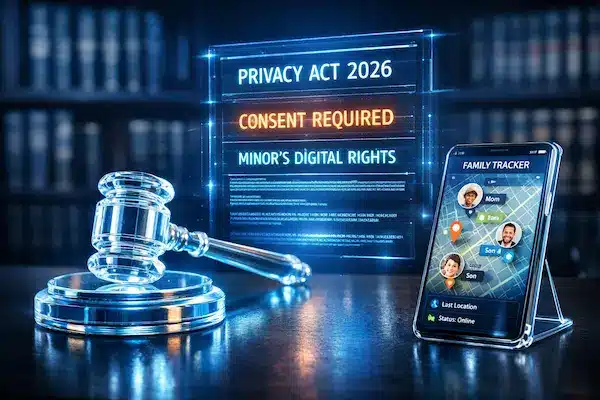
In 2026, Parental Monitoring Laws have become one of the most discussed legal topics among families and tech users worldwide. As smartphones, location tracking, and AI-based monitoring grow more common, parents are facing a difficult balance between protecting their child’s safety and respecting digital privacy rights. Governments in the U.S., Europe, and Asia have tightened child-data regulations, introducing new age-of-consent rules and heavier penalties for misuse. This guide explains what every parent should know before using a phone tracker app, how to stay compliant, what counts as “legal monitoring,” and why 2026 marks a turning point in the future of digital parenting. Whether you live in California, Singapore, or UAE, understanding these laws is now essential for safe, responsible family technology use.
Parental monitoring is most likely to be legal when you follow a consent-first approach:
You monitor a device you own/manage (or have clear authority to manage).
You use transparent tools (no stealth/hidden monitoring).
You collect the minimum data needed for safety.
You avoid high-risk features (call recording, ambient audio) unless you’re sure consent rules are met.
You respect custody/school/employer policies where applicable.
Why this matters more in 2026
In 2026, parents turn to monitoring tools for one reason: real safety problems move fast—scams, sextortion, bullying, unsafe meetups, and harmful content can escalate in hours, not weeks. Basic features like location check-ins, safe-zone alerts, and screen-time controls can genuinely help when they’re used as guardrails, not as “spying.”
At the same time, the legal and platform landscape has tightened. Children’s data is treated as high-sensitivity, and the biggest risk isn’t “family safety” features—it’s crossing the line into covert surveillance. Hidden tracking, message interception, and any kind of call or ambient audio recording can trigger stricter consent or interception rules, especially when other people’s communications are captured.
That’s why the safest standard is consent-first monitoring: use transparent tools, monitor only devices you own or are authorized to manage, collect the minimum data needed for safety, and avoid high-risk recording/interception features unless you’ve confirmed the rules where you live.
Most families do best with a family safety app approach—clear rules, check-ins, and emergency alerts—not covert surveillance.

Why this matters more in 2026
What parental monitoring means today
“Parental monitoring” isn’t one single thing—it’s a spectrum of features, and the legal/ethical risk changes a lot depending on what you track and how transparent you are.
The low-risk zone: safety + supervision
These are the most common, widely accepted use cases—especially when the child knows they’re enabled:
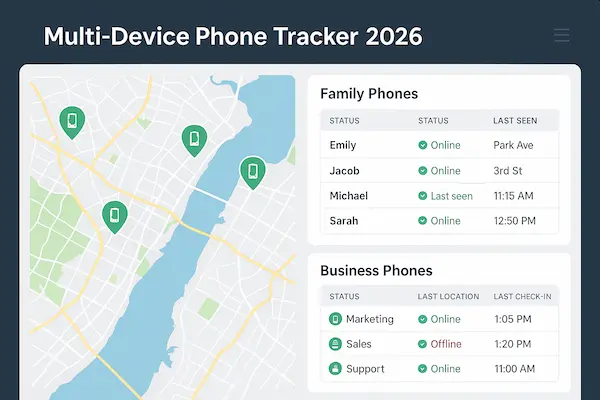
Location sharing & check-ins: “I’m home,” “I’m at practice,” live location during travel.
Safe zones (geofencing): alerts when a child arrives/leaves school or home.
Lost-phone recovery: find a misplaced device, play sound, mark as lost.
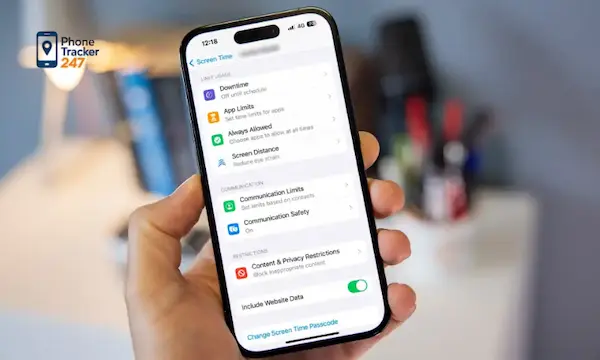
Screen-time limits: bedtime schedules, app time caps, downtime, focus hours.
Content restrictions (age-appropriate): blocking explicit content, limiting risky apps by age.
These features are typically framed as preventive safety and are easier to justify as “necessary and proportionate.”
The medium-risk zone: activity insights
These can still be legitimate, but they require stronger boundaries and clear communication:
Viewing installed apps and basic usage patterns.
Web filtering and browsing protections (especially for younger kids).
Alerts for risky keywords or unsafe content (depending on jurisdiction/app policy).
Risk rises when monitoring becomes overly intrusive or stored indefinitely.
The high-risk zone: interception and covert surveillance
This is where parents and apps get into trouble most often—legally, and with platform enforcement:
Call recording or ambient audio (“listen in” / microphone access).
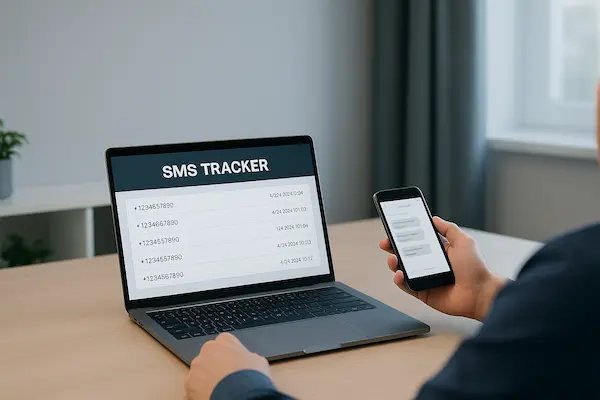
Reading private messages or capturing chats from social apps.
Keylogging, hidden screenshots, or “stealth mode” installs.
Anything marketed as undetectable or “spy” functionality.
These features can trigger stricter rules around consent, interception, and unauthorized access, and they’re also the most likely to be flagged as spyware behavior.
The 3 legal layers parents must understand
There isn’t one global “parental monitoring law.” What matters in practice is how your setup interacts with three different legal layers—and each one can apply differently depending on your country (and sometimes your state/province).
Layer 1: Children’s privacy and data-protection rules
Many privacy frameworks focus on organizations (apps, platforms, schools, companies) that process children’s personal data—not parents acting privately at home. That’s why you’ll often see stronger rules for the app provider than for the parent.
What this means for parents:
Choose tools that are transparent about what data is collected, why, and how long it’s kept.
Avoid apps that over-collect data “just because they can.”
Expect stricter protections for minors, especially around profiling and sensitive data.
Layer 2: Recording and interception laws
This is where families accidentally cross the line. Even if you’re a parent, laws about:
call recording
listening in through the microphone
capturing other people’s communications
can require one-party or all-party consent depending on where people are located. If your child is talking to another person (teacher, friend, coach), recording may involve third-party rights, not just your family.
Practical takeaway:
Treat any recording or “interception” feature as high risk.
If you can’t confirm consent rules for all locations involved, don’t use it.
Layer 3: Authority, access, custody, and device ownership
Even when monitoring is “for a child,” problems start when:
you monitor a device you don’t own or aren’t authorized to manage
you bypass passwords or access accounts without permission
there’s shared custody and the other parent disputes the setup
the device is issued by a school or another organization with its own policies
Practical takeaway:
The safest setup is: you own/manage the device + you’re transparent + you use consent-based tools.
In shared-custody situations, follow written agreements and local court orders first.
Table 1: Legal vs Illegal Parental Monitoring
| Criteria | Legal Monitoring (Compliant with Parental Monitoring Laws) | Illegal Monitoring (Privacy Violation) |
|---|---|---|
| Purpose | Child safety, education, or device recovery | Control, spying, or punishment |
| Transparency | Child informed or consented | Hidden or deceptive tracking |
| Data Type | Minimal data: location, usage time | Full message or media capture |
| Consent | Documented or verified digitally | None or forged consent |
| Security | Encrypted, stored locally | Unsecured, third-party data sharing |
| Duration | Limited retention, regular deletion | Continuous, indefinite tracking |
| Legal Outcome | Fully compliant with Parental Monitoring Laws | Subject to fines, civil penalties, or lawsuits |
Legal Boundaries for Using a Phone Tracker App
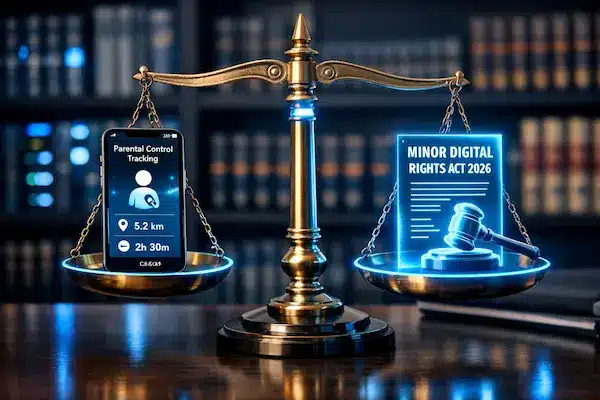
In 2026, using a phone tracker app is not just a parenting choice, it’s a legal responsibility. Under modern Parental Monitoring Laws, parents can monitor a child’s device only when it serves a clear protective purpose, and data collection complies with privacy regulations. Unauthorized or secret tracking is now treated as a privacy violation in many countries.
1. Consent and Age Requirements
Most regions define a “digital age of consent”, the age at which a child must agree to data tracking.
In the U.S., the updated COPPA 2.0 enforces parental consent for users under 13.
The EU’s GDPR-Kids extends this protection to 16.
Across Asia, nations like Singapore, India, and Vietnam now require both parental approval and child awareness before any phone tracking occurs.
These regulations ensure that monitoring is cooperative, not coercive.
2. Data Privacy and Compliance
Every app handling minors’ data must follow strong encryption, transparency, and deletion protocols. Laws such as GDPR, PDPA, and India’s PDP Act mandate that parental tracking apps store data securely and disclose how it’s used. Failing to do so can lead to fines reaching millions of dollars or license suspensions.
Responsible parents are advised to use verified apps that clearly display compliance certifications and privacy guarantees.
3. Cross-Border and Legal Risks
With global mobility, families often use trackers across countries, yet Parental Monitoring Laws differ widely. What’s legal in one nation may violate privacy in another. Parents traveling or living abroad must check local data-transfer rules to avoid breaching international privacy frameworks.
In 2026, ignorance is no defense. Legal awareness is part of ethical parenting.

Parental rights vs. child privacy: where the real line is
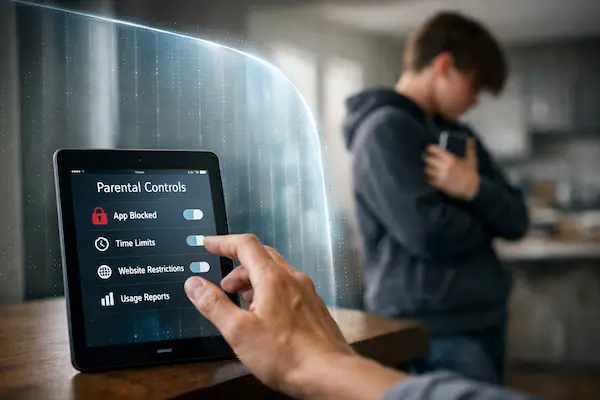
Modern Parental Monitoring Laws are built on one central tension: how to protect children without violating their privacy. In 2026, this debate has reached classrooms, courts, and family homes worldwide. Parents have both the duty to safeguard and the obligation to respect boundaries, especially as minors gain stronger digital rights under new international privacy acts.
1. Legal vs. Ethical Monitoring
Legally, parents can supervise a child’s phone use for safety or education purposes. Ethically, however, they must avoid constant or hidden surveillance. Parental Monitoring Laws now encourage “reasonable monitoring,” meaning data collection must be transparent, limited, and directly linked to protection. Tracking without disclosure can be considered harassment or emotional intrusion in many jurisdictions.
2. Parental Rights in Custody and Education
Family and education laws intersect with digital rights. Courts increasingly view parental tracking during custody disputes as potential overreach, especially if one parent uses it to control the other. Schools, too, are adapting to privacy-first rules, requiring explicit consent before sharing a student’s device location or usage data. The goal is to ensure parental guidance supports development, not control.
3. The Digital Age of Consent
By 2026, many regions have introduced a “digital age of consent”, granting teenagers limited autonomy over their personal data. For example, European teens aged 16 can refuse monitoring apps if not essential for safety. This shift redefines parenting from authority to partnership, where trust becomes the strongest layer of digital protection.
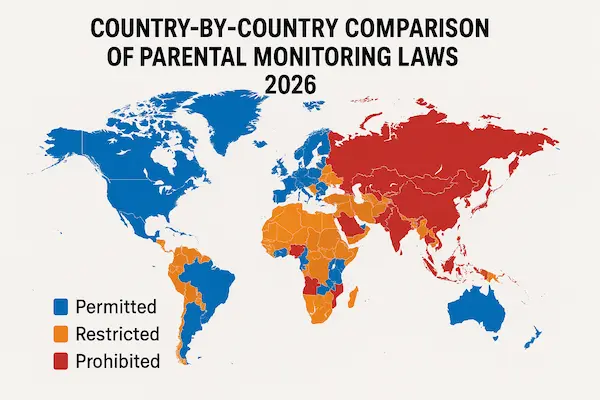
Country-by-Country Comparison of Parental Monitoring Laws 2026
In 2026, Parental Monitoring Laws vary widely between regions, reflecting cultural attitudes toward privacy and family responsibility. While most countries agree on the need to protect minors online, they differ in how much control parents are legally allowed to exercise. Understanding these distinctions is essential before using any phone tracker app internationally.
Global Overview
The United States continues to lead with the COPPA 2.0 Act, requiring verified parental consent for users under 13. The European Union’s GDPR-Kids Regulation raises that age to 16 and imposes some of the world’s highest penalties for violations. In Asia, nations like Singapore, India, and Vietnam are modernizing their child data protection laws to include parental monitoring clauses that emphasize consent, encryption, and data deletion transparency.
United States
Children’s privacy rules mostly target websites/apps/services that collect data from kids (especially under 13).
Parent risk usually shows up around recording/interception (call recording, “listen in” audio), which can depend on state rules.
European Union
Children’s data is treated as high sensitivity.
The consent age for online services can vary by country (often in the early-to-mid teens).
Providers must be careful with profiling/ads to minors; parents should stick to safety basics and avoid covert features.
Singapore / Hong Kong / other PDPA-style environments
Strong expectations for purpose limitation, security, retention, and cross-border transfers (often aimed at organizations).
Parents should choose apps that are very clear about where data is stored and how deletion works.
India
Stronger focus on children’s data handling by services; high sensitivity around tracking/profiling minors.
Parents should avoid apps that do behavioural profiling, “stealth,” or excessive collection.
Table 2: Parental Monitoring Laws 2026
| Country / Region | Minimum Child Age for Consent | Consent Required | Key Regulation / Act | Penalty for Violation |
|---|---|---|---|---|
| United States | Under 13 | Yes, from parent | COPPA 2.0 | Up to $50,000 per case |
| European Union | Under 16 | Yes, child + parent | GDPR-Kids / DSA | Up to 4% global revenue |
| Singapore | Under 18 | Yes | PDPA (2025 Revision) | Up to SGD 1,000,000 |
| India | Under 18 | Yes | PDP Act 2026 | Up to ₹15 crore |
| Vietnam | Under 16 | Yes | Cybersecurity Law | Fine up to 50 million VND |
| Japan | Under 18 | Yes | APPI (Child Privacy Addendum) | Business suspension possible |
Real-World Cases and Legal Lessons
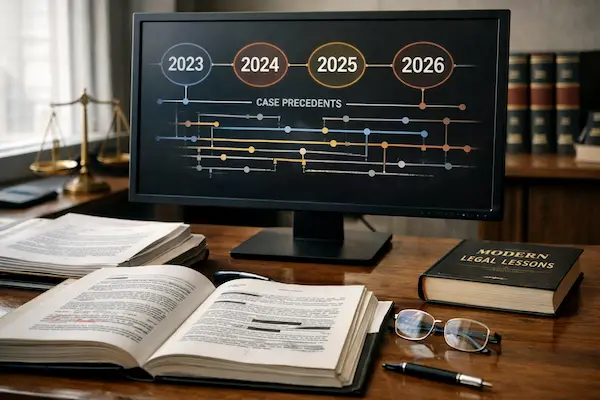
The rapid evolution of Parental Monitoring Laws hasn’t just changed policy — it has reshaped real families’ lives. Between 2023 and 2026, several headline cases around the world defined how far parents can go when tracking their children’s phones. Each one offers an important lesson about privacy, consent, and accountability in the digital-parenting era.
Case 1: U.S. Family Court and Unauthorized Tracking
A parent in California installed a hidden GPS tracker on a teenager’s phone without consent. When the child discovered it, the court ruled the act a privacy violation under COPPA 2.0, emphasizing that protection cannot come at the cost of autonomy. The ruling clarified that parental monitoring must be disclosed and justified by safety reasons.
Case 2: European GDPR Fine for Excessive Monitoring
In Germany, regulators fined a family €25,000 after an app stored chat data without encryption. The decision reinforced that Parental Monitoring Laws require transparent data processing and proper security measures. Even family use is subject to the same privacy standards as corporate apps.
Case 3: Asia-Pacific Example: PDPA Breach in Singapore
A father’s use of a non-compliant tracking tool led to an investigation under Singapore’s updated PDPA 2025. Authorities concluded that uploading a child’s location to foreign servers without consent broke cross-border data-transfer rules. The case prompted local schools to publish parental-tech guidelines for safer monitoring.
Legal and Practical Lessons
Always inform and obtain consent before installing monitoring apps.
Use tools certified under Parental Monitoring Law standards like COPPA, GDPR, or PDPA.
Ensure data encryption and local storage to avoid international privacy breaches.
Keep monitoring proportional — safety-driven, not control-driven.
How to Stay Compliant When Using a Phone Tracker App
By 2026, compliance is no longer optional — it’s the foundation of responsible digital parenting. New Parental Monitoring Laws require parents to treat tracking apps the same way companies handle customer data: with transparency, consent, and security. Staying compliant protects not only your child’s privacy but also your own legal safety.
1. Obtain Clear Consent
Before installing any tracking app, always explain the purpose to your child. Most laws — from COPPA 2.0 in the U.S. to GDPR-Kids and PDPA 2025 in Asia — demand informed consent when minors’ data is collected. Parents should keep a written or digital record confirming this permission.
2. Use Verified and Compliant Apps
Choose apps that explicitly state compliance with child-data regulations. Look for labels such as COPPA-compliant, GDPR-certified, or PDPA-approved. Legitimate platforms will provide encryption standards (like AES-256), clear privacy policies, and transparent data retention timelines. Avoid tools that store information on foreign or unverified servers.
3. Secure Data and Limit Access
Under global Parental Monitoring Laws, parents are considered data controllers — meaning they’re accountable for how the collected data is used. Always enable two-factor authentication, restrict access to trusted devices, and regularly delete unused data. This ensures compliance and minimizes the risk of leaks or misuse.
4. Follow Updates and Local Rules
Regulations evolve quickly. What’s legal in 2025 may not be compliant in 2027. Subscribe to official updates from government data protection agencies or legal-tech sources. Responsible parents stay informed and adjust monitoring habits as laws change.
Future Trends in Parental Monitoring Laws (2026 – 2030)
The next five years will redefine how parents, children, and technology interact. Parental Monitoring Laws are evolving beyond simple rules — they’re becoming dynamic systems that adapt to AI, biometric data, and global digital ethics. For families and developers alike, understanding these upcoming changes will be critical for staying compliant and trustworthy.
1. AI-Based Monitoring and Ethics
Artificial intelligence is transforming how phone tracker apps interpret behavior. Systems can now detect emotional patterns, location routines, and potential risks automatically. Yet lawmakers are cautious. Between 2026 and 2030, new privacy directives in the EU, U.S., and Asia will likely restrict AI-driven profiling of minors unless there’s explicit consent and human oversight. Parents will be required to use AI features transparently — explaining what data is analyzed and why.
2. Biometric and Facial-Data Protection
Emerging parental-control tools now use fingerprint or facial recognition for log-ins and child verification. By 2030, these identifiers will fall under stricter protection similar to medical records. Parental Monitoring Laws are expected to limit biometric storage and demand local encryption instead of cloud uploads. Parents who choose such tools must confirm the vendor’s compliance status and avoid unverified biometric tracking.
3. Toward Global Standardization
A major shift is coming: international coordination. Organizations like the OECD, UNICEF, and ASEAN Digital Council are working toward a unified child-data framework. The goal is to harmonize consent ages, simplify cross-border data transfers, and establish universal standards for parental monitoring apps. By 2030, a single “global compliance code” may help parents understand their rights anywhere in the world.
FAQs – Parental Monitoring Laws 2026
1) Are parental monitoring laws the same everywhere?
No—rules vary by country (and sometimes state).
2) Can I track my child without telling them?
Usually risky—transparent, consent-first is safest.
3) What’s the digital consent age in 2026?
Depends on the region, often around 13–16 for online services.
4) What makes a tracker app compliant?
Clear policy, consent flow, strong security, minimal data, easy deletion.
5) Are free tracking apps legal?
Some are—but many over-collect data; choose reputable providers.
6) What happens if tracking is illegal?
You may face complaints, fines, or legal action—especially for covert access/recording.
7) Do rules cover AI and biometrics?
Often yes—AI profiling/biometrics for minors is high-risk.
8) How do parents stay compliant long-term?
Document consent, review settings, limit retention, update rules.
9) Which features are highest risk?
Call/audio recording, stealth mode, keylogging, message interception.
10) What about shared custody?
Follow custody terms and get clear authority before monitoring.
Conclusion – Why Parental Monitoring Laws Matter in 2026
In 2026, Parental Monitoring Laws are no longer just legal guidelines — they are the moral compass of digital parenting. Across continents, governments are reshaping how families use technology, balancing protection with privacy, and ensuring that children grow up safe yet respected in the connected world.
The message is clear: monitoring must be transparent, consensual, and purposeful. Parents who adapt to these principles not only protect their children from online threats but also build trust — the foundation of every healthy digital relationship.
Technology will keep advancing, but so will regulations. Staying informed, choosing compliant tools, and respecting your child’s privacy are the smartest steps any parent can take in 2026 and beyond.
Quick Summary: Parental Monitoring Laws 2026
| Aspect | Global 2026 Standard | Practical Tip for Parents |
|---|---|---|
| Digital Age of Consent | 13–16 years | Always explain and confirm consent before tracking |
| Legal Purpose | Safety, education, or device protection | Avoid covert or excessive monitoring |
| Data Protection | Encryption + transparent storage | Use verified, privacy-certified apps |
| Cross-Border Rules | Consent + legal transfer mechanisms | Keep data on trusted or local servers |
| AI & Biometrics | Human oversight required | Disable unnecessary AI profiling features |
| Penalties | Up to millions in fines | Document consent + privacy compliance |
| Ethical Principle | Safety with respect | Communicate openly with your child |
Protect Your Family the Right Way
Digital parenting in 2026 isn’t about control — it’s about connection and compliance. Before installing any app, make sure it respects your country’s Parental Monitoring Laws, offers clear consent options, and uses secure, encrypted systems.
Choose tools built for safety and legality — platforms that empower parents while preserving a child’s right to privacy.
If you use a third-party family safety platform like PhoneTracker247, keep it consent-first: use it for check-ins, recovery, and safety alerts—avoid stealth setups and high-risk recording features unless you’ve confirmed local consent rules.