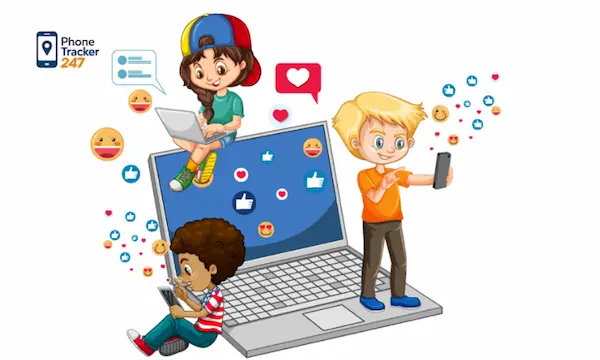

Digital citizenship facts matter more today than ever because children do not simply use the internet anymore. They live part of their daily lives inside it. School, friendships, entertainment, shopping, and identity now develop across screens as naturally as they do offline. That shift creates a new responsibility.
Families and educators must help young people learn how to act safely, think critically, protect privacy, and treat others with respect in digital spaces. Good digital citizenship is not about fear. It is about building judgment, habits, and confidence that help people use technology well. Let’s find out more in this article with PhoneTracker247.
Contents
- 1 What Is Digital Citizenship?
- 2 Why Digital Citizenship Matters More Than Ever
- 3 Essential Digital Citizenship Facts Everyone Should Know
- 4 Core Elements of Good Digital Citizenship
- 5 How Parents Can Teach Digital Citizenship at Home
- 6 How Schools Can Reinforce Digital Citizenship
- 7 Common Myths About Digital Citizenship
- 8 Final Thoughts on Digital Citizenship Facts
- 9 FAQs – Digital Citizenship Facts
What Is Digital Citizenship?
Digital citizenship describes how people use technology in responsible, safe, ethical, and informed ways. It includes behavior on social media, messaging apps, gaming platforms, school tools, websites, and shared devices.
It is more than screen time rules
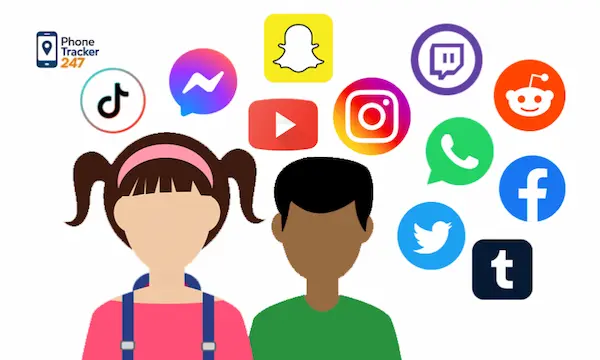
Many people reduce digital citizenship to limits on device use, but that view is too narrow. Time online matters, yet behavior matters more. A child can spend one hour online and still face scams, cyberbullying, or privacy risks. Another child may spend more time online while using strong judgment, critical thinking, and respectful communication. Digital citizenship focuses on the quality of digital behavior, not only the quantity of digital use.
It combines safety, ethics, and participation
Strong digital citizenship blends three areas that should work together:
- Safety
This includes password protection, privacy settings, scam awareness, and safe browsing habits. Users need to know how to avoid risky links, fake accounts, and oversharing. - Ethics
This covers honesty, respect, consent, and responsible communication. It teaches people not to harass others, spread harmful content, or misuse private information. - Participation
This means using digital tools in constructive ways. Good digital citizens learn, collaborate, create, and contribute positively instead of only consuming content.
It affects children and adults alike
Digital citizenship is not only a school topic. Parents, teachers, employees, and business owners also shape the online environment through their own behavior. Children often copy what adults normalize. When adults post responsibly, verify information, and respect privacy, they teach digital citizenship in practice.
Why Digital Citizenship Matters More Than Ever
The internet is no longer separate from daily life. That is why digital citizenship facts should be part of basic modern education at home and at school.

Online actions have real-world consequences
Young users sometimes believe online behavior disappears after a few seconds, but screenshots, reposts, and data collection can make actions lasting. A cruel comment, impulsive post, or overshared photo can affect relationships, school life, and emotional wellbeing long after it was posted.
Children face more digital risk earlier
Kids now access connected devices at younger ages, often before they can fully judge risk. They may trust online strangers, click misleading ads, or share personal details without understanding the consequences. Digital citizenship helps close that gap between access and maturity.
Technology skills alone are not enough
A child may know how to install apps, use filters, and switch between platforms quickly. That does not mean they understand digital responsibility. Knowing how to use technology is different from knowing how to use it wisely. Digital citizenship turns technical ability into informed judgment.
Essential Digital Citizenship Facts Everyone Should Know
These core digital citizenship facts can help parents, students, and teachers understand what responsible online behavior really requires.

Fact 1: Privacy is one of the biggest online issues
Many apps encourage people to share location, photos, interests, contacts, and habits. Young users often reveal personal information without realizing how easily it can be collected, sold, copied, or misused.
- Personal data travels fast
Names, school details, routines, and live locations can spread far beyond the original audience. Even a harmless-looking post can reveal more than intended. - Privacy settings are not enough on their own
Strong settings help, but they do not replace good judgment. Friends can still screenshot content, and platforms may still collect behavioral data. - Children need clear sharing rules
Families should define what is never shared online, such as home address, passwords, school schedules, and private family matters.
See more: Best Family Locator App for Android in 2026: Top 6 Picks
Fact 2: Digital footprints are permanent or hard to erase
A digital footprint includes posts, comments, search history, usernames, uploads, and app activity. Some content can be deleted, but it is often copied, archived, or remembered by others.
- Future opportunities can be affected
Old posts may influence school admissions, job applications, or reputational trust later in life. - Private content is not always private
Messages, disappearing photos, and closed-group conversations can still be saved or forwarded. - Reputation starts early
Teaching children to pause before posting builds a habit that protects them for years.
Fact 3: Not everything online is true
Misinformation spreads quickly because emotional, dramatic, and simplified content often gets more engagement. Children and teens may not yet recognize manipulation techniques, edited clips, or misleading headlines.
- Virality does not equal truth
Popular content is not automatically accurate. Many false claims spread because they are memorable, not credible. - Critical thinking must be taught directly
Young users should learn to ask who posted something, why it was posted, and whether another reliable source confirms it. - Sharing false information can still cause harm
Even when done accidentally, forwarding misleading content can spread panic, stigma, or confusion.
Fact 4: Respect online is as important as respect offline
Digital spaces can make people feel anonymous, rushed, or detached. That often leads to harsher words and lower empathy. Digital citizenship pushes users to remember there is always a real person on the other side.
- Cyberbullying can happen quietly
Harmful behavior may take the form of exclusion, mocking, rumor sharing, impersonation, or constant unwanted messages. - Tone is easy to misread
Short messages, jokes, and sarcasm can escalate conflict faster online than in person. - Kindness is a digital skill
Respectful disagreement, consent before sharing, and thoughtful replies should be taught as practical habits.
Fact 5: Security habits protect both people and devices
Many online problems begin with weak passwords, unknown downloads, phishing links, or unsafe app permissions. Security is a basic part of digital citizenship because careless habits can expose entire families.
- Simple passwords are a major weakness
Reused or predictable passwords make accounts easier to access. - Scams often look normal
Fake giveaways, urgent warnings, and copied login pages are designed to look trustworthy. - Updates matter
Apps and devices should stay current because updates often fix security vulnerabilities.
Core Elements of Good Digital Citizenship
Good digital citizenship becomes easier to teach when broken into practical skills. These are the areas families and schools should reinforce consistently.
Safe online behavior
Children need specific instructions, not vague warnings. Teach them how to recognize suspicious links, avoid unsafe downloads, report uncomfortable interactions, and ask for help without fear of punishment.
Healthy communication
Digital communication should be respectful, clear, and intentional. That includes thinking before posting, avoiding public arguments, and understanding when a private conversation is better than a public reply.

Media literacy
Students should learn how algorithms shape what they see, how content creators influence attention, and how advertising blends into entertainment. Media literacy helps users consume content with awareness instead of passive trust.
Consent and boundaries
Sharing someone else’s photo, private message, or personal detail without permission is a digital boundary issue. Consent must be part of digital citizenship because trust can be damaged quickly online.
How Parents Can Teach Digital Citizenship at Home
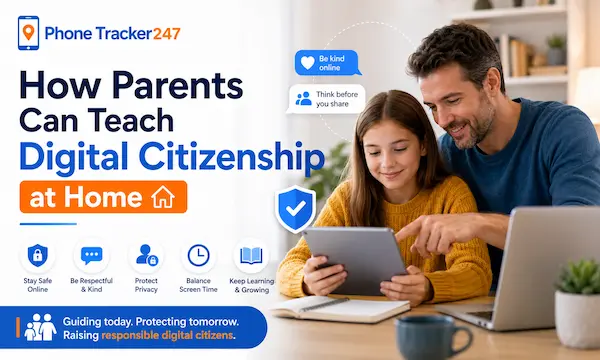
Parents do not need to be tech experts to teach smart online behavior. They need consistency, openness, and practical conversations that connect digital choices with real consequences.
Start with conversation, not surveillance
Children respond better when digital safety is framed as guidance rather than suspicion. Ask what apps they use, what trends they see, and what online situations feel confusing or uncomfortable. That builds trust and makes reporting easier.
Make rules specific and realistic
General warnings like be careful online are too vague to guide behavior. Instead, create clear expectations for privacy, respectful messaging, app downloads, location sharing, and talking to strangers online.
Use tools that support safety and transparency
Monitoring tools can support digital citizenship when they are used ethically, with clear communication and legal consent. PhoneTracker247 positions itself as a privacy-first, consent-based safety platform rather than a spyware product, with a focus on lawful use, device oversight, and family or business protection.
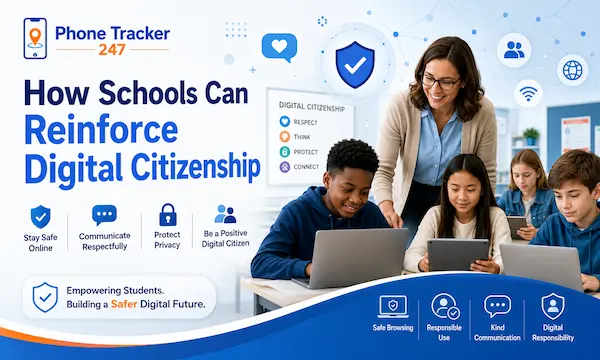
How Schools Can Reinforce Digital Citizenship
Schools play a major role because students use digital tools for research, collaboration, communication, and classroom management every day.
Teach it across subjects
Digital citizenship should not live in one assembly or one annual lesson. It should appear in research projects, media analysis, group work, and online classroom discussions so students see it as part of normal digital life.
Use real examples and scenarios
Students learn better from realistic situations than from abstract warnings. Show how fake messages work, how digital rumors spread, or how an unkind comment can escalate across a class group chat.
Encourage reporting without shame
Students must know they can report scams, bullying, or online mistakes without being humiliated. Fear of punishment often keeps children silent until a problem grows bigger.
Common Myths About Digital Citizenship
Several myths make this topic harder to teach well. Clearing them up helps families focus on what actually works.
- Myth: Tech-savvy kids are automatically safe online
Fast app skills do not equal mature judgment. Children can navigate devices well and still miss emotional, social, or privacy risks. - Myth: Private accounts remove all danger
Privacy settings reduce exposure, but screenshots, fake accounts, and careless sharing still create risk. - Myth: Monitoring alone solves the problem
Tools help, but they cannot replace conversations, boundaries, and critical thinking. - Myth: Digital citizenship is only for children
Adults model digital behavior every day. Children notice how parents and teachers verify information, manage privacy, and speak to others online.
Final Thoughts on Digital Citizenship Facts
The most important digital citizenship facts are simple but powerful. Online behavior has real consequences. Privacy is fragile. Respect matters on every platform. Critical thinking is essential. Security habits protect both devices and people. When families and schools teach these lessons early, children become more confident, thoughtful, and resilient digital users.
Digital citizenship is not about raising fearful kids. It is about raising capable ones. Help children think before they share, question before they trust, and act with respect before they react. That is how safer digital habits become lifelong strengths.
For daily updates, subscribe to PhoneTracker’s blog!
We may also be found on Facebook!
FAQs – Digital Citizenship Facts
1. What is digital citizenship?
It means using technology safely, responsibly, and respectfully.
2. Why does digital citizenship matter?
Online actions can create real-world consequences.
3. Is digital citizenship only about screen time?
No, it also covers privacy, ethics, safety, and respect.
4. What is a digital footprint?
It is the record of posts, searches, comments, and online activity.
5. Why is online privacy important?
Personal data can be copied, shared, or misused.
6. How can students spot misinformation?
They should check sources before trusting or sharing content.
7. Why does online respect matter?
Real people are affected by digital words and actions.
8. What security habits should kids learn?
Use strong passwords, updates, and safe browsing habits.
9. How can parents teach digital citizenship?
Use clear rules, open talks, and transparent safety tools.
10. How can schools support digital citizenship?
Teach it through real examples, projects, and reporting habits.