
Managing calls across two phones, a work number and a few apps can get confusing fast. This guide shows you how to track your own call history in a way that keeps your data organised, private and easy to search across devices. We will start with a quick TLDR, then move step by step through devices, cloud accounts, carrier records and safe tools so you always know where your call information lives.
Contents
- 1 1. How To Track Your Own Call History
- 2 2. Key Questions And Definitions Before You Track Your Own Call History
- 3 3. Where Your Call History Actually Lives Before You Track Your Own Call History
- 4 4. Track Your Own Call History On A Single Device First
- 5 5. How To Track Your Own Call History Across Multiple Devices In Real Time
- 6 6. Using Backups, Exports And Carrier Records Over Time
- 7 7. Third-Party Apps And Analytics Tools
- 8 8. Troubleshooting, Recovery And Privacy
- 9 9. Security, Legal And Ethical Checklist For Tracking Your Own Call History
- 10 FAQs About How To Track Your Own Call History
- 11 Conclusion And Quick Summary – Building A Safe Way To Track Your Own Call History
1. How To Track Your Own Call History
Most people do not need a complex system, they just need something that works every day. This section gives you a simple roadmap to organise calls across phones, apps and numbers without drowning in settings or extra tools.
1. Core steps to track your own call history
- Check the call log on each phone and app you actually use, and remove test devices that should not hold your data.
- Pick one primary account for each ecosystem, for example one Apple ID and one Google account, and stop sharing those accounts with other people.
- Turn on cloud sync for calls only on devices that are truly yours, so you can keep everything consistent across your main phones and laptop.
- Activate self service access to your carrier or carriers, so billing level records are available when a device is lost, wiped or replaced.
- Decide how long you want to keep your history and set a simple backup routine, for example a monthly export or a scheduled full device backup.
- Write down a short checklist you follow whenever you buy a new phone or SIM, so your setup does not break every time you change hardware.
2. Who this multi device call history guide is for
This guide is written for people who live on the phone for work and life, not just for tech hobbyists. It is for sales reps, founders, freelancers, support leads and anyone who uses more than one device or number and still needs one clear picture of their own activity.
If you juggle a personal phone, a work phone and a softphone on your laptop, or you often upgrade devices, these steps will be enough to track your own call history day to day without turning your workflow into a full time IT project.

2. Key Questions And Definitions Before You Track Your Own Call History
Before you change settings or install new apps, you need a clear picture of what you are actually trying to do. Many problems do not come from technology but from confusion about accounts, ownership and consent. This section sets the ground rules so when you track your own call history later, you know exactly which data is yours and which is not.
1. What does it really mean to track your own call history
In this guide, “track your own call history” simply means seeing, storing and sometimes analysing the list of calls you make and receive on devices and accounts that belong to you. It covers missed calls, incoming calls and outgoing calls, along with time, number and duration.
It does not automatically include recording audio, spying on someone else’s phone or trying to recover calls from accounts that you do not control. If any idea starts to look like secret monitoring of another person, it is no longer a plan to track your own call history, it is a privacy and legal risk.
2. Devices, accounts and identities
To keep your setup clean, think in three layers:
- Devices: phones, tablets, laptops, desk phones, softphones
- Numbers and SIMs: the actual phone numbers used for calls
- Accounts and IDs: Apple ID, Google Account, carrier login, VoIP login
Most people get into trouble when several people share one Apple ID, Google account or carrier login. The result is a mixed call log that does not clearly belong to anyone. If you want a reliable view when you track your own call history, each real person should ideally have their own identity and credentials, even if some devices are shared.
3. Legal and ethical boundaries you cannot ignore
There is a simple rule: only track what you own or what you have clear permission to manage. That means your personal devices, your own accounts and, in a work context, phones that are covered by a written company policy.
It is not acceptable to secretly pull call history from a partner, child, colleague or client without informed consent. Even if a trick or tool makes this technically possible, it is usually the opposite of what a responsible person should do and can breach both law and trust.
4. Key definitions when you track your own call history
Before going further, it helps to lock in a few short definitions:
- Call log / call history: the list of calls on a device or service, including direction, number, time and duration.
- Single device: one phone or endpoint where all your calls happen.
- Multi device setup: two or more phones or apps that all handle your calls.
- Personal use: calls that relate to your own life, friends and family.
- Business use: calls made as part of your job, usually subject to workplace policies.
Once these basics are clear, every later step to track your own call history becomes much easier to design and explain.

3. Where Your Call History Actually Lives Before You Track Your Own Call History
Before you can track your own call history properly, you need to know where that data is stored. The same call can appear on your phone, in the cloud, at your carrier and sometimes in a business system, each with different limits and retention rules.
1. On device call logs on Android, iPhone and desk phones
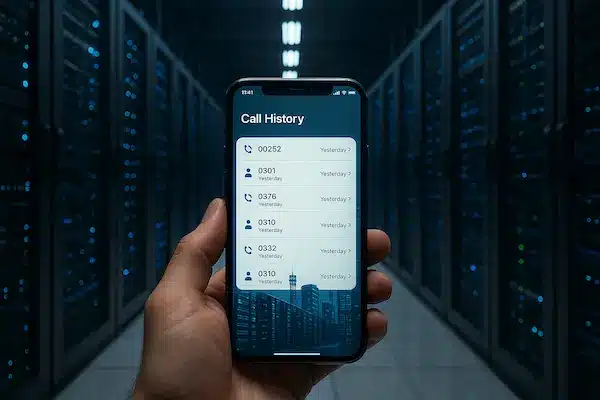
Every phone keeps a local list of recent calls with time, number and duration. It is fast and convenient, but space is limited, old entries are pruned and a reset or lost phone can wipe everything. Local logs are great for daily use, not for long term history.
2. Cloud and account level history
When you sign in with an Apple ID, Google account or VoIP login, some call activity can sync across devices. This is what lets the same recent calls appear on your iPhone, iPad and Mac, or in both a mobile and desktop VoIP app. It is powerful, but if accounts are shared between people, logs get mixed and it becomes hard to clearly track your own call history.
3. Carrier and billing records
Carriers keep their own call records for billing and compliance. You may see a simplified version in a self service app or on your invoice. These records are useful as a fallback when devices fail, but they update more slowly and do not show contact names or app specific context.
Table 1 – Where Your Call History Lives By Platform And Service
| Layer | Examples | What you usually see | Pros | Cons |
|---|---|---|---|---|
| Device call log | Android Phone, iPhone Recents | Recent calls on that device only | Instant, offline, easy to view | Limited entries, lost on reset or lost phone |
| Cloud account | iCloud, Google Account, VoIP app | Synced history across signed in devices | Best for multi device setups | Depends on settings, sync and security |
| Carrier portal | Telco website, self care app | Call records tied to SIM and number | Longer retention, billing accurate | Slower updates, less detail, needs login |
| Business PBX / CRM | Cloud PBX, call center, CRM | History by extension or user | Reporting, analytics, team visibility | Usually only available in business context |
4. What this means if you want to track your own call history
- Always check which layer you are looking at before trusting any call list.
- Use device logs for quick checks, cloud accounts to stay in sync across devices and carrier records as a long term safety net.
- When you design your setup to track your own call history, plan from all three layers instead of relying on a single screen of “Recents” on one phone.
4. Track Your Own Call History On A Single Device First
Before you think about syncing across phones and laptops, you need one clean base on each device. If a single phone is already messy, no multi device setup will magically fix it. This section is about getting each device into a good state so you can track your own call history with confidence later.
1. Check and optimise call history on Android
On Android, open the Phone app and look at the Recents tab. Make sure you can see missed, incoming and outgoing calls and that numbers are linked to the right contacts. If spam calls dominate the list, turn on spam protection and block obvious junk so real calls are easier to review.
Next, check permissions. In Settings, confirm the Phone app and any trusted call apps have access to call logs. If you denied that in the past, parts of your history may not be recorded correctly. Finally, decide what to keep: clear only the entries you truly do not need and avoid wiping the entire list unless you have a backup or carrier records you can refer to later.
2. View and manage call history on iPhone
On iPhone, the Phone app Recents tab is your main window into past calls. Make sure you understand the filters: All vs Missed, and how to expand entries to see more detail or create contacts from unknown numbers. This small habit makes it easier to read your history months later.
If you use iCloud backup, remember that call history can be part of your backups and can sync to other devices signed in with the same Apple ID. If several people share one ID, consider separating accounts before you rely on that history. It is much easier to track your own call history when each person has their own Apple ID and their own Recents list.
3. VoIP and communication apps on a single device
Many important calls now happen in apps like WhatsApp, Signal, Telegram, Skype, Teams or Zoom Phone. Each of these has its own Calls or History tab, independent of your main Phone app. Spend a few minutes opening the ones you use for real work and checking that their call lists are complete.
If an app is not critical, it is often better to clear its log or even uninstall it, rather than let it clutter your picture. The goal is not to collect every possible trace, but to make it easy to read the story of your real calls when you track your own call history in the future.
4. Baseline checklist before you go multi device
Before you move on, make sure each device passes this quick checklist:
- The main Phone app shows a sensible, readable list of recent calls.
- Spam and junk are blocked or minimised so real calls stand out.
- Call log permissions are correctly granted for trusted apps.
- Key VoIP or messaging apps have clean, usable call history.
- Shared accounts are identified so you can fix them later.
Once every device looks good on its own, you have a solid base. From here, it becomes much easier to design a multi device setup that keeps your history in sync instead of multiplying confusion.

5. How To Track Your Own Call History Across Multiple Devices In Real Time
Once each phone looks clean on its own, the next step is connecting everything. The goal is to track your own call history once, not rebuild it from scratch on every screen and every app you touch.
1. Apple ecosystem (iPhone, iPad, Mac, Watch)
If you live inside Apple’s world, your call list can follow your Apple ID:
- Use one Apple ID per person, not a shared family ID.
- In Settings → [your name] → iCloud, review which apps sync.
- On iPhone and iPad, check settings for Phone and FaceTime to see how calls appear on other devices.
- On a shared Mac or iPad, turn call syncing off if other people use that device.
This way, your personal Recents stay tied to you, not to a device that the whole house touches.
2. Google account and Android multi device setups
On Android, the account layer matters more than the brand of phone:
- Decide which Google account will be your “main” identity.
- Avoid signing that account into phones you lend or share.
- Turn on backup and cross device features only on hardware that is truly yours.
- For work profiles, let your company handle its own call data, and keep your private number separate.
Most confusion comes from mixing work and personal accounts on too many devices without a plan.
3. Carrier and shared number features
Some operators let one number ring on several devices via Wi-Fi calling, linked watches or home phones. These options are useful, but they can blur the picture if you are not careful:
- Activate shared number features only on devices you control.
- Check whether calls from linked devices appear together on the carrier portal.
- If several people answer the same number, agree who is responsible for keeping records.
Treat these products as tools for availability, not as a shortcut for long term record keeping.
4. Cross platform: Android and iPhone in one life
Many people carry an iPhone and an Android at the same time. To stay sane:
- Pick one device as your main “calling home base” and let the other play a secondary role.
- Use the carrier portal as the neutral view of all calls tied to the SIM, regardless of phone.
- For work calls, try to keep them on a dedicated number or app so they do not flood your personal log.
This keeps your picture simple even when your hardware is mixed.
Table 2 – Scenarios To Track Call History Across Multiple Devices
| Scenario | Devices involved | Best primary source for history | Extra tips |
|---|---|---|---|
| One person, two smartphones and a laptop | 2 phones + 1 laptop | Cloud account (Apple ID or Google) | Use one main account, review which devices sync |
| Founder or sales lead on phone + softphone | Phone + softphone + desktop app | Business PBX or CRM | Map each extension to one user only |
| Family sharing devices and tablets | 2–3 phones + 1–2 tablets | Separate IDs, limited sharing | Use family sharing, not a single shared login |
| Freelancer with multiple SIMs across devices | Dual SIM + backup phone | Carrier portals for each SIM | Save PDF or CSV from carrier on a schedule |
5. What this means in practice
- Design around people and accounts first, then devices.
- Decide which account and which portal is your “source of truth” for past calls.
- Keep shared logins to a minimum if you want a clean, personal picture when you later sit down to track your own call history across months, not just days.

6. Using Backups, Exports And Carrier Records Over Time
Daily logs are fine for quick checks, but they will not help much if you need to track your own call history from months or years ago. For that, you need a simple long term safety net.
1. Backups as emergency protection
Phone and cloud backups usually include call logs, but only as part of a full device snapshot. Restoring a backup can overwrite newer calls, so treat this as an emergency option, not your main way to track your own call history. Set backups to run regularly so you are protected if a phone is lost or wiped.
2. Exports and archives for important calls
Where possible, export call history from business tools or VoIP apps to CSV, Excel or PDF and store it in a secure folder or drive. For work, linking these exports to a CRM or notes app makes it much easier to track your own call history around key clients or projects without touching device backups.
3. Carrier records as a slow but solid fallback
Most carriers let you view recent bills and call lists per number. These records are not real time and they lack contact names, but they are reliable proof that a call happened. Log in once in a while, see how far back they go and download copies of the periods that matter. Combined with backups and exports, carrier data gives you one last layer if everything on your devices disappears.

7. Third-Party Apps And Analytics Tools
Built-in logs are fine for basics, but a few well chosen tools can make it easier to track your own call history without jumping between devices.
1. What a good app should do
- Ask clearly for permission before reading call logs
- Explain what data it collects and how it uses it
- Let you search, filter and label your own calls
- Allow easy export and full deletion of your data
If an app is clear, boring and transparent, it is usually safer than something that promises “magic”.
2. Red flags to avoid
Avoid apps that:
- Offer secret spying or hidden monitoring
- Request extreme permissions with no reason
- Have no real company name or privacy policy
These are the opposite of a safe way to track your own call history.
3. Simple “control center” idea
Aim for one lightweight “hub”:
- Device logs for day to day checks
- One trusted app or dashboard for patterns and stats
- Secure exports or business tools for long term records
If you can open a single screen and quickly see what matters, you have enough structure without turning your life into a tracking project.
8. Troubleshooting, Recovery And Privacy
Even with a careful setup, things can still go wrong: logs vanish, appear on the wrong device or expose more than you intended when you track your own call history. These quick checks cover the main issues.
1. When history is missing
- Check filters (All / Missed / date range) in your Phone or VoIP app.
- Confirm the right account is signed in and call log permission is enabled.
- If calls still do not show, look at another device or your carrier portal; if they never appear there, they are usually gone for good.
2. When history shows on the wrong device
- Sign out shared Apple ID / Google accounts from family or shared hardware.
- Turn off options like “allow calls on other devices” on laptops and tablets you do not fully control.
- Change passwords and switch on 2FA if you see activity you did not expect.
3. What you can and cannot recover
- Sometimes you can restore from cloud or phone backups, carrier portals or business PBX/CRM logs.
- You generally cannot recover calls that were never logged or were deleted everywhere with no backup in place.
4. Basic privacy hygiene
- Lock every device with PIN or biometrics and use 2FA on key accounts.
- Keep exports and screenshots in clearly protected or encrypted folders.
- Regularly review which devices and apps can see your call data so you can track your own call history without accidentally sharing it with everyone who touches your phone.
9. Security, Legal And Ethical Checklist For Tracking Your Own Call History
The tech side is the easy part. The harder and more important part is staying on the right side of law, trust and basic decency while you track your own call history. Use this checklist as a quick filter before you add any new tool or workflow.
1. Only track devices and accounts you control
- Stick to phones, SIMs and logins that are clearly yours or issued to you by your company.
- If a device or account is shared, agree in writing what is allowed before keeping any detailed history.
- Never install tools or pull logs from a partner, child or colleague in secret.
2. Respect laws, policies and contracts
- Read your workplace policy on monitoring, recording and data retention if you use work hardware.
- Be aware of local rules around call recording and data protection, especially if you work with clients.
- If you are not sure whether something is allowed, assume “no” until you have proper advice.
3. Minimise and protect the data you keep
- Store only the call history you genuinely need for work, safety or record keeping.
- Lock your devices, turn on two factor authentication and encrypt any folders that hold exports or backups.
- Review and delete old logs on a schedule so tracking does not quietly turn into hoarding.
4. Use tracking for clarity, not control
- The goal is to track your own call history so you can organise your time, protect yourself from scams and serve clients better.
- If a setup starts to feel like spying or controlling other people, it is a sign you need to step back and redesign it.
- A healthy system is one you could explain calmly to a manager, a regulator or the person who pays the phone bill.
FAQs About How To Track Your Own Call History
1. How can I safely track your own call history on more than one phone?
Use one main account per person, turn on sync only on devices you control and keep that account off shared hardware.
2. Can I track my own call history if I use both Android and iPhone?
Yes, let each phone keep its local log and use your carrier portal or simple exports as the neutral long term record.
3. Does my carrier keep a copy of my calls?
Carriers keep their own billing records for each number, even if you delete entries from your phone.
4. How long is call history usually stored?
Phones keep only recent entries, while cloud and carrier systems may keep data for months or years, depending on their policies.
5. What is the safest way to track business call history?
Use company approved PBX, CRM or helpdesk tools that log calls server side under clear policies.
6. Can I recover call history if my phone is lost or stolen?
Sometimes yes, if you had backups, cloud sync or a carrier portal in place before the loss.
7. How do I stop my call history syncing to a shared device?
Sign out your account, turn off “calls on other devices” and keep your main ID on personal devices only.
8. What is the best source to track your own call history overall?
Use your phone app for daily checks, the carrier for proof and one trusted app or business system if you need tags and reports.
Conclusion And Quick Summary – Building A Safe Way To Track Your Own Call History
Spam calls, fraud and remote work mean a call log is no longer just a list of numbers. Being able to track your own call history across phones, apps and carriers is now part of how you protect yourself, handle disputes and stay professional. With a clear setup, the same data stops being noise and turns into a simple record you can trust.
Quick Summary For Tracking Your Own Call History
| Question | Best primary source | Key action to take |
|---|---|---|
| See recent calls on one device | Local call log | Clean spam, fix permissions, keep it readable |
| Stay in sync across personal devices | Cloud account (Apple / Google) | One main ID per person, controlled sync |
| Look back months or years | Carrier portal, exports, backups | Download bills/CSV, schedule archiving |
| Keep work calls structured | PBX, CRM, helpdesk tools | Log calls server side under clear policies |
| Protect privacy while tracking | Device + account security | Lock devices, 2FA, secure folders for exports |
Key takeaways
- Think in layers: device, cloud, carrier and business tools each hold part of your history.
- Design around people and accounts, not just hardware, so your picture stays clean and personal.
- Keep only the history you really need, and protect it like any other sensitive data.
Try PhoneTracker247 As Your Call History Hub
If you want one clean, searchable timeline of your own calls across the devices you own and control, start with PhoneTracker247:
- Centralize call history from multiple phones into one dashboard
- Search by contact, number, time or notes in seconds
- Keep a private, structured record that follows you even when you change devices
Set your primary phone, install PhoneTracker247, connect your other numbers, and let the system pull your call history together so you can focus on the conversations, not on chasing scattered logs.
For daily updates, subscribe to PhoneTracker’s blog!
We may also be found on Facebook!