Many parents do not struggle with screens because they do not care. They struggle because every decision feels urgent, emotional, and hard to measure. One day it is cartoons during dinner. The next day it is gaming, YouTube, or questions about social media. That is why many parents ask, “What is the 3 6 9 12 rule for kids?” This rule still matters because it gives us a simple way to think about digital milestones before habits become harder to manage. With PhoneTracker247, we can take that simple framework and turn it into clear family rules, visible routines, and healthier screen habits over time.
What Is the 3 6 9 12 Rule for Kids?
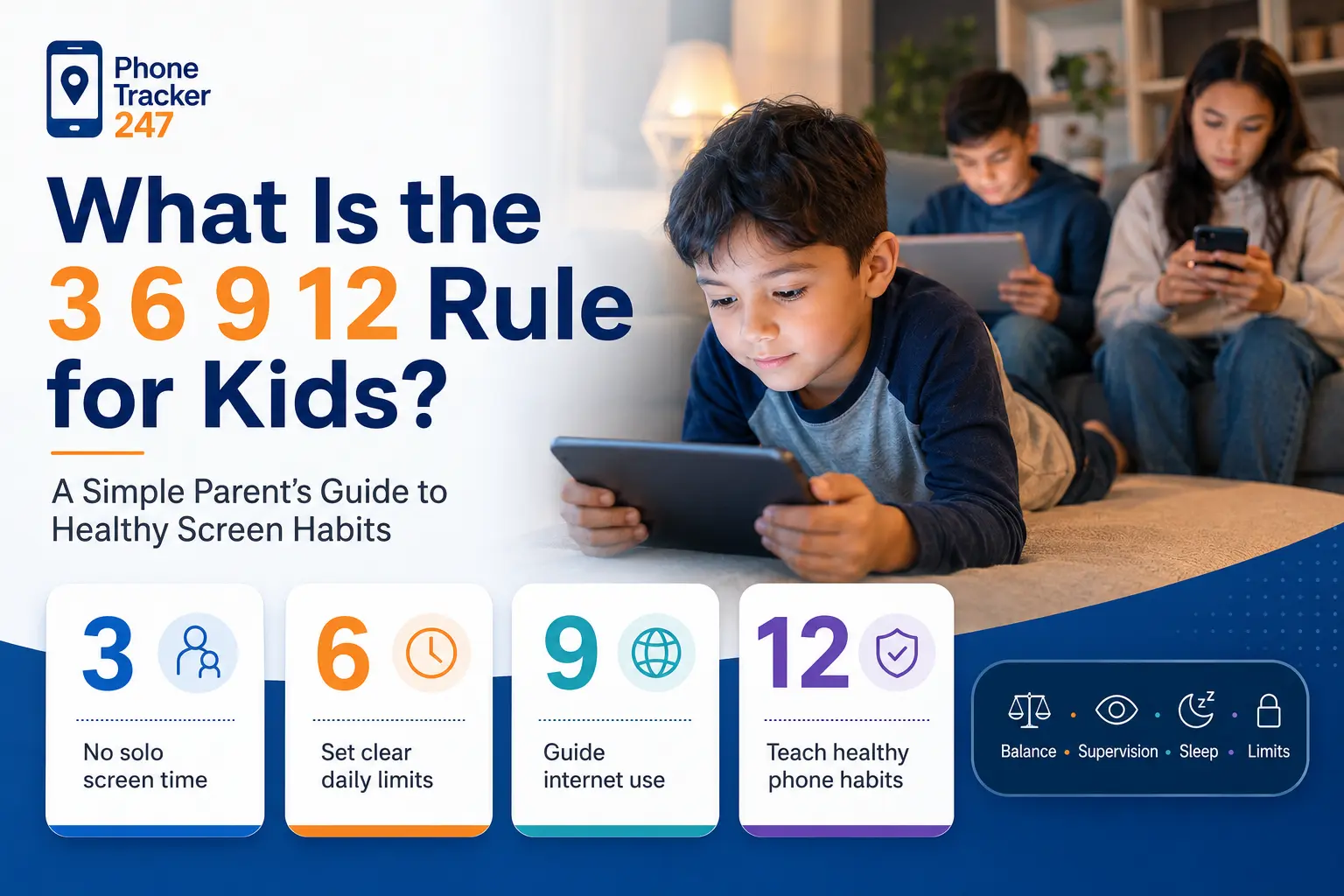
The 3 6 9 12 rule for kids is an age-based framework designed to help parents introduce screens gradually instead of all at once. It is commonly associated with psychiatrist Serge Tisseron and the 3-6-9-12+ milestones, which were created to help families think about screens in a more structured and development-aware way.
Where the rule comes from
The original idea behind the 3 6 9 12 rule is simple. Children do not need the same kind of digital access at every stage of development. A toddler, a first grader, a nine-year-old, and a preteen do not process attention, emotion, privacy, or risk in the same way. The framework helps us pace exposure according to those differences instead of treating every screen the same.
What the numbers 3, 6, 9, and 12 mean
In broad terms, the rule is usually explained like this: before age 3, avoid screen exposure as much as possible; before age 6, keep screens limited and shared rather than personal; before age 9, avoid unsupervised internet access; before age 12, delay social media and more independent online behavior. Different summaries phrase the milestones a little differently, but the core idea stays the same: children need boundaries that match their stage of growth.

Why parents still search for it
Parents still search for this rule because it is easy to remember and easier to use than vague advice. Instead of asking, How many hours are allowed, we begin asking better questions. Is this child ready for independent use? Does this device support family life or disrupt it? Are we introducing technology in layers, or handing over everything too early? That shift makes the rule useful in real homes.
See more: The Best Screen Time App 2026
Why the 3 6 9 12 Rule Still Makes Sense Today
Screens are now everywhere, which is exactly why families need a framework that cuts through the noise. Phones, tablets, smart TVs, school platforms, games, messaging apps, and social feeds all compete for a child’s attention. A simple age-based rule gives us a starting point before negotiations take over the household.
It gives parents a practical decision framework
One reason this rule works is that it removes some daily guesswork. When we already know the family standard for a certain age, we do not need to debate every app, device, or request from scratch. That consistency lowers friction and helps children understand that digital access grows with readiness, not just desire.
It focuses on readiness, not only time
The American Academy of Pediatrics no longer recommends one universal screen-time number for all children and teens. Instead, it emphasizes context, quality, co-viewing, communication, and the effect of media on sleep, activity, and well-being. That aligns well with the spirit of the 3 6 9 12 rule. It is less about counting minutes in isolation and more about knowing what kind of digital life fits a child at a certain stage.

It works better when we pair rules with visibility
Rules alone sound good on paper, but family life is messy. Children test limits. Schedules change. New apps appear fast. That is why we need visibility, not only good intentions. PhoneTracker247 is positioned as a lawful parental control and phone monitoring platform that helps families monitor app activity, browsing history, and device habits through a centralized dashboard. That kind of visibility helps us guide children with more confidence and fewer assumptions.
Breaking Down the 3 6 9 12 Rule by Age
The real value of this framework appears when we apply each milestone in plain language. The ages are not magic numbers, but they help us build digital habits at the right pace.
Before age 3: prioritize real-world interaction over screens
The 3-6-9-12 milestone guidance stresses that very young children build language, motor skills, attention, and recognition of facial expressions through live, interactive relationships. That is why early childhood should focus on play, movement, conversation, and shared human interaction rather than passive screen exposure. The goal is not perfection. The goal is to make real-world experience the default.
At this age, screens can easily crowd out what matters most. A calm video may look harmless, but if screens start replacing talking, active play, and face-to-face attention, they begin shaping daily development in the wrong direction. Families benefit more from simple routines, shared books, physical play, and consistent sleep than from using a screen as the fastest solution to every restless moment.
Before age 6: limit screens and keep them shared
In the official 3-6-9-12 guidance, the years from 3 to 6 are a period for limited, shared screen use. The recommendation is not just about duration. It is also about structure. Screens should stay in common spaces, not become a private habit behind a closed door. The guidance also argues against giving young children a personal digital device too early because personal ownership makes self-regulation much harder.
This stage is where we begin teaching children that screens are tools, not automatic entertainment on demand. Shared viewing, short sessions, simple educational content, and adult involvement matter more than giving a child unrestricted access to a tablet. We should also avoid relying on screens to calm emotions, fill every gap in the day, or replace bedtime routines.

Before age 9: avoid unsupervised internet access
Around this milestone, the issue changes from screen exposure to internet exposure. The internet is not just a bigger TV. It is unpredictable, interactive, and full of content a child cannot yet evaluate well. Before age 9, children usually need a high level of adult guidance if they go online at all. That means no free browsing, no casual jumping across platforms, and no assumption that “kid content” always stays safe.
This is also the age when many parents first feel the limits of verbal rules. Children become more curious, more independent, and better at switching quickly between apps and activities. With PhoneTracker247, we can monitor app usage and browsing patterns from one dashboard, which helps us see whether family rules still match real behavior. That is more effective than waiting for a problem to become obvious.
Before age 12: delay social media and independent online behavior
The jump from internet use to social media is not a small one. Social platforms add messaging pressure, comparison, attention loops, and contact with wider audiences. Even when a child seems technically skilled, emotional readiness may still lag behind. The 3 6 9 12 framework treats this stage as a reason for caution, not a green light for digital independence.
For many families, this is the point where boundaries need to become more specific. Which apps are allowed? When can a child use them? Are devices allowed in bedrooms? Are notifications turned off at night? Can we review trends together every week? These questions matter more than simply asking whether a child has screen time.

How to Apply the 3 6 9 12 Rule in Real Life With PhoneTracker247
A rule becomes useful only when it turns into repeatable family habits. This is where many parents need more than theory.
Start with clear family rules
We should define where screens are used, when they are allowed, and which types of activities fit each age. Shared spaces work better than bedrooms. Bedtime needs protection. Meals should stay screen-light or screen-free. Children respond better when our rules sound predictable and simple instead of emotional and improvised.
Monitor patterns before problems grow
PhoneTracker247 is designed as an all-in-one monitoring platform with features such as app activity monitoring, browsing history, and dashboard-based visibility for family device management. That lets us spot late-night use, rising time in certain apps, or repeated visits to distracting content before those patterns turn into conflict, secrecy, or school problems. Used lawfully and transparently, this supports family safety rather than punishment.
Review and adjust as children grow
Digital boundaries should evolve. A six-year-old needs a very different structure from an eleven-year-old. We can use weekly check-ins to review habits, ask what is working, and make small changes based on maturity. When we pair conversation with real usage visibility, discipline becomes steadier and less reactive.
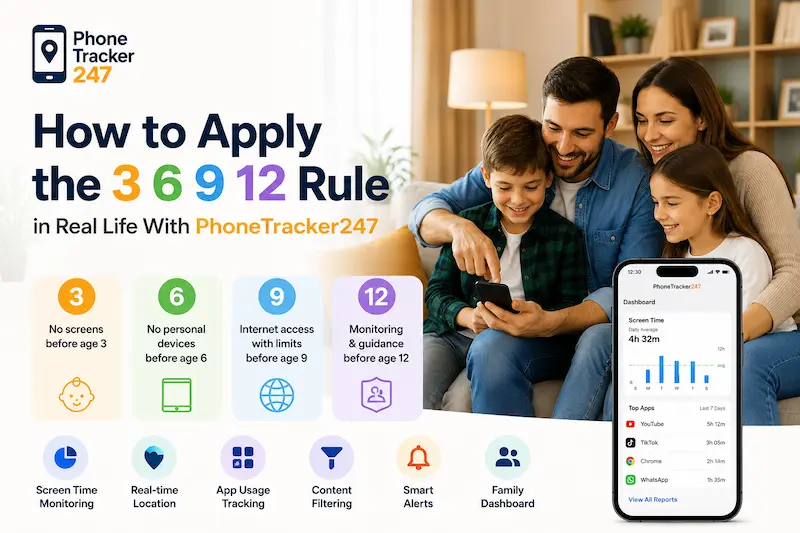
Download PhoneTracker247 here to start building safer, healthier screen habits for your child today.
FAQs – What Is the 3 6 9 12 Rule for Kids?
1. What is the 3 6 9 12 rule for kids?
It is an age-based guide for healthier screen habits.
2. What does age 3 mean?
Before age 3, prioritize real-world play over screens.
3. What does age 6 mean?
Before age 6, keep screen use limited and shared.
4. What does age 9 mean?
Before age 9, avoid unsupervised internet access.
5. What does age 12 mean?
Before age 12, delay social media and independent online use.
6. Is the rule only about screen time?
No, it is also about readiness and digital behavior.
7. Can parents adjust the rule?
Yes, adjust it based on maturity and family needs.
8. Should parents use monitoring tools?
Yes, transparent tools can show app and browsing patterns.
9. Is PhoneTracker247 useful for this rule?
Yes, it helps parents review habits and set boundaries.
10. What should parents do first?
Set age-based rules, review habits, and adjust weekly.
Final Thoughts
So, what is the 3 6 9 12 rule for kids? It is a simple framework that helps us introduce screens, internet, and social media in stages instead of all at once. It reminds us that healthy digital habits should grow with development, not with pressure from trends, classmates, or convenience. The most useful version of this rule is not the one we memorize. It is the one we apply consistently at home.
With PhoneTracker247, we can support that process with clearer visibility, better conversations, and more confident parenting. Build healthier screen habits with PhoneTracker247, set practical boundaries by age, and guide your child with a calmer plan that actually fits real family life.
For daily updates, subscribe to PhoneTracker’s blog!
We may also be found on Facebook!