
Before looking at specific rules or examples, it helps to step back and ask why the question of when parents should not check call history has become so important for modern families, and how the answer can shape both safety and long term trust at home.
Contents
- 1 1. Why The Question “When Parents Should Not Check Call History” Matters
- 2 2. The Line Between Protection And Spying On Your Child
- 3 3. When Parents Should Not Check Call History: Key Situations
- 4 4. Age, Trust And Consent: How Your Approach Should Change Over Time
- 5 5. Legal And Ethical Guardrails Around Checking Call History
- 6 6. Healthy Alternatives To Constantly Checking Call History
- 7 7. How To Talk About Call History And Privacy With Your Child
- 8 8. What To Do If You Suspect A Problem But Want To Respect Boundaries
- 9 FAQs: When Parents Should Not Check Call History
- 10 Moving From Surveillance To Support: What Parents Can Do Next
1. Why The Question “When Parents Should Not Check Call History” Matters
In the past, parents might have overheard a landline conversation or seen who called from a paper bill. Today, a smartphone can reveal almost every call a child makes. That power changes the rules. Knowing when parents should not check call history is now just as important as knowing how to step in when something looks wrong.
1. Changing digital parenting norms in 2026
Parents are under pressure from all sides. News stories highlight bullying, grooming and scams that reach children through their phones. At the same time, schools and psychologists talk more about teen anxiety, privacy and the need for autonomy. Older advice simply said that if you pay for the phone, you can read anything. Newer thinking is more balanced. It recognises that technical access does not automatically mean it is wise to use it every day.
2. The emotional cost of constant phone surveillance at home
For a child or teenager, the phone is not just a gadget. It is their social life, their support network and often the place they turn when they feel low. If they believe a parent reads every log and message, they may stop reaching out to friends, hide their feelings or move to secret accounts. What feels like protection to a parent can feel like suspicion to a teen, and that gap can slowly erode the relationship you depend on when real trouble appears.
3. Why “can” and “should” are not the same with call history
Many parents have full control over the device, the account and the bill. That answers the question of whether they can see the call log. It does not answer whether they should. Each time you think about opening that history, it is worth pausing. Ask yourself what you are looking for, what risk you are trying to address and how it will affect trust if your child finds out. This is where when parents should not check call history stops being an abstract idea and becomes a practical decision you make, call by call and day by day.

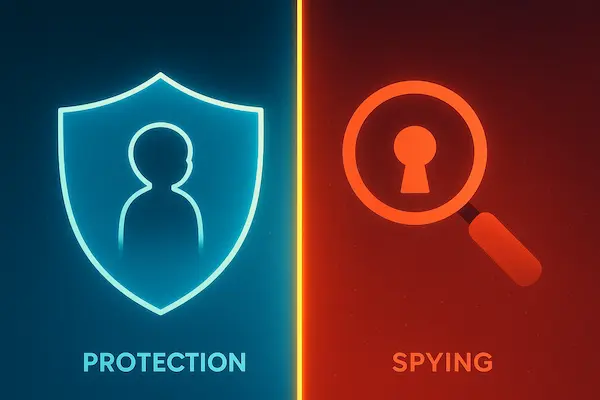
2. The Line Between Protection And Spying On Your Child
To decide when parents should not check call history, you need to see the gap between real protection and quiet spying. The same tool can either build safety or quietly break trust.
1. What responsible safety monitoring looks like
Responsible monitoring has a clear purpose and is discussed openly. Parents explain that they have access, focus on real risks like bullying or unsafe contacts and check only at agreed times or during specific problems. Call history is used to support conversations, not to control every detail of a child’s social life.
2. When checking call history quietly turns into spying
Checking turns into spying when parents open logs in secret, without a concrete concern and mainly from curiosity, anger or anxiety. Making it a daily habit to scroll through every number “just in case” usually pushes kids to hide more, delete records or move to other devices.
3. How constant checking can damage trust and backfire
If a child expects their parent to snoop first and ask later, they stop sharing honestly. Serious problems may stay hidden because they fear being investigated instead of supported. Knowing when parents should not check call history helps you step back from unnecessary checks, keep room for open talk and stay someone your child can still come to when something is truly wrong.
3. When Parents Should Not Check Call History: Key Situations
There is no single rule that fits every family, but there are clear moments when parents should not check call history, even if the phone is in their name and the log is easy to open. Thinking through these situations in advance helps you act from principle instead of fear or curiosity in the moment.
Table 1 – Key situations and whether parents should check call history
| Situation | Should parents check call history? | Main focus instead of reading every log |
|---|---|---|
| Stable behaviour, no warning signs, open communication | No | Protect trust, keep talking regularly |
| Older teen asks clearly for reasonable privacy | Usually no | Respect boundaries, stay available for support |
| Calls linked to therapy, helplines or confidential support lines | No | Encourage continued use of support and talk about how they feel |
| Shared custody or legal limits on access | Usually no | Follow agreements, work with professionals or legal guidance |
| Mild curiosity about friendships or everyday drama | No | Ask questions, listen and show interest |
| Early signs of bullying or serious online pressure | Maybe, with care | Talk first, consider looking together if concerns stay strong |
| Clear threat to life or safety | Yes, as an emergency step | Check quickly, record details and seek urgent professional help |
1. When there are no warning signs and trust has been earned
If your child is behaving normally, doing their work, treating people well and still talking to you about their life, routine snooping usually does more harm than good. Opening the log “just to see” sends the message that nothing they do is ever trusted. In a calm, stable period, when parents should not check call history is precisely when there is no red flag and the relationship is working.
2. When an older teen clearly asks for reasonable privacy
As teens grow older, they need space to handle friendships and feelings without a parent watching every detail. If a generally honest teen politely asks you not to read every call log, that is a sign your role should start shifting from inspector to advisor. You can still keep clear rules around phone use and safety, but checking every number from habit undermines the adult they are trying to become.
3. When calls involve therapy, helplines or confidential support
Some calls are meant to be private, even from family. Conversations with therapists, school counselors, crisis lines, legal aid or trusted mentors often work only because the young person believes they can speak freely. Unless there is a direct and immediate risk to life, quietly mapping out every number linked to support can shut down the very help your child needs most.
4. When legal orders, custody plans or school policies limit access
In shared custody, foster care or certain school and community programs, there may be written rules about who can see what. Even if you feel those rules are unfair, ignoring them and digging through call history can trigger serious legal, school or family consequences. In those cases, it is better to work through official channels and professionals than to act alone simply because the phone is in your hand.
5. When you are driven by curiosity, anger or jealousy instead of safety
There are also moments when parents should not check call history because their motive is off. Wanting to know every detail of a crush, replaying an argument by inspecting every call, or comparing your own importance to friends or the other parent are emotional triggers, not safety reasons. In those moments, putting the phone down, calming yourself and choosing a conversation instead of a secret check protects your child, your relationship and your own judgment.

4. Age, Trust And Consent: How Your Approach Should Change Over Time
The right answer to when parents should not check call history depends heavily on age and maturity. A pattern that might be reasonable for a 10 year old can be harmful for a 16 year old who is almost an adult.
1. Younger children: why limited checking can still be acceptable
For younger kids, a phone is closer to a shared family device than a private one. Limited checks of call history can help you teach basic safety: how to handle unknown numbers, spam or rude callers. Even here, explain what you are doing and why, so they learn that monitoring is about protection, not catching them out for every small mistake.
2. Early teens: setting shared rules for privacy and phone use
In early teen years, social life becomes intense while judgment is still developing. Instead of silent daily checks, agree on simple rules together: how late calls can go, what to do about strangers and when they should tell you if a call feels wrong. This is a transition stage where you start to define when parents should not check call history and when you might look together because there is a real concern, not just curiosity.
3. Older teens: moving from control to coaching
With older teens, constant checking usually does more harm than good. They are close to the point where the law will give them full privacy and their own contracts. Focusing on conversations about friendships, dating and conflict prepares them for that reality far better than secretly reading every log. At this stage, when parents should not check call history is most of the time, with rare exceptions for clear emergencies or situations you talk through openly.
4. Phasing out call monitoring as your child becomes an adult
There should be a visible path from more oversight to almost none. You might agree that after a certain age or milestone you will only review call logs in serious, time sensitive situations, and later not at all unless your child asks for help. Naming this plan out loud shows that when parents should not check call history will become the normal case, and that growing independence is the goal, not endless control.

5. Legal And Ethical Guardrails Around Checking Call History
Even with the best intentions, there are real legal and ethical lines that shape when parents should not check call history. Knowing these limits helps you protect your child without crossing into territory that damages trust or creates bigger problems.
1. What the law usually allows parents to see on child devices
In many countries, parents or legal guardians can manage devices and accounts they provide for a minor, which often includes seeing phone bills and basic call logs. But rules change between regions, and situations like shared custody, school issued phones or numbers in another adult’s name can make things more complicated. Legal access is a minimum standard, not a guarantee that checking is always wise.
2. Grey areas: shared plans, family phones and work linked numbers
Shared plans and multi user devices can expose more than your child’s information. A family phone passed between siblings, a tablet with calling apps or a number tied to a parent’s work account may reveal private details about other adults or children. In these grey zones, quietly reading call history can cross lines you did not mean to cross. It is better to talk, clarify expectations and, if needed, ask for professional guidance than to rely only on technical access.
3. Ethical principles: dignity, autonomy and the right to make mistakes
Ethically, every choice to open or not open the log sends a message about how you see your child. Respecting dignity and growing autonomy means accepting that they will make small social mistakes and learn from them. If you only look when there is a clear, serious concern, you show that privacy matters. If you look from habit, you risk treating them like a problem to manage rather than a person to guide, even in moments when parents should not check call history.
4. How ignoring these guardrails can harm both safety and trust
Ignoring legal and ethical boundaries can backfire badly. Teens who feel constantly monitored often respond by hiding more, using secret accounts or avoiding you when they really need support. Over time, this can make them less safe, not more. Keeping these guardrails in mind helps you decide when parents should not check call history, and when to focus instead on conversation, outside help or emergency steps that are clearly justified.

6. Healthy Alternatives To Constantly Checking Call History
Even when you understand when parents should not check call history, it can feel risky to step back. The aim is not to ignore safety, but to swap quiet snooping for healthier ways to stay involved.
Table 2 – Parent worries and healthier alternatives to constant checking
| Parent worry | Reflex action to avoid | Healthier alternative | Likely outcome |
|---|---|---|---|
| “I am afraid I might miss a danger” | Reading every call log in secret every day | Set clear rules, use risk based alerts, talk regularly | You still catch real risks while keeping basic trust |
| “I do not like some of their friends” | Checking who they call after every hangout | Ask about the friendship, discuss values and boundaries | Better understanding of their world and their choices |
| “They never put the phone down at night” | Inspecting late night call history in secret | Agree a phone curfew and charging spot outside bedroom | Less conflict about checking, healthier sleep routine |
| “They seem more secretive lately” | Sudden deep dive into months of call logs | Talk about mood and stress, ask if something changed | Higher chance they share what is really going on |
| “I caught them lying once, now I do not trust them” | Permanent monitoring of every call | Set consequences, then a clear plan to rebuild trust | Gives a path back to trust instead of endless suspicion |
| “I am not sure I can keep up with online risks” | Overusing strict control tools | Learn basics of digital safety, use tools as support | You feel more confident without relying only on snooping |
1. Creating a simple family phone and privacy agreement
Write a short family agreement that covers phone use, privacy and safety: how to handle unknown numbers, what to do about threats, and when they must tell you if a call feels wrong. Clear, shared rules reduce the need to scan every log, because everyone already knows what is expected.
2. Using open conversations instead of silent log checks
Regular, calm talks about friends, group chats and conflicts often reveal more than a list of numbers. When your child sees you listening instead of spying, they are more likely to come to you early, before problems grow.
3. Using rules and alerts instead of reading every call
Set firm boundaries such as blocking persistent strangers, ignoring unknown callers and putting the phone away at a set time each night. If you still worry, choose tools that flag only high risk patterns instead of showing every call. That way, you can still notice serious danger while respecting the many everyday moments when parents should not check call history and trust your relationship and house rules to do most of the work.

7. How To Talk About Call History And Privacy With Your Child
Even the best rules do not work if you never talk about them. Honest conversations are what turn your ideas about when parents should not check call history into something your child can understand and trust.
1. Explaining why you have access but will not always use it
Start by being clear that you could look at their call history, but you choose not to do it all the time. Explain that your job is to keep them safe, not to watch every detail of their social life. You might say that you will only consider checking logs if there is a serious concern, like threats, harassment or a real fear for their safety, and that talking together will always be your first step.
2. Admitting past over checking and resetting boundaries
If you have checked in secret before, it helps to be honest. A simple apology, without a long defence, can open the door to new rules. You can say that you were worried, you did not handle it in the best way and you want to do better. Then suggest clearer boundaries for the future, including situations where you agree that you will not look at call history even if you feel tempted.
3. Teaching your child when to ask you to look together
Explain that there are times when it is wise for them to invite you in. For example, repeated calls from a stranger, pressure from someone older, or contact that makes them feel scared or controlled. Make it clear that if they bring you a problem, you will focus on helping them first, not on blaming them for the contact. When they know this, they are more likely to ask you to look at the log side by side when it truly matters.
4. Handling conflict when your child feels you crossed the line
At some point, your child may feel that you went too far, whether you agree or not. When that happens, listen before you explain. Let them say why it hurt, then share your reasons calmly. You can still hold your ground about safety, but you can also adjust how you act next time. Showing that you take their feelings seriously is one of the strongest ways to rebuild trust and to prove that your decisions about privacy and call history are guided by care, not control.
8. What To Do If You Suspect A Problem But Want To Respect Boundaries
One of the hardest moments is when you sense something is wrong but also believe there are times when parents should not check call history. You want to keep your child safe without destroying hard won trust.
1. Reading behaviour and context before reading call logs
First, look beyond the phone. Has their mood, sleep, school work or friend group changed suddenly? Are they nervous when the phone rings or never let it out of their hand? These signs, plus a calm talk about how they are feeling, often tell you more than a list of numbers.
2. When to ask for permission to review call history together
If your concerns remain, ask to look at recent calls together instead of checking in secret. Explain what you have noticed, what you are worried about and ask if they will go through the log with you. This keeps them involved in the decision and shows that checking is about safety, not control.
3. When to involve another trusted adult or professional
If they shut down with you, a trusted relative, coach, school counselor or therapist may be able to help. Sometimes a child will open up to another adult first, and that person can guide you on next steps without you needing to inspect every call.
4. Rare emergencies where checking call history is justified
In clear emergencies such as threats, grooming, disappearance or serious self harm risk, safety comes first. In those rare cases, it can be justified to check call history quickly, record key details and get urgent help. The important thing is to treat this as an exception, then return to more respectful boundaries once the crisis has passed.
FAQs: When Parents Should Not Check Call History
1. When should parents not check call history even if they pay for the phone?
When there are no warning signs, communication is open and your child has generally earned trust, it is usually better not to check call history at all.
2. Is it wrong for parents to check call history without telling their teen?
Secret checking can feel like spying and often damages trust, even if the parent thinks they are protecting their child.
3. At what age should parents stop checking a child’s call history?
There is no fixed age, but for older teens routine checks should fade out, with call history only reviewed in clear emergencies or by mutual agreement.
4. Should parents check call history if there are no warning signs?
No, if there are no signs of risk, checking out of habit or curiosity is usually a moment when parents should not check call history.
5. How can parents respect privacy but still keep a child safe?
Use clear rules, regular conversations and agreed steps for handling threats or strangers, instead of silently reading every log.
6. What can parents do instead of secretly checking call history?
They can talk openly, set a family phone agreement, watch for changes in mood or behaviour and ask to review the log together only when there is a real concern.
7. Is it legal for parents to check call history on a shared family phone?
It often is, but shared plans can expose other people’s data, so parents should still think about consent, ethics and house rules.
8. How can parents rebuild trust after checking call history in the wrong way?
Admit what happened, apologise without blaming the child, explain your worry and agree on clearer boundaries for when you will and will not look in future.
Moving From Surveillance To Support: What Parents Can Do Next
Phones, call logs and tracking tools are not going away. In 2026, debates about teen privacy, mental health and digital parenting are only getting louder. That is why understanding when parents should not check call history is more than a private family choice, it is part of a wider shift toward healthier, more respectful online safety at home.
Quick summary: the core principles in one view
Use this table as a fast reminder before you reach for the call log.
| Principle | What it looks like in daily life | Why it matters |
|---|---|---|
| Lead with trust, not suspicion | You do not read logs when there are no warning signs | Protects long term connection and honest sharing |
| Talk first, look second | You start with a calm conversation before asking to see call history | Teaches your child to bring problems to you early |
| Check for safety, not curiosity | You only review logs for real risks, not gossip or drama | Avoids turning you into a spy in your child’s eyes |
| Respect age and growth | Oversight shrinks as your child becomes an older teen or adult | Supports autonomy and prepares them for real life |
| Use support, not only control | You involve schools, therapists or trusted adults when needed | Shows that safety is a shared effort, not a solo hunt |
| Keep emergencies as exceptions | You read logs secretly only in clear, urgent danger | Keeps serious steps rare and easier to explain later |
When you follow these principles, the question is no longer “Can I see every call” but “What keeps my child safest and our relationship strongest over time”.
Use PhoneTracker247 as a balanced safety tool
You do not have to choose between total surveillance and doing nothing. A well designed tool can help you act early without reading every detail. PhoneTracker247 gives parents a clearer view of patterns around calls and phone use so you can:
- Spot sudden changes in activity that may signal risk
- Focus on repeated contact from worrying numbers instead of scrolling every log
- Combine call patterns with other safety signals in one place
- Support house rules and family agreements with real data, not guesswork
Used well, PhoneTracker247 supports the boundaries you set in this guide. It helps you see when something might be wrong, while still respecting the many moments when parents should not check call history and should rely on conversation, trust and agreed rules instead.
If you are ready to move from constant checking to smarter protection, start by reviewing your family’s phone rules, then set up PhoneTracker247 on the devices you manage. Use it to watch for real risks, not for everyday drama, and let it back up the trust you are building rather than replace it. That way, your child learns that your goal is not to catch them out, but to stand beside them when they truly need you.
For daily updates, subscribe to PhoneTracker’s blog!
We may also be found on Facebook!