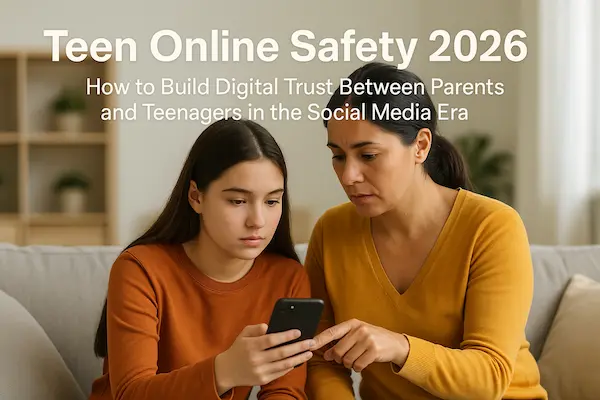
For older generations, going online was something you chose to do, then walked away from. Today it is the background of almost everything teenagers think, feel and share. To understand Teen Online Safety in 2026, parents first need to see that the phone is not a separate world, but the main place where school, friends, hobbies and worries all meet.
Contents
- 1 1. Why Teen Online Safety In 2026 Is Not The Same As Before
- 2 2. What Teen Online Safety Really Means Today
- 3 3. Why Digital Trust Works Better Than Pure Control For Teen Online Safety
- 4 4. Mapping Teen Life Online: Where Risks And Opportunities Actually Are
- 5 5. Core Building Blocks Of A Teen Online Safety Plan At Home
- 6 6. Communication Frameworks That Build Digital Trust At Home
- 7 7. Using Safety Tools To Support Trust, Not To Spy On Teens
- 8 8. Playbooks For Common Teen Online Safety Crises
- 9 9. School, Community And Platform Roles In Teen Online Safety
- 10 10. Laws, Rights And Responsibilities Around Teen Online Safety
- 11 11. Case Studies: Families And Teens Who Rebuilt Digital Trust
- 12 FAQs – Teen Online Safety 2026
- 13 Conclusion: Teen Online Safety 2026 Checklist For Real Life
1. Why Teen Online Safety In 2026 Is Not The Same As Before
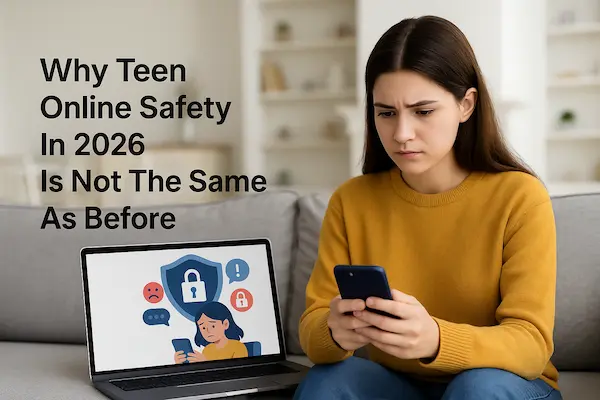
For older generations, going online was something you chose to do, then walked away from. Today it is the background of almost everything teenagers think, feel and share, so Teen Online Safety has to match that always connected reality.
1. How Always Connected Screens Shape Teen Online Life
For many teens the phone is where friendships, jokes, arguments and secrets all live. A late night comment, a meme in a group chat or a short video can follow them into school the next day. There is rarely a clean break, which means small online moments can have a much bigger emotional impact than adults expect.
2. From Simple Parental Controls To Complex Feeds And Algorithms
Old style filters on a family computer cannot keep up with fast moving apps, private chats and personalised feeds. What a teen sees is shaped by algorithms as much as by who they follow, so two children in the same house can live in very different online worlds. Families need to talk about how recommendations work, not just which sites are allowed.
3. Why Fear Based Safety Talks Fail With Modern Teens
Endless warnings about predators and worst case headlines often make teenagers hide more, not less. They worry that if they tell the truth, parents will panic or ban everything. Calm, curious questions about what feels hard or confusing online open the door to honest conversations and make real Teen Online Safety possible.
2. What Teen Online Safety Really Means Today
Before you think about filters or tracking apps, it helps to be clear on what Teen Online Safety actually is. At its core it is not about perfect control. It is about reducing real risks while helping teenagers feel confident, respected and able to ask for help.
1. One Sentence Definition Of Teen Online Safety In 2026
Teen Online Safety in 2026 means creating home rules, habits and tools that protect teenagers from serious digital harm while still letting them explore, learn and connect online in age appropriate ways they understand and agree with.
2. The Three Pillars Of Teen Online Safety: Protection, Empowerment, Respect
A simple way to think about it:
- Protection
Limit real risks like bullying, scams, unsafe strangers and harmful content. - Empowerment
Teach teens how platforms work, how to block, report and reset feeds so they can look after themselves when adults are not there. - Respect
Set clear rules together, explain your reasons and avoid secret spying so trust can grow instead of fading.
3. What Real World Digital Trust Between Parents And Teens Looks Like
Digital trust does not mean full access to every message or blind faith that nothing will go wrong. In practice it looks like this: parents are honest about what they are worried about, teenagers are honest about what they actually do online and both sides agree on a few shared rules they can live with. When something bad happens, the first reaction is calm support and problem solving, not shouting or instant bans. That is the point where Teen Online Safety starts to feel real instead of theoretical.
Teen Online Safety in under a minute
- It is about protecting teens from real harm, not trying to remove all risk
- Parents and teens agree on clear rules they both understand
- Teens know how to block, report, save evidence and ask for help
- Tools and monitoring are discussed openly, not hidden or used as traps
- The goal is that a teen will come to a trusted adult early, not after a crisis
Table: Typical teen online risks and what safer daily life looks like
| Risk type | What unsafe looks like day to day | What safer looks like day to day | Parent role | Teen role |
|---|---|---|---|---|
| Cyberbullying | Cruel jokes, pile ons and name calling ignored or hidden | Teens know how to block, mute, report and save screenshots | Stay calm, listen, help report and follow up | Tell someone early, do not fight back alone |
| Oversharing personal info | Posting location, contact details or secrets | Teens pause before sharing and limit who sees private details | Model careful sharing, explain real examples | Think twice before posting and adjust privacy |
| Harmful or triggering content | Endless disturbing or extreme videos in feeds | Mixed feeds with positive, neutral and helpful content | Help reset feeds, suggest better accounts | Unfollow, block and use tools to tune the feed |
| Contact from strangers | Secret chats, pressure to move to private apps | Clear rules on who can message and when to end a conversation | Set boundaries and support blocking and reporting | Follow the rules, leave chats that feel wrong |
3. Why Digital Trust Works Better Than Pure Control For Teen Online Safety
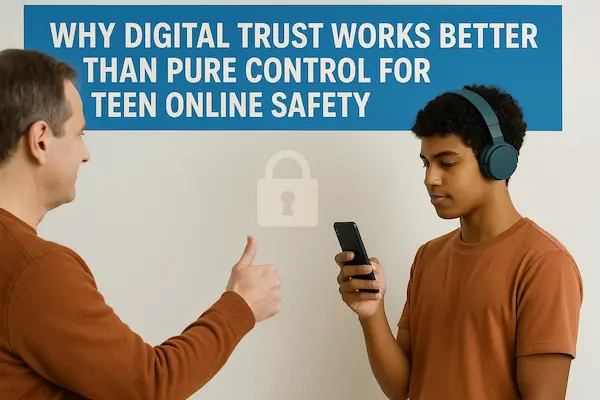
Rules and filters matter, but they are not enough on their own. If teens feel watched, judged or tricked, they will simply move their real online life somewhere adults cannot see. Teen Online Safety works best when protection and trust grow together, not when control becomes a secret battle.
1. How Secret Monitoring Damages Honest Tech Conversations
When parents read messages in secret, install hidden apps or pretend not to know things they have already seen, teenagers usually notice. The result is simple: they hide more, use backup accounts, delete chats faster and stop asking for help. Even if spying finds one short term problem, it can destroy the long term habit of coming to adults when something serious happens online.
2. Why Teens Need Space But Not Unlimited Online Privacy
Most teenagers want some private space to talk with friends, vent about their day and experiment with identity. Total access to every message can feel like someone listening at the bedroom door all the time. On the other hand, completely unchecked privacy is risky when scams, bullying and strangers are part of daily online life. The goal is a middle ground where teens know there are boundaries, but also know their whole inner world is not being inspected every day.
3. Everyday Habits That Quietly Strengthen Teen Online Safety
Trust is built in small, repeated moments. Parents who share their own online habits, admit what they do not understand and ask curious questions instead of only giving orders make it easier for teens to talk. Simple habits like checking in after a big online event, asking how certain apps feel, or reviewing safety settings together once in a while all send the same message: you are not alone with this. Over time, those habits matter more for real Teen Online Safety than any single app or rule.
4. Mapping Teen Life Online: Where Risks And Opportunities Actually Are
Teenagers do not just use one app. Their day moves through feeds, chats, games and AI tools, often on the same screen. To support Teen Online Safety, parents need a simple map of these spaces so conversations and rules match where teens actually spend their time.
1. Social Feeds, Direct Messages And Group Chats
This is where most drama and connection happens. Public feeds shape how teens see themselves and the world, while DMs and group chats carry jokes, support, gossip and sometimes pressure. Problems often start small here, with comments that go too far, exclusion from a group or screenshots shared without consent.
2. Gaming Platforms, Voice Chat And Toxic Lobbies
Online games are not just about winning. They are social spaces with their own slang, jokes and hierarchies. Voice chat and open lobbies can expose teens to aggression, slurs or grooming attempts mixed in with normal play. Parents who only see a game title may miss how intense the social layer feels.
3. Anonymous Apps, Private Servers And Hidden Accounts
Many teens experiment with anonymous questions, private servers, alt accounts or close friends lists. These spaces can feel safer to share feelings, but they can also hide bullying, self harm content or risky dares. The goal is not to hunt every account down, but to keep an honest channel open so teens talk when something in these spaces feels wrong.
4. AI Tools, Chatbots And Deepfake Content Teens May Meet
AI chatbots, image generators and face swap tools are becoming normal parts of teen life. They can help with homework, creativity and language learning, but they can also be used to fake screenshots, twist photos or spread convincing lies. Families need to talk about what AI can and cannot do, how easily images can be edited and why saving evidence matters if an AI based prank goes too far.
5. Core Building Blocks Of A Teen Online Safety Plan At Home
A solid Teen Online Safety plan rests on a few clear building blocks that parents and teens can review and adjust together.
1. Devices, Accounts And Strong Authentication For Teens
Know which devices and main accounts your teen uses, help set strong passwords and two factor authentication, and keep recovery info updated so you can step in if something is hacked.
2. Privacy Settings, Friend Lists And Sharing Boundaries
Sit together to check who can see posts, stories and location, clean up friend lists and agree on a few hard lines about what must never be shared publicly.
3. Content Filters, Age Ratings And Algorithm Awareness
Turn on safer search or age limits where possible, then show how to hide or report bad clips and explain that feeds are driven by engagement, not by truth or balance.
4. Screen Time, Night Time And Family No Phone Zones
Choose a few simple no phone moments such as dinner, homework or late night, apply them to adults as well and tweak them based on how everyone feels, not on guilt alone.
5. Emotional Safety, Body Image And Comparison Culture
Talk about how likes, comments and follower counts affect mood, and normalise unfollowing or muting accounts that repeatedly leave your teen anxious, angry or ashamed.
6. Clear Reporting Paths When Something Goes Wrong Online
Agree who your teen can come to first, how to save evidence and which situations must always be shared with an adult so they never feel they have to handle a crisis alone.
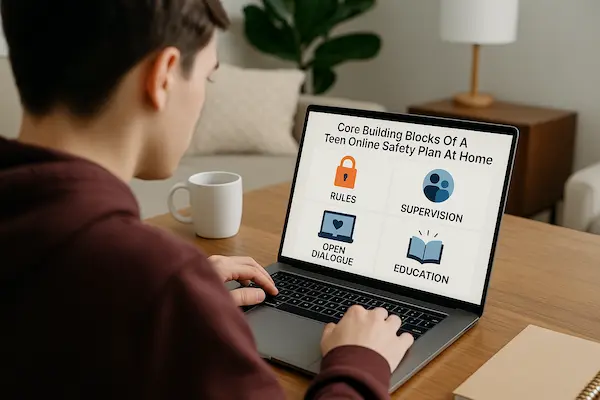
Building Blocks Of A Teen Online Safety Setup For Families
| Building block | What it means in daily practice | Parent responsibility | Teen responsibility |
|---|---|---|---|
| Devices and accounts | Phones, tablets and main logins are mapped and protected | Help set strong passwords and recovery options | Keep logins private and tell adults about issues |
| Privacy and sharing | Settings match real comfort levels, not default values | Review settings and model careful sharing | Adjust lists, think before posting |
| Content and feeds | Filters and tools keep feeds roughly age appropriate | Turn on tools and explain how feeds work | Hide, report and reset bad or toxic content |
| Time and space | Clear moments without screens and calmer nights | Set and follow shared routines | Respect agreed no phone zones |
| Feelings and pressure | Mood and self image are part of online check ins | Start honest talks about impact of online life | Share when something online feels heavy or wrong |
| Reporting and support | Everyone knows what to do when things cross the line | Stay calm, help document and report problems | Reach out early instead of hiding the situation |
6. Communication Frameworks That Build Digital Trust At Home
Rules and apps only work if conversations feel safe. The way parents and teens talk about phones, games and social media often decides whether Teen Online Safety becomes a shared project or a constant argument.
1. Turning One Way Safety Lectures Into Two Way Tech Talks
Instead of long speeches about what teens must not do, ask them to show you how their favorite apps work and what they like or dislike about them. Mix short pieces of guidance with real curiosity, so the message is “we are trying to understand this together” rather than “you are always doing it wrong”.
2. Using Open Questions Instead Of Phone Inspection Interrogations
Checking a phone in silence and firing yes or no questions usually shuts teens down. Open questions such as “What feels hardest to deal with online right now” or “Is there anything in your feed you wish you saw less of” invite real answers. The goal is to understand their world before you try to change it.
3. Agreeing On Shared Principles Before Setting Any Rules
Before arguing about exact time limits or specific apps, talk about basic principles like sleep, school focus, kindness and safety. Once you both agree that these matter, it is easier to build rules that feel fair and connected to real values, not just to adult frustration.
4. How To Respond When A Teen Shares Something Difficult Online
The first reaction matters more than the perfect advice. If a teen opens up about bullying, a mistake or a risky chat, focus on staying calm, thanking them for telling you and asking what they need right now. You can still set consequences later if needed, but a steady first response makes it far more likely they will come to you again, which is the foundation of lasting Teen Online Safety.

7. Using Safety Tools To Support Trust, Not To Spy On Teens
Apps and filters can help with Teen Online Safety, but only if teenagers know they are there and understand why they are used. The goal is to use tools as support for the relationship, not as weapons in a secret investigation.
1. What Transparent Monitoring Looks Like In A Healthy Family
Transparent monitoring means nothing important is hidden. Parents explain which tools they use, what information they see and when they will look at it. Teens know, for example, that location may be visible during school runs or late nights out, or that new apps may be checked together once in a while. This turns tools into a safety net instead of a trap.
2. When App Based Supervision And Location Sharing Actually Helps
Supervision works best in clear situations such as first phones, new social platforms, late trips home, travel with friends or early dating. In these cases, light touch tools can reassure both sides. Location sharing, basic content filters or app usage summaries are most helpful when they support existing rules instead of replacing conversations.
3. Why Secret Tracking, Hidden Apps And Fake Accounts Backfire
Secret tracking usually feels like betrayal when teens discover it, and they often do. Hidden apps, fake profiles or silent reading of private chats push them to create backup accounts, move to encrypted tools or stop sharing problems. The short term sense of control is quickly replaced by long term distrust that makes honest Teen Online Safety much harder.
4. How A Platform Like PhoneTracker247 Can Support Teen Online Safety
A people focused platform such as PhoneTracker247 can fit into a family plan when it is introduced openly, with clear limits and time frames. Parents and teens can agree when location should be visible, who can see it and how long history is kept. Used this way, PhoneTracker247 becomes one part of a wider Teen Online Safety plan that is built on trust, consent and regular check ins, not on spying.
8. Playbooks For Common Teen Online Safety Crises
Even in families with good rules, bad moments still happen. Having simple playbooks ready keeps everyone calmer and turns scary situations into chances to strengthen Teen Online Safety, not just react in anger.
1. When Your Teen Faces Cyberbullying Or Group Pile Ons
First, pause before you reply to anyone. Ask your teen to show you what happened, help them take screenshots and save links, then block or mute the worst accounts. Use in app reporting tools, speak to the school if classmates are involved and agree together which chats or groups they should leave for their own peace of mind.
2. When Money Scams, Phishing Or Account Takeovers Happen
Treat scams like accidents, not moral failure. Change passwords, turn on two factor authentication, log out of all sessions and contact the platform or bank as needed. Afterwards, walk through how the scam worked so your teen can spot similar tricks in the future instead of just feeling ashamed.
3. When Harmful Or Disturbing Content Dominates Their Feed
If your teen keeps seeing upsetting or extreme clips, sit beside them and scroll together for a few minutes. Hide, dislike or report problem posts, unfollow harmful accounts and follow a few healthier ones to rebalance the feed. Remind them it is OK to take a break from certain apps while things calm down.
4. When Contact From Strangers Crosses A Clear Line
Make it a rule that your teen tells an adult whenever a stranger asks for personal details, photos, money or to move to a private app. Save the messages, block the account, use the platform reporting tools and, if threats or blackmail appear, consider contacting the school or local authorities. The key message for your teen is simple: you are not in trouble for telling the truth and you do not have to handle this alone.
9. School, Community And Platform Roles In Teen Online Safety
Families carry most of the work, but real Teen Online Safety is easier when schools, community adults and platforms all pull in the same direction.
1. What Schools Can Realistically Do Beyond One Time Assemblies
Instead of a single yearly talk, schools can weave online life into normal lessons, have clear policies on cyberbullying and phone use, and name at least one trusted adult students can go to when something online feels serious. When parents know who that person is and what the school will do, it is much easier to respond together.
2. Partnering With Youth Leaders, Coaches And Other Trusted Adults
Teens often open up to adults who are close but not their parents. Coaches, club leaders, older siblings and counselors can quietly support Teen Online Safety by checking in, listening and sharing concerns when needed. Parents can encourage these links and share basic safety expectations so everyone gives similar guidance.
3. Using Safety Centers, Reporting Tools And Parental Guides On Major Platforms
Most big apps now have safety centers, reporting tools and parental guides that few people read. Spending even an hour on the ones your teen uses can show you how to block, mute, filter and report. Schools and community groups can share these links in newsletters or meetings so families do not have to figure it all out alone.
10. Laws, Rights And Responsibilities Around Teen Online Safety
You do not need to be a lawyer to support Teen Online Safety, but a few basics about teen data and boundaries make your choices safer and more fair.
1. Why Teen Data Is Sensitive
Location, photos, private chats and mood hints are all personal data. For teens, leaks or misuse can hit school life, friendships and future chances, so many countries treat data about minors as higher risk. Remember that Teen Online Safety is also about respecting digital rights, not only enforcing house rules.
2. Simple Home Rules For Consent And Data Use
At home you can borrow good practice from professional settings:
- Say clearly what is monitored and why, instead of watching in secret
- Avoid keeping more screenshots, logs or history than you really need
- Decide together how long serious incidents will stay in your records
This keeps monitoring focused on safety, not on cataloguing every mistake forever.
3. When To Ask For Professional Or Legal Help
If there are threats, blackmail, repeated harassment, non consensual image sharing or clear harm to mental health, the problem may be bigger than a family can handle alone. In those cases, involve the school, a counselor or local authorities and bring calm notes and evidence. Tell your teen that asking for outside help is a way to protect them, not a sign that they are in trouble for speaking up.
11. Case Studies: Families And Teens Who Rebuilt Digital Trust
Real stories make Teen Online Safety easier to picture in everyday life. These short examples show how small changes in habits and tools can unlock better conversations instead of more conflict.
1. A Gamer Teen And Parents Moving From Spying To Shared Rules
At first, parents secretly checked their teen’s gaming chats and reacted with strict bans whenever they saw bad language. The teen responded by using new accounts and voice chat the parents could not see. After one big argument, they agreed to stop spying, sit together to review safety settings and set clearer rules for play time and voice chat. Trust slowly returned because both sides knew what was being monitored and why.
2. A Content Creator Teen Setting Boundaries Around Comments
A teenager who loved posting short videos began to feel crushed by negative comments. Instead of forcing them to quit, the family reviewed comment filters, blocked repeat offenders and agreed on a simple rule: if a video caused too much stress, it could be taken down without shame. Over time, the teen learned to use platform tools, choose better topics and focus more on supportive communities.
3. A Family Recovering After A Serious Online Incident
One teen was drawn into a risky private chat that crossed clear lines. When they finally told their parents, the adults were shocked but tried hard not to explode. Together they saved evidence, reported the account, involved the school and then updated their Teen Online Safety plan with new boundaries and check in times. The message was clear: mistakes are serious, but asking for help early is always the right move.
FAQs – Teen Online Safety 2026
1. How much privacy should a teen have online
Teens need some private space with friends, but not total secrecy. A good rule is that adults know the main apps, accounts and rules, while everyday chats are not read unless there is a clear safety concern.
2. When is it ok for parents to check a teenager’s phone
It is usually better to agree on checks in advance than to grab the phone in anger. Many families use spot checks during early phone years or after serious worries, always explained as a safety step, not a punishment.
3. Which online risks are most common for teens right now
The issues that show up most often are cyberbullying, harsh comparison on social media, scams, oversharing personal details and pressure from strangers or peers in private chats.
4. How can parents talk about Teen Online Safety without starting a fight
Choose calm moments, ask open questions about what feels hard online and share your worries without blaming. Short, regular talks work better than one long lecture after something goes wrong.
5. Which tools really help Teen Online Safety and which ones cause harm
Tools that are explained, agreed and used lightly to support rules can help. Hidden tracking apps, fake accounts and constant spying usually damage trust and push teens to hide more.
6. What should a teen do first if something bad happens online
Stop replying, save evidence with screenshots, block the person or account and tell a trusted adult as soon as possible. Quick support is more important than perfect words in the moment.
7. How often should families review their Teen Online Safety rules
Once or twice a year, or after big changes such as a new device, a new platform or a serious incident, is a good rhythm. The goal is to keep rules realistic for your teen’s age and current habits.
8. How can schools and parents work together on Teen Online Safety
Schools can share clear policies, contact points and resources, while parents share concerns early and back up school rules at home. When both sides use similar language about respect and safety, teens get a consistent message instead of mixed signals.
Conclusion: Teen Online Safety 2026 Checklist For Real Life
Teen Online Safety is not a one time talk or a single app. It is an ongoing agreement between parents and teenagers about how to stay safe, stay honest and stay connected while phones and platforms keep changing.
Quick Teen Online Safety Checklist For Parents And Teens
| Area | Question to discuss together | Status now (green / yellow / red) | One action for this month |
|---|---|---|---|
| Devices | Do we both know which devices and main accounts are in use | Mark together: green / yellow / red | Map devices and turn on two factor where needed |
| Privacy | Are privacy settings and friend lists close to what feels safe | Mark together: green / yellow / red | Clean up followers, contacts or groups |
| Content | Does the feed feel mostly healthy, or often upsetting or extreme | Mark together: green / yellow / red | Hide, report and follow better accounts |
| Time | Are sleep, school and key family moments protected from screens | Mark together: green / yellow / red | Choose one new no phone time or no phone place |
| Feelings | Do we talk about how online life affects mood and self image | Mark together: green / yellow / red | Plan one short check in each week |
| Support | Does everyone know what to do if something serious happens online | Mark together: green / yellow / red | Agree who to tell first and how to save evidence |
You do not need to fix everything at once. Pick one yellow or red area and work on that first.
Why Digital Trust Is The Strongest Long Term Strategy
Rules and filters change as apps change, but trust keeps its value. When teens believe adults will listen first and react calmly, they are far more likely to speak up before a crisis explodes. That is when Teen Online Safety shifts from chasing problems to catching them early, with less drama and less damage.
Turn Trust Into Action With PhoneTracker247
Talking about online safety is important, but it only works when you turn the conversation into a clear, shared plan. PhoneTracker247 gives parents and teenagers a transparent way to agree on boundaries, monitor with consent and step in early when something looks wrong.
With PhoneTracker247 you can:
- Set agreed safety rules, alerts and screen time that your teen understands
- Spot warning signs without reading every private message
- Use real data to start calm, honest conversations instead of arguments
If you are serious about building digital trust, choose one device, sit down with your teen, explain why safety matters and set up PhoneTracker247 together. Let the app handle the monitoring so you can focus on the relationship.
For daily updates, subscribe to PhoneTracker’s blog!
We may also be found on Facebook!