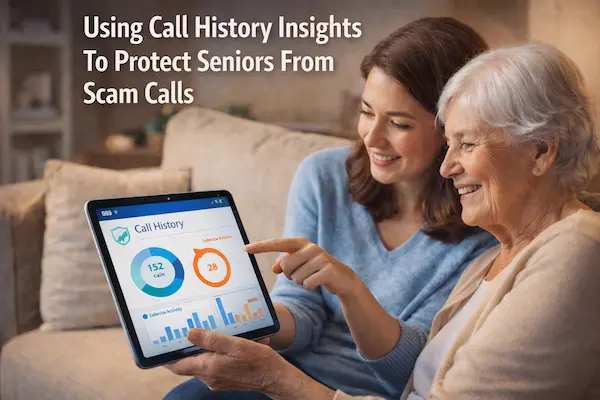
Scam calls do not just waste time, they can drain savings, confidence, and independence. The goal of this guide is simple: help families use call history patterns to spot escalation early, respond calmly, and set up safer habits that still respect a senior’s dignity. If your only objective is to Protect Seniors From Scam Calls, start with a repeatable system that reduces urgency and removes the pressure to act “right now.”
Contents
- 1 2026 Update: How Scam Calls Are Evolving
- 2 Why Call History Is an Early-Warning System
- 3 The Most Common Scam Call Scripts
- 4 High-Risk Call History Signals
- 5 The Caregiver Workflow That Works
- 6 Safer Calling Setup Without Breaking Independence
- 7 If a Senior Already Engaged With a Scammer
- 8 The Family Incident Log
- 9 Mini Case Studies
- 10 FAQs – Protecting Seniors From Scam Calls
- 11 Conclusion: A Calm, Repeatable System That Helps Protect Seniors From Scam Calls
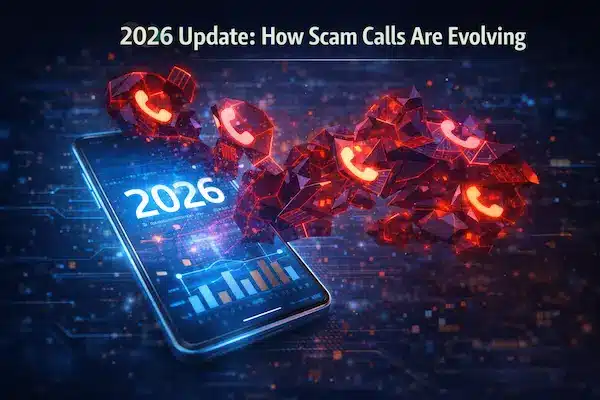
2026 Update: How Scam Calls Are Evolving
In 2026, scam calls feel more “normal” than ever, which is exactly the point. Spoofed local numbers, polished scripts, and rapid follow-ups are designed to remove thinking time and create a false sense of urgency. If your goal is to Protect Seniors From Scam Calls, the first step is understanding that modern scams rarely succeed in one call. They succeed through repetition, pressure, and confusion.
1. What changed in 2026
- Spoofed numbers often rotate in clusters, so blocking one number is not enough.
- Scripts sound more official and more conversational, with fewer obvious mistakes.
- Follow-ups are faster: short calls, immediate callbacks, and voicemail urgency that pushes quick action.
2. The 60-Second Answer
Use call history as an early-warning dashboard. Look for repeated contact from unknown numbers, especially short calls followed by fast callbacks, or a sudden spike in urgent voicemails. When those patterns appear, do not call back automatically and do not follow instructions from the caller. Verify using an official number you already trust, then block and report. This simple habit is one of the most effective ways to Protect Seniors From Scam Calls without creating constant tension at home.
3. Quick decision tree: block, verify, or report
- Unknown number calls once, no urgency: let it go to voicemail and review later.
- Unknown number repeats or pressures action: do not call back, verify first.
- “Bank, police, tax, benefits” claims: hang up and call the official number yourself.
- Threats, secrecy demands, gift cards, codes, or remote access: end the call and report.
4. Scam Risk Score
Add points when these appear in call history:
- Many calls from different local-looking numbers in a short window (3)
- Short calls followed by immediate callbacks (2)
- Urgent voicemails with “act now” language (3)
- New unknown number suddenly dominating recent calls (2)
- Calls clustered around a daily routine (1)
- Requests for codes, gift cards, remote access, or secrecy (3)
0–3 Low: monitor. 4–7 Medium: verify and block. 8+ High: tighten settings, review together, and take reporting steps. When families use this score consistently, it becomes easier to Protect Seniors From Scam Calls without arguing about every unknown number.
Why Call History Is an Early-Warning System
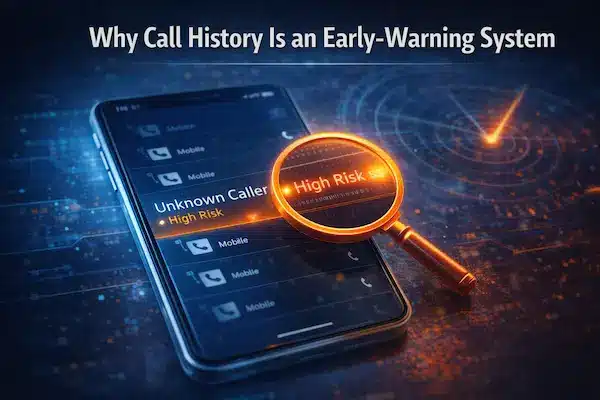
Scams rarely win in a single conversation. They win through repetition, timing, and pressure, and those patterns show up in call history long before money is lost. If you want to Protect Seniors From Scam Calls, treating the call log like a weekly “safety dashboard” is one of the lowest-friction steps a family can take.
1. Nuisance calls vs grooming patterns
A nuisance call is usually random: one attempt, no follow-up, and no clear escalation. A grooming pattern is different. It looks like persistent contact, multiple tries per day, short calls that test responsiveness, and a shift from “friendly” to urgent language over time. Call history helps you spot that shift early, when it is still easy to interrupt the cycle.
2. What “insights” actually mean (simple signals you can track)
You do not need complex analytics. The most useful call history signals are straightforward:
- Frequency: how many unknown calls per day or week
- Repeats: the same number, or many similar “local” numbers in clusters
- Timing: calls that hit the same routine window (morning, lunch, evening)
- Callbacks: short missed calls followed by immediate repeated attempts
- Voicemail pressure: sudden spikes in “urgent” voicemails
- New dominance: one unknown contact suddenly becomes a top caller
These signals are valuable because they are objective. They reduce arguments like “maybe it was important” and replace them with a calmer question: why is this number trying so hard?
3. What call history cannot prove (and how to avoid false alarms)
A call log can show patterns, but it cannot prove intent. Not every unknown number is a scam, and overreacting can cause missed medical, pharmacy, or service calls. If the goal is to Protect Seniors From Scam Calls, the rule should be “verify, then act.” Use voicemail, look up numbers through trusted channels, and add legitimate callers to contacts so future calls are less stressful.
Many families panic because they assume “call history” proves what was said on the call. In reality, call history is metadata (who called, when, how long) — and that distinction helps you avoid false alarms. See the simple breakdown here: what call history tracking really means.
4. The simplest weekly routine
A five-minute review once a week, plus a quick check after any “urgent” call, is usually enough. Look for new repeated unknown numbers, cluster patterns, and urgent voicemails. Then apply the same playbook every time: verify using official numbers, block what is confirmed suspicious, and document anything that repeats. This routine keeps the senior in control while still helping you Protect Seniors From Scam Calls consistently.
The Most Common Scam Call Scripts
Scam calls change numbers and names, but the scripts stay familiar. Once you can label the script, you stop reacting to urgency and start verifying calmly. If you want to Protect Seniors From Scam Calls, this section is the shortcut: recognize the pattern, end the call, and verify through trusted channels.
1. “Bank security” and account lock threats
The caller claims fraud and pushes “urgent verification” steps, often asking for one-time codes or account details. The safe move is always the same: hang up and call the bank using an official number you already trust.
2. “Government, taxes, police” intimidation
These calls use fear and authority, demanding secrecy and immediate payment. A short refusal works best: “Send it by mail. I will call the official number.” Then end the call.
3. “Grandchild emergency” and family crisis
This script targets empathy and panic, often insisting the senior should not contact family. A family code word and a callback rule can stop it fast. Used consistently, that habit helps Protect Seniors From Scam Calls without turning life into suspicion.
4. “Medical, insurance, benefits” pressure
The goal is usually personal data. The safest response is to decline and call the provider back using a trusted number on a card or official website.
5. “Tech support” and device takeover
The caller claims the device is infected and tries to get remote access or guide settings changes. The rule is simple: no remote access, no installs, no codes from an incoming call. If you need help, contact official support yourself.
When seniors and caregivers can name the script, they can slow down the moment. That is why learning these patterns is one of the fastest ways to Protect Seniors From Scam Calls and why it keeps working even when scammers change numbers.

High-Risk Call History Signals
Scammers rarely stop after one attempt. They probe, repeat, and escalate, and call history is where that escalation becomes obvious. If you want to Protect Seniors From Scam Calls, these are the patterns to flag first because they often show up right before a scam succeeds.
1. Rapid repeat calls from related numbers (spoof clusters)
A burst of calls from several different numbers that look local or familiar is a classic campaign signal. The numbers rotate, but the behavior is consistent: repeated attempts in a short window meant to wear someone down. Treat clusters as one scam effort, not separate “new callers.”
2. Short calls followed by immediate callbacks
Quick hang-ups or very short calls are often used to trigger curiosity, then the caller hits again immediately. If the log shows repeated short attempts from unknown numbers, do not call back to “see who it is.” Let voicemail take it and verify through trusted channels only. This small habit helps Protect Seniors From Scam Calls without adding stress.
3. Odd timing patterns that target routines
Watch for calls that repeatedly hit the same routine window, early morning, lunchtime, late evening, or right after a regular appointment. Predictable timing can mean the caller is learning habits and aiming for distraction. When you see routine targeting, tighten screening settings and review together.
4. A new unknown number suddenly dominates the log
If an unknown number becomes a top caller within a day or two, that is a strong escalation signal. It usually means the scammer has identified a responsive target and is pushing harder. This is the moment to step in calmly, set a callback rule, and block after verification.
5. Voicemail pressure spikes and urgency language
Voicemails that demand immediate action, secrecy, or a callback “right now” are pressure tactics. If several urgent voicemails appear close together, assume the goal is to rush past verification. Save the voicemail, do not follow instructions, and verify using official numbers you already trust. Done consistently, these checks Protect Seniors From Scam Calls more reliably than arguing with the caller.
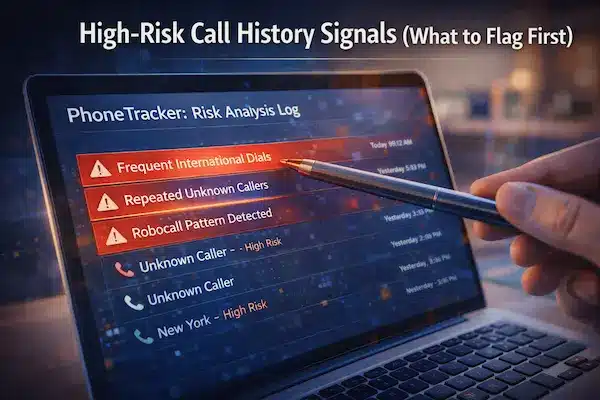
Table 1: Scam Risk Signals from Call History
| Call history signal | What it often means | Risk level | What to do now | What not to do |
|---|---|---|---|---|
| Many calls from different “local” numbers in a short time | Spoof cluster or rotating campaign | High | Stop answering unknown callers, enable screening, review together | Do not call back unknown numbers |
| Very short calls then repeated attempts | Hook to trigger curiosity and engagement | Medium to High | Let voicemail handle it, verify via trusted contacts | Do not “test” by calling back |
| Repeated calls at the same daily routine time | Targeting and conditioning | Medium | Block after verification, adjust screening rules | Do not share schedule details |
| One unknown number becomes a top caller quickly | Escalation and focused manipulation | High | Review call log together, block and report | Do not handle it alone |
| Spike in urgent voicemails | Pressure tactic to bypass thinking | High | Save voicemails, verify via official numbers | Do not follow voicemail instructions |
When families watch these signals and respond with a simple verify-and-block routine, it becomes much easier to Protect Seniors From Scam Calls without overreacting to every unknown number.
The Caregiver Workflow That Works
A good system should feel calm, predictable, and respectful. If you want to Protect Seniors From Scam Calls, the best approach is not chasing every unknown number. It is building a simple routine that reduces urgency and makes verification the default.
Step 1: Review call history
Keep this short, five minutes is enough. You are looking for patterns, not perfection: repeated unknown callers, clusters of “local” numbers, short calls with quick callbacks, and urgent voicemails. Pick one or two items to address each week, not the entire log.
Caregiver tip: review together when possible. It feels less like monitoring and more like teamwork.
Step 2: Verify using trusted channels only
Verification means the family calls back using an official or known number, never the number that just called. That can be the phone number on a bank card, the official website for a provider, or a saved contact for family. This is the step that breaks most scams, because it removes the scammer’s control over the conversation.
If you are trying to Protect Seniors From Scam Calls, teach one simple rule: “I do not verify anything from an incoming call. I call back using a number I already trust.”
Step 3: Block and report
Once you confirm a number is suspicious, block it and move on. If the calls keep rotating, enable call screening or spam filtering and consider carrier-level blocking tools. Save any threatening voicemails and report patterns that include extortion, impersonation, or repeated harassment.
Keep blocking simple. The goal is fewer risky conversations, not a perfect blacklist.
Set two family rules that reduce risk without reducing independence
- Trusted contacts rule: doctors, pharmacies, banks, and close family should be saved in contacts. Unknown numbers go to voicemail first.
- Callback rule: if a caller claims urgency, the senior hangs up and calls a trusted number back.
These two rules prevent most “act now” traps while still letting seniors manage their own phone.
The no shame rule
Many seniors hide scam calls because they feel embarrassed. That silence is what scammers rely on. Make the rule explicit: no blame, no lectures, and no punishment for answering. The win is honesty and a quick reset.
When families follow this routine consistently, it becomes much easier to Protect Seniors From Scam Calls without constant arguments or over-blocking.

Safer Calling Setup Without Breaking Independence
The best protection does not feel like control. It feels like fewer stressful interruptions and a clear plan for what to do when something looks suspicious. If you want to Protect Seniors From Scam Calls, focus on settings that reduce exposure while keeping the senior in charge.
1. Turn on built-in spam labeling and call screening
Most modern phones and carriers offer spam detection, caller labeling, and basic screening features. These tools will not stop every scam, but they reduce the number of risky calls that reach the senior in the first place. The key is consistency: leave screening on, and treat unknown callers as “voicemail first.”
2. Use a trusted-contacts approach for high-risk periods
Instead of blocking the world, use simple boundaries during times when seniors are most vulnerable to pressure, such as early mornings or late evenings. A “contacts-first” rule during those windows can reduce scams while still allowing important calls to come through later by voicemail.
3. Make voicemail work for you, not against you
Many scam scripts rely on urgency. Voicemail creates breathing room. Encourage a habit of listening to voicemail first, then calling back using a known number if it seems legitimate. This one change can reduce the emotional leverage scammers depend on.
4. Avoid common setup mistakes
- Over-blocking that causes missed medical or pharmacy calls
- Too many alerts that create anxiety and confusion
- Complex settings that the senior cannot adjust or understand
- Changing rules too often, which makes the system feel unreliable
A good setup is easy to explain in one sentence: “Unknown numbers go to voicemail, urgent claims get verified by calling back through a trusted number.” That combination helps Protect Seniors From Scam Calls while preserving independence and dignity.
If a Senior Already Engaged With a Scammer
If a senior already answered, shared something, or sent money, the priority is speed and calm follow-through. The goal is to limit damage, restore control, and reduce the chance of repeat targeting. Families who Protect Seniors From Scam Calls well do not panic or blame, they move step by step.
1. If personal info was shared
Treat it as a risk of identity misuse. Note what was shared (name, address, date of birth, ID numbers), then tighten account security: update email and banking passwords, enable two-factor authentication, and review account recovery options. Watch for follow-up calls or texts that reference the information to sound “legitimate.”
2. If one-time codes or passwords were shared
Assume account takeover is possible. Change passwords immediately, sign out of other devices where available, and reset recovery email and phone settings. If the scam involved banking or payments, contact the bank or card issuer right away and ask what protective steps they recommend for your situation. This is one of the fastest ways to Protect Seniors From Scam Calls from turning into repeat losses.
3. If money was sent or gift cards were purchased
Do not send more money to “fix” it. Call the bank or payment provider immediately and ask about reversing or disputing the transaction. If gift cards were involved, keep receipts and card numbers and contact the card issuer’s support as soon as possible. Also expect a second wave of calls claiming they can “recover” funds for a fee.
4. If remote access was granted (phone or computer)
Disconnect from the internet if needed, remove any remote-access apps you do not recognize, and change key passwords from a different trusted device. If you are unsure what was installed, get help from official device support or a trusted local technician. The key is to regain control of accounts first, then clean up the device.
One rule that matters: no shame. If a senior feels judged, they may hide the next call. Keeping the conversation calm is part of how families Protect Seniors From Scam Calls long-term.
The Family Incident Log
A simple incident log keeps everyone calm and consistent, especially when numbers keep changing. If your goal is to Protect Seniors From Scam Calls, this log is not “monitoring”, it’s a family memory aid that helps you spot repeats and respond the same way every time.
1. What to record (keep it lightweight)
Write down only what helps you act later: date and time, number shown, what they claimed (bank, police, tech support), what they asked for (codes, money, remote access), and what you did (voicemail, verified, blocked, reported). That is enough to Protect Seniors From Scam Calls without turning it into paperwork.
2. How to spot repeat campaigns
Look for the same script returning with new numbers, calls hitting the same routine window, and a second wave after you block. Repeat patterns are the signal that your family needs to tighten the “voicemail first” and “verify by official number” rules.
3. Keep the tone respectful
The log should feel like teamwork. No blame, no lectures, and no pressure. A calm routine is how families Protect Seniors From Scam Calls long-term, because seniors stay willing to share what happened.
Mini Case Studies
These quick examples show how small call-history clues lead to simple next steps. If you want to Protect Seniors From Scam Calls, the goal is calm routines, not perfect detection.
1. “Bank security” stopped with a callback rule
A senior got repeated “local” calls and a voicemail claiming their bank account was frozen, asking for a text code. Call history showed the same pattern multiple times in two days. The family ignored the voicemail instructions and called the bank using the number on the card. The bank confirmed it was a scam. They blocked the numbers and reinforced one rule: no codes on incoming calls. That routine helped Protect Seniors From Scam Calls without blaming the senior.
What we learned: Verification beats conversation.
2. “Grandchild emergency” blocked by a family code word
A caller begged for urgent help and told the senior not to call family. The senior asked for the family code word, the caller failed, and the call ended. Call history later showed a cluster of similar numbers trying again. The family blocked them and kept the code-word rule. This made it easier to Protect Seniors From Scam Calls while keeping the senior confident and in control.
What we learned: A code word buys time.
3. Tech support takeover avoided with “no remote access”
A caller claimed the phone was infected and pushed remote access. The log showed short calls and fast callbacks. The caregiver used a clear refusal, hung up, and checked for unfamiliar apps. Nothing was installed, so the risk stayed contained. This is how families Protect Seniors From Scam Calls before a “helpful fix” becomes a takeover.
What we learned: Clear boundaries stop escalation early.
FAQs – Protecting Seniors From Scam Calls
1. What is the fastest way to reduce scam call risk today?
Let unknown numbers go to voicemail first, then verify using a trusted number you already have. Do not call back numbers you do not recognize.
2. How often should a caregiver review call history?
Once a week is usually enough, plus a quick check after any call that feels urgent or threatening. Five minutes beats a long, stressful deep dive.
3. Are unknown numbers always scams?
No. Doctors, pharmacies, delivery drivers, and service providers may call from unfamiliar numbers. The safer rule is “verify first,” not “block everything.”
4. What should a senior say to end a scam call quickly?
Keep it short: “I don’t handle this by phone. Goodbye.” Then hang up and verify through an official number. This calm habit helps Protect Seniors From Scam Calls without turning every call into a debate.
5. Why do scam calls often show local numbers?
Scammers spoof caller ID to look familiar and trustworthy. A local-looking number is not proof the caller is local.
6. How do we avoid blocking important medical calls?
Save known clinics, pharmacies, and caregivers in contacts. Use voicemail-first for unknown callers, then add legitimate repeat callers to contacts after you confirm them.
7. What are the red flags that mean a scam is escalating?
Repeated calls in clusters, short calls with immediate callbacks, urgent voicemails, secrecy demands, and requests for codes, gift cards, or remote access.
8. What should we do right after a scam succeeds?
Act calmly and quickly: secure accounts, change passwords, enable two-factor authentication, and contact the bank or provider using official channels. A clear, no-shame response makes it easier to Protect Seniors From Scam Calls next time because the senior will be more willing to report what happened.
Conclusion: A Calm, Repeatable System That Helps Protect Seniors From Scam Calls
Scam calls are not slowing down, and the pressure tactics are getting sharper. The families who respond best do not chase every unknown number. They build a simple routine that works even on a stressful day: voicemail first, verify through trusted numbers, then block and move on. That steady approach is how you Protect Seniors From Scam Calls without taking away independence, and it is how you stop a single attempt from turning into a weeks-long campaign.
Quick Summary Table
| What to watch in call history | What it usually means | Best next step |
|---|---|---|
| Repeat calls from “local” numbers in clusters | Rotating spoof campaign | Enable screening, do not call back, verify if needed |
| Short calls followed by fast callbacks | Curiosity hook and escalation | Voicemail first, apply callback rule |
| Urgent voicemails claiming bank or government action | Pressure to bypass thinking | Hang up, call official numbers only |
| One unknown number becomes a top caller | Focused manipulation attempt | Review together, block, document repeats |
| Requests for codes, gift cards, secrecy, remote access | High-risk scam behavior | End call immediately, report and secure accounts |
Families often ask what matters most in the moment. It is not the perfect blacklist or a complicated setup. It is the ability to slow down urgency, verify through official channels, and keep communication open so seniors feel safe telling the truth.
If you want a clearer way to spot patterns and keep a caregiver-friendly view of risky repeat calls, use PhoneTracker247. It helps you review call activity, identify repeated unknown callers faster, and build a calmer protection routine that supports seniors without making them feel supervised. When you are serious about how to Protect Seniors From Scam Calls, PhoneTracker247 gives families a practical system they can actually stick with.
For daily updates, subscribe to PhoneTracker’s blog!
We may also be found on Facebook!