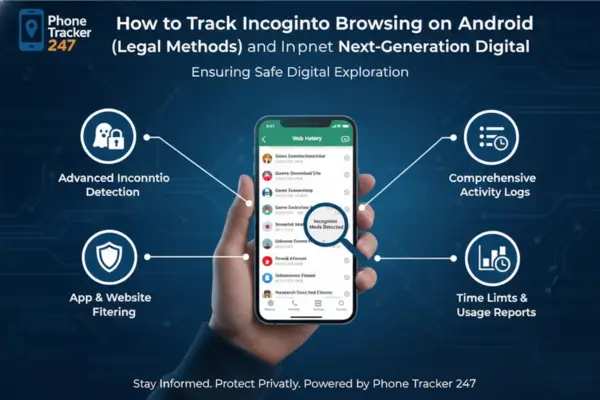
Learn How to Track Incognito Browsing on Android (Legal Methods) using expert-vetted parental monitoring apps. Essential guide to Track Browsing History: Protecting Kids from Unsafe Websites.
Contents
- 1 Understanding the Challenge of Tracking Private Sessions on Android
- 2 Choosing the Right Parental Monitoring App to Track Browsing History: Protecting Kids from Unsafe Websites
- 3 The Ethical and Legal Framework for How to Track Incognito Browsing on Android (Legal Methods)
- 4 Implementation and Best Practices for Continuous Device Monitoring
- 5 Frequently Asked Questions (FAQs)
- 6 Conclusion: Securing the Digital Frontier
Understanding the Challenge of Tracking Private Sessions on Android
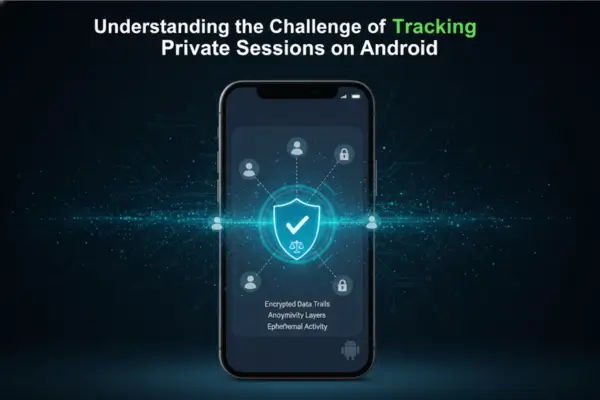
Understanding the Challenge of Tracking Private Sessions on Android
The moment a user selects “New Incognito tab” in Chrome or activates a similar private mode in another Android browser, the device’s local browsing history, cookie files, and site data are temporarily isolated and deleted upon closing the session. The core difficulty in answering How to Track Incognito Browsing on Android (Legal Methods) stems from this fundamental design. However, specialized, legitimate parental control applications effectively bypass this local history limitation by monitoring network activity and screen input at a deeper operating system level. These tools, when installed with full consent and device permissions, capture and transmit a traceable record of visited Uniform Resource Locators (URLs) back to the parent’s dashboard. This provides the only reliable and legal pathway for proactive supervision, establishing the necessary visibility into otherwise hidden online activity.
The rise of the internet as the primary information source for minors has brought unprecedented challenges to parenting in the digital age. While standard monitoring tools often rely solely on accessing the saved history log, private browsing modes intentionally subvert this, making it simple for children to conceal potentially harmful online behavior. As such, the focus shifts from retrieving deleted data to capturing the activity in real-time, which necessitates a purpose-built device monitoring application. Understanding this technical distinction is the first critical step toward implementing effective digital safety measures.
The Technical Reality of Incognito Privacy
Incognito mode, or private browsing, is not the ultimate cloaking device many believe it to be. It is designed merely to prevent the local device from retaining a record. It does not mask the user’s IP address, nor does it prevent the network owner (such as a school, workplace, or cellular provider) or, crucially, a privileged phone monitoring app for Families from logging the traffic destination. These apps operate with system-level access, essentially recording the destination address of every packet of data transmitted, thereby solving the riddle of How to Track Incognito Browsing on Android (Legal Methods) through authorized application-layer interception, not by hacking the browser itself.
Table 1: Incognito Monitoring Reality Check for Parents
Short description: This table clarifies what Incognito mode actually hides, what it does not hide, and which monitoring/control layers parents can legally use to improve safety.
| Layer / Method | What It Does | What Parents Can See / Control | Main Limitation | Trust Note |
|---|---|---|---|---|
| Chrome Incognito (device-only privacy) | Reduces what Chrome saves locally after the private session ends | No persistent local history in Chrome after tabs are closed | Does not make activity invisible to websites, network operators, schools, employers, or ISPs | Matches Google Chrome Help documentation on what Incognito saves vs. what others can still observe |
| Google Family Link (supervised child account) | Applies Chrome web controls for a child account | Block/allow sites, try to block explicit sites, approve/deny blocked-site requests | Works best when the child is signed in with a supervised Google account; controls may not apply in other browsers/profiles | Official Google Families documentation explicitly notes Incognito is turned off for supervised child accounts in Chrome |
| System-level parental monitoring app | Logs activity outside the browser history layer (app/system level) | URL logs (where supported), keyword alerts, app usage, filtering/blocking, alerts | Requires proper setup, permissions, and lawful/consent-based use | Aligns with your article’s core technical explanation for handling Incognito gaps |
| Chrome enterprise / managed-device policy (schools/orgs) | Admin-level policy can disable Incognito mode entirely | Organization can enforce “Incognito disabled” on managed Chrome environments | Primarily for managed devices/accounts (school/business), not typical home setups | Google Chrome Enterprise policy docs provide a verifiable control path (IncognitoModeAvailability) |
| Parent review workflow (alerts + routine check-ins) | Turns raw monitoring into intervention and guidance | Detects risk patterns (self-harm, grooming, cyberbullying indicators) and supports faster response | Monitoring without communication can damage trust | Stronger because it shows a safety-first, consent-first process rather than “spyware” framing |
Choosing the Right Parental Monitoring App to Track Browsing History: Protecting Kids from Unsafe Websites
Choosing the Right Parental Monitoring App to Track Browsing History: Protecting Kids from Unsafe Websites
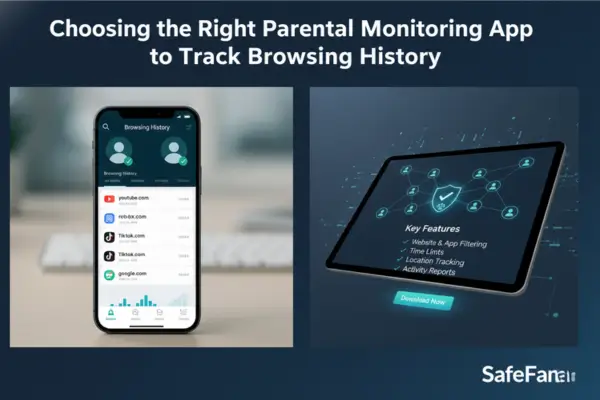
The most effective way to address the issue of concealed online activity and reliably Track Browsing History: Protecting Kids from Unsafe Websites is by deploying a robust, highly-rated parental monitoring app that complies with all privacy regulations. Such applications provide comprehensive, time-stamped reports on all web activity, irrespective of whether the browser session was initiated in standard or private mode. Crucially, these tools offer advanced features such as real-time content filtering, keyword alerts, and the ability to instantly block high-risk or prohibited websites, moving beyond simple surveillance to active protection.
The modern solution for online safety tools must extend far beyond basic logging capabilities. Parents need a comprehensive, yet intuitive, dashboard that allows them to review a child’s children’s online behavior patterns, identify sudden shifts toward high-risk content, and intervene before a minor exposure escalates into a major cyber risk prevention incident. This holistic approach is essential for maintaining trust while fulfilling the parental obligation of supervision.
Essential Features of a High Monitoring Solution
A truly authoritative and effective solution for parental control on Android should include the following features to ensure you can adequately Track Browsing History: Protecting Kids from Unsafe Websites:
- Comprehensive URL Logging: Capture every visited URL, regardless of the browser (Chrome, Firefox, etc.) or mode (standard, Incognito). This directly addresses How to Track Incognito Browsing on Android (Legal Methods).
- Keystroke Logging (Keylogger): A key feature for capturing search terms entered during private sessions, providing context even if the full page fails to load or the child quickly closes the tab.
- App Usage Monitoring: See not only the browser activity but also the usage patterns of all installed applications, including social media and messaging platforms.
- Location Tracking Accuracy: Reliable location tracking accuracy, often incorporating geofencing, adds an extra layer of real-world safety, linking online activity to physical location.
- Web Filtering & Blocking: Instantaneous blocking capabilities for categories like pornography, violence, or gambling.
Addressing the Incognito Mode Technical Gap
A common pitfall is the belief that a simple browser extension can solve the problem of How to Track Incognito Browsing on Android (Legal Methods). This is incorrect. Incognito mode is specifically designed to disable most extensions and third-party scripts. The effective method is a system-level parental monitoring app that operates outside of the browser sandbox, logging network requests before they are processed by the browsing application. This ensures persistent device monitoring even when sophisticated attempts are made to hide activity. Furthermore, these best-in-class tools typically offer stealth mode operation, preventing the child from easily disabling the monitoring features and ensuring continuous visibility.
The Ethical and Legal Framework for How to Track Incognito Browsing on Android (Legal Methods)
The legal justification for monitoring a minor’s device hinges primarily on device ownership and the age of the child. For parents who legally own the Android device their minor child uses, the ability to How to Track Incognito Browsing on Android (Legal Methods) is generally permissible under U.S. and most Western international laws, provided the monitoring is for the minor’s safety and well-being. However, the ethical and procedural requirements are equally crucial for maintaining a strong family dynamic. The goal must always be supervision, not invasive surveillance, establishing a clear boundary that respects a child’s developing autonomy while protecting them from genuine risks.
When seeking to Track Browsing History: Protecting Kids from Unsafe Websites, the legal methods involve using software tools that explicitly require the device owner’s installation and administrative privileges, such as the suite of tools found at PhoneTracker247. This avoids resorting to illegal hacking or unauthorized access.
The Importance of Transparency and Consent
While legality may allow for covert monitoring of very young children, most cybersecurity and mental health experts advocate for transparency, particularly with teenagers. Open communication about the existence of the monitoring software and the ‘why’—centered on safety and trust—can significantly improve a child’s willingness to practice responsible children’s online behavior. The monitoring software is presented not as a punitive tool, but as a collective strategy for digital well-being and cyber risk prevention. Transparency aids in the long-term goal of teaching the child mobile security practices rather than simply policing them.
Compliance with Regulations and Privacy Policy
Any professional solution designed to How to Track Incognito Browsing on Android (Legal Methods) must demonstrate clear compliance with regulations like COPPA (in the US) or GDPR (in the EU) regarding the handling of a minor’s data. This includes having a robust, transparent privacy policy and consent framework. Parents should only utilize services that have a proven record of data security and ethical operation, ensuring that the tool used to protect their child does not inadvertently expose their private information to third-party risks. Due diligence here is essential for establishing.
Table 2: Consent-First Setup Checklist for Tracking Incognito Risk
Short description: Use this checklist to present a legal, ethical, and evidence-based implementation flow that improves parental trust while protecting children online.
| Step | Recommended Action | Why It Matters | Evidence You Can Document (EEAT) |
|---|---|---|---|
| 1. Confirm device ownership and guardian role | Use monitoring only on a child’s device you legally manage | Establishes lawful basis and avoids unauthorized access | Device ownership note, guardian relationship, account ownership |
| 2. Explain the purpose clearly | Tell the child the goal is safety (not punishment) | Transparency improves trust and long-term compliance, especially with teens | Family safety agreement (1–2 paragraphs) |
| 3. Choose the right control layer | Use Family Link for supervised Chrome controls; use a system-level monitoring tool for deeper visibility | Browser-level controls alone may not cover all private-session behavior | Screenshot of Family Link settings + app feature list/policy page |
| 4. Enable filtering and alerts | Turn on explicit-site filtering, keyword alerts, and website blocking rules | Real-time alerts are more actionable than manually reviewing long URL lists | Keyword list, blocked category list, notification settings |
| 5. Add digital well-being rules | Set screen-time limits, study-hour blocks, and device curfews | Reduces risk exposure and supports healthy habits, not just detection | Screen-time schedule and review cadence |
| 6. Review data on a schedule | Check summaries weekly; escalate only when needed | Prevents over-monitoring and keeps responses proportional | Weekly review log (date, issue type, action taken) |
| 7. Minimize and protect data | Keep retention short, limit who can access reports, and avoid unnecessary data collection | Strong privacy practice improves trustworthiness and compliance posture | Retention policy (e.g., 30–90 days), access list |
| 8. Handle serious-risk signals fast | Create a response plan for grooming, self-harm, or severe harassment indicators | Monitoring only helps if parents know what to do next | Escalation plan (parent, school counselor, local support, emergency steps) |
Implementation and Best Practices for Continuous Device Monitoring
Implementation and Best Practices for Continuous Device Monitoring
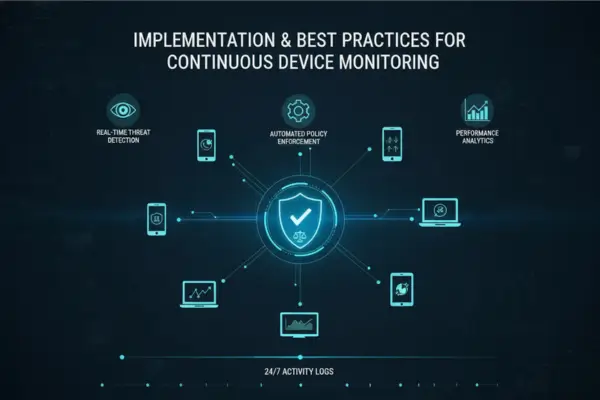
Deploying a monitoring solution effectively requires more than just installation; it requires a strategic, long-term approach to device monitoring. Once a suitable application is chosen—one that can reliably Track Browsing History: Protecting Kids from Unsafe Websites—the focus shifts to integrating the data into a healthy parenting in the digital age strategy. This includes setting clear boundaries, scheduling regular review periods, and utilizing the advanced features of the software proactively.
For example, real-time alerts for pre-defined keywords (like ‘suicide,’ ‘drugs,’ or location-specific risk terms) are often more valuable than a nightly review of hundreds of URLs. This targeted approach allows the parent to intervene immediately and prevent serious harm before it occurs. Further guidance and insights on this can often be found through a provider’s resources.
Screen Time Management and Digital Well-being
Effective parental control is not solely about detecting bad behavior; it is equally about promoting digital well-being. The tools that offer a reliable pathway for How to Track Incognito Browsing on Android (Legal Methods) often include robust screen time management features. These features allow parents to set daily limits, enforce a digital curfew, and block distracting apps during study hours.
This combination of monitoring what is viewed and controlling when it is viewed is powerful. It allows the child to develop healthy boundaries and avoid the negative impacts of excessive screen usage, while the parent retains the critical safety net required to Track Browsing History: Protecting Kids from Unsafe Websites should the child attempt to circumvent safety rules.
Proactive Cyber Risk Prevention
Beyond simple content filtering, the most advanced solutions offer deep analytical insights that assist in cyber risk prevention. This involves identifying patterns indicative of:
- Cyberbullying: Repeated, hostile communications via messaging apps.
- Predatory Grooming: Suspicious, repeated contact with unknown adults.
- Self-Harm: Searching for extreme content or accessing pro-anorexia or pro-suicide websites, often concealed through Incognito mode.
The ability to How to Track Incognito Browsing on Android (Legal Methods) transforms the parental role from reactive cleanup to proactive intervention, using data to inform urgent, potentially life-saving discussions. This expertise is a cornerstone of mobile security practices in modern households.
Frequently Asked Questions (FAQs)
1. What does Incognito mode actually hide?
Incognito mainly hides browsing activity on the device itself (local history, cookies, and site data after the session ends), not everywhere online.
2. Can Android or Chrome natively show a child’s Incognito history?
No. Chrome/Android do not keep a normal local history log for Incognito sessions after the tabs are closed.
3. What is the legal way for parents to monitor Incognito browsing?
Use a legitimate parental monitoring app on a parent-owned minor’s device, with proper permissions and a safety-focused purpose.
4. Does Incognito mode make a user invisible online?
No. Websites and network operators (like schools, employers, or ISPs) may still see activity.
5. What features help monitor private browsing safely?
Look for URL logging, keyword alerts, web filtering/blocking, and app activity monitoring.
6. Can a monitoring app “recover” deleted Incognito history?
Not exactly. The article explains that good tools log activity in real time, so they do not rely on the browser’s deleted history file.
7. Is a browser extension enough to track Incognito activity?
Usually no. The article notes Incognito is designed to limit many extensions, so browser-only tools are often not enough.
8. Is it legal to monitor a teenager’s phone?
It depends on local law, age, and device ownership, but the article emphasizes legal, consent-based parental use for minor safety.
9. Are free monitoring apps a good option?
Often no. Free tools may be less secure, less reliable, or easier for teens to bypass.
10. What is the best ethical way to use Incognito monitoring?
Use it for safety, be transparent (especially with teens), and combine alerts with open conversations—not punishment-only monitoring.
Conclusion: Securing the Digital Frontier

Conclusion: Securing the Digital Frontier
The ability of a minor to launch a private browsing session should not translate into a parent’s inability to ensure their child’s safety. The solution to How to Track Incognito Browsing on Android (Legal Methods) is found not in hacking or digital espionage, but in leveraging legal, professional-grade parental monitoring apps. These tools provide the necessary, real-time visibility that standard browsers intentionally conceal, allowing parents to fulfill their duty of protection in an increasingly complex digital world.
By implementing an ethical, feature-rich platform, parents gain the authority and expertise needed to effectively Track Browsing History: Protecting Kids from Unsafe Websites. This approach moves the discussion beyond simple privacy to an active strategy of cyber risk prevention, ensuring that parenting in the digital age is built on a foundation of proactive knowledge, ethical transparency, and unwavering commitment to a child’s online safety tools and well-being. Ultimately, knowing How to Track Incognito Browsing on Android (Legal Methods) is a critical capability for any modern parent seeking to secure their child’s digital frontier.
For daily updates, subscribe to PhoneTracker’s blog!
We may also be found on Facebook!