Caring for aging parents is a delicate balance between respecting their freedom and ensuring their safety. That sudden jolt of panic when a loved one doesn’t answer or return home is a feeling no caregiver should endure. In 2026, a high-quality elderly GPS tracker is an essential lifeline, bridging the gap between independence and security. This guide reviews the top-rated solutions—from advanced wearables to the versatile Phone Tracker 247 app—helping you choose the right safety net with empathy and expert insight.
Read on to discover the perfect safety net for your loved ones and regain your peace of mind today.
Contents
- 1 Why an Elderly GPS Tracker is Essential for Modern Caregiving
- 2 Key Features to Look for in a GPS Monitor for Elderly Safety
- 3 Top-Rated GPS Tracker for Old People: 2025 Expert Reviews
- 4 Comparing Hardware vs. Smartphone Apps
- 5 How to Choose and Set Up Your Elderly GPS Tracker
- 6 FAQs
- 7 Conclusion: Real Safety, Real Peace of Mind
Why an Elderly GPS Tracker is Essential for Modern Caregiving
In 2025, the landscape of elderly care has shifted. As global populations age, caregivers are turning to technology not just for convenience, but as a critical safety requirement. Implementing an elderly gps tracker is a proactive step that addresses the most pressing risks associated with aging today.
The Growing Risk of Wandering in Seniors (Alzheimer’s & Dementia)
Wandering is one of the most distressing challenges for families, often occurring without warning. Research from the Alzheimer’s Association indicates that 6 out of 10 people living with dementia will wander at least once; many do so repeatedly. Without an elderly GPS tracker, a simple walk can quickly turn into a life-threatening “elopement” incident.
In the United States, with over 7.2 million Americans living with Alzheimer’s in 2025, the risk is a national concern. From the busy streets of New York to suburban neighborhoods in Florida, “Silver Alerts” have become a frequent necessity to mobilize public help for missing seniors. Similarly, across Europe—the world’s fastest-aging region—search and rescue teams in countries like the UK and Germany report that a significant portion of their emergency calls involve disoriented seniors. A dedicated tracking device for elderly safety ensures that if a loved one loses their way, they are found within the “golden hour,” drastically reducing the risk of injury or exposure.
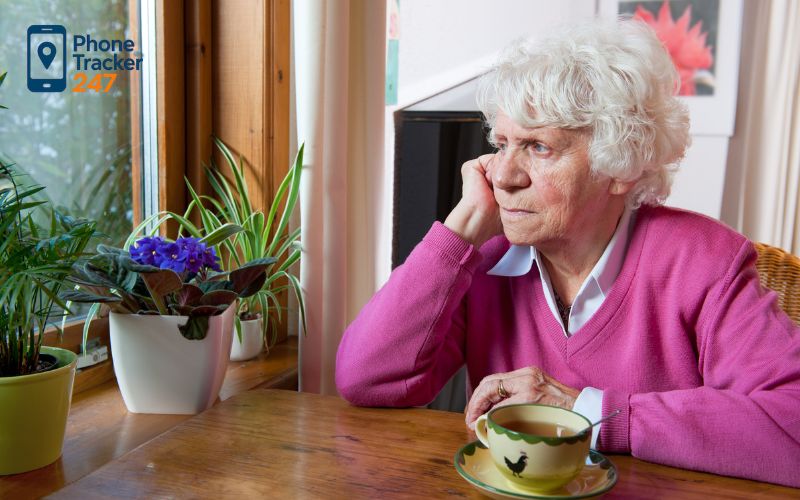
Balancing Independence with Safety: The Role of a GPS Locator for Elderly
For many seniors, the fear of being “monitored” is a barrier to using technology. However, a gps locator for elderly independence actually provides more freedom, not less.
- Encourages Physical Activity: Seniors feel confident walking to the local market or park, knowing help is one click away.
- Reduces Social Isolation: By removing the fear of getting lost, seniors are more likely to visit friends and participate in community events.
- Privacy-First Features: Modern devices allow for “incognito” tracking that only alerts caregivers if a “Safe Zone” (Geofence) is breached, respecting the senior’s dignity.
Peace of Mind for Long-Distance Caregivers
The “sandwich generation”—those caring for both children and aging parents—often lives miles away from their loved ones. A GPS monitor for elderly health and location serves as a digital bridge. Whether you are in the UK or the US, you can check your phone to see that your parents in another state (or even another country) is safe at home.
Recent 2025 caregiver surveys show that using a GPS tracker for old people reduces caregiver anxiety levels by over 40%, allowing family members to focus on their own work and lives while remaining “virtually” present.
Table 1: Best Elderly GPS Tracker Options Compared
| Tracker type | How it works | Biggest pros | Main downsides | Best for |
|---|---|---|---|---|
| Smartphone + tracking app (PhoneTracker247) | GPS + cellular data from the senior’s phone | No extra device to wear, strong location history, easy caregiver sharing | Depends on the senior carrying and charging the phone | Seniors who already use a smartphone daily |
| GPS smartwatch (cellular) | Watch with built-in GPS + eSIM/cellular plan | Always on-wrist, quick SOS, some models add fall alerts | Higher cost, needs charging and cellular setup | Active seniors who will wear a watch consistently |
| Dedicated GPS pendant (SOS) | Small wearable with GPS + SIM, usually with an SOS button | Simple, lightweight, designed for emergencies | Accuracy varies indoors, subscription often required | Seniors who want “press one button for help” simplicity |
| Medical alert system with GPS | Emergency monitoring service + wearable GPS device | 24/7 response center option, clear emergency workflow | Ongoing monthly fees, more “service” than “tracker” | Seniors living alone or with higher medical risk |
| Pocket GPS tracker | Small GPS unit carried in pocket/bag | Easy to carry, longer battery on some models | Easy to forget at home, not wearable | Short errands, occasional outings |
| Bluetooth tag (not true GPS) | Uses nearby phones to help locate lost items | Cheap, great for locating items nearby | Not real-time GPS tracking, limited for safety use | Keys/wallets, not recommended as primary senior safety tracker |
Key Features to Look for in a GPS Monitor for Elderly Safety
Selecting an elderly gps tracker is a critical decision that balances technical capability with the specific needs of a senior. To ensure you are getting a reliable gps monitor for elderly loved ones, prioritize these five essential features:
Real-Time Location Tracking and History
The core of any tracking device for elderly safety is its ability to provide pinpoint accuracy. Modern devices now use a “Multi-GNSS” approach, combining GPS, GLONASS, and Galileo satellites.
- Live Updates: Look for “Active Tracking” which updates every 10–30 seconds. In urban jungles like New York or London, where tall buildings can bounce signals, 4G LTE/5G cellular backup is vital to maintain a steady connection.
- Location History: High-quality apps allow you to view the last 24–48 hours of movement. This is crucial for identifying “pacing” or “repetitive loops,” which are early warning signs of cognitive disorientation.
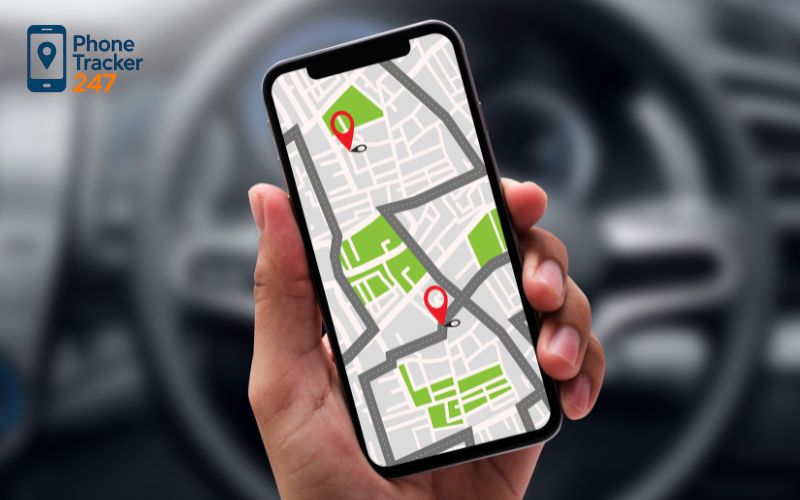
Geofencing: Setting Virtual Safety Perimeters
Geofencing is arguably the most powerful tool for managing dementia. It allows you to draw a virtual “safe zone” on a digital map—such as the senior’s home or a local community center.
- Instant Alerts: If the GPS locator for elderly exits this pre-defined area, you receive a push notification immediately.
- Example (US Market): Many caregivers in suburban America set geofences around their block. If a parent wanders toward a busy highway or woods, the 30-second head start provided by an alert can be the difference between a safe return and a tragic accident.
SOS Emergency Buttons and Two-Way Communication
In a crisis, simplicity is key. An effective elderly GPS tracker must have a dedicated, easy-to-press SOS button.
- Direct Voice Link: Top-tier trackers act like a “mini-phone.” When the SOS is pressed, it initiates a two-way voice call.
- Professional Monitoring: In many European countries, these devices can be linked to 24/7 telecare centers, ensuring that if family members are busy, a professional operator will answer and dispatch emergency services.
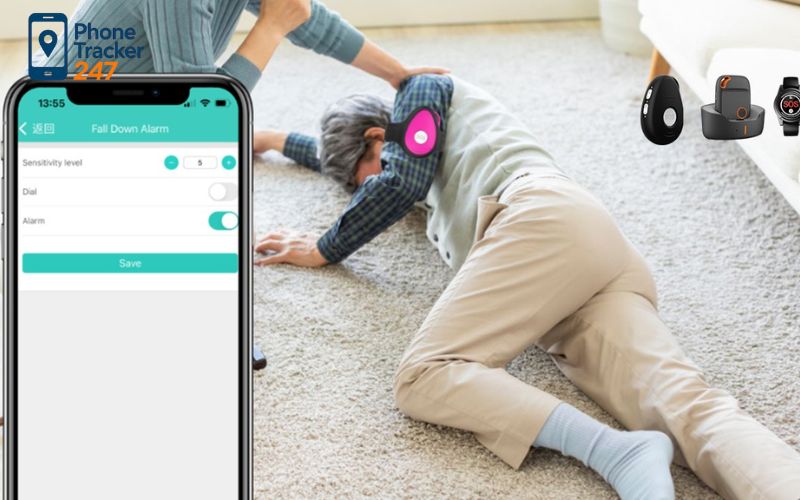
Fall Detection: A Life-Saving Addition
According to the CDC, falls are the leading cause of fatal and non-fatal injuries for those 65+ in the US.
- AI-Enhanced Sensors: Modern gps monitor for elderly users utilizes tri-axial accelerometers and AI algorithms to distinguish between a “hard fall” and someone simply sitting down quickly.
- Automatic Response: If a fall is detected and the senior doesn’t move for 30 seconds, the device automatically sends the exact GPS coordinates to emergency contacts. This “auto-alert” is vital if the senior is knocked unconscious or is too disoriented to press a button.
Battery Life and Reliability in Low-Signal Areas
A dead tracker is a safety hazard. Battery performance varies wildly across the elderly GPS tracker market:
- Wearable Watches: Typically last 24–48 hours (require daily charging).
- Dedicated Pendants: Can last 5–10 days on a single charge.
- Phone Apps: Leverage the phone’s power management to provide consistent tracking without needing extra hardware.
- Low-Signal Performance: Ensure the device supports “Cell Tower Triangulation” for when the senior is indoors—like a shopping mall in Germany or a clinic in the UK—where GPS signals are often blocked by concrete.
Top-Rated GPS Tracker for Old People: 2025 Expert Reviews
Choosing the right elderly gps tracker is not a one-size-fits-all process. The ideal device must match the user’s cognitive health, daily mobility, and personal style. Below are the top four categories of tracking solutions dominating the market in 2025.
Wearable GPS Watches: The All-in-One Solution
Smartwatches have become the gold standard for active seniors who want safety without the “medical device” stigma. In the US, mainstream options like the Apple Watch (Series 10/SE) or specialized watches like the Medical Guardian MGMove are leading the way.
- Key Stats: Wearable watches now hold over 55% of the personal GPS tracker market share.
- Best For: Seniors in the early stages of aging who are tech-savvy and want features like step counting, heart rate monitoring, and hands-free calling.
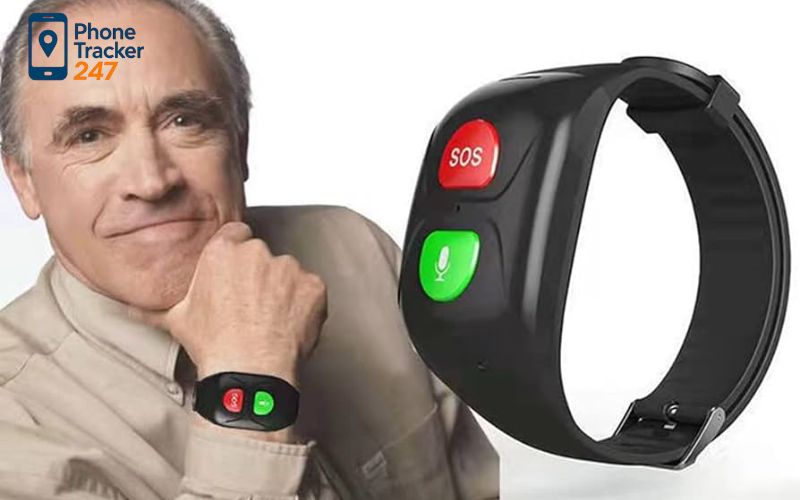
Discreet Pendants and Pocket-Sized Trackers
For those who find watches too bulky or forget to put them on, discreet pendants offer a lightweight alternative. These can be worn as a necklace, clipped to a belt, or tucked into a bag.
- Key Benefits: These devices often prioritize battery life over screen real estate, with some models like the Family1st Portable Tracker lasting up to 14–28 days.
- Safety Highlight: Most pendants feature a large, tactile SOS button that is easier for seniors with arthritis to press compared to a touchscreen.
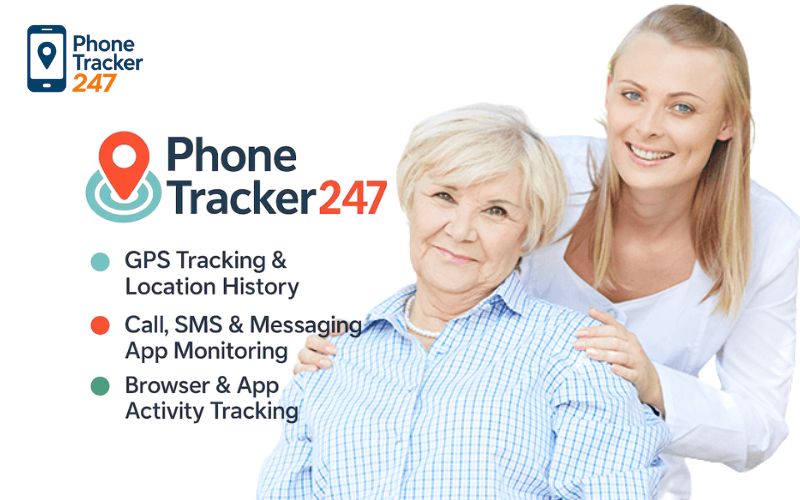
Phone Tracker 247: The Best Smartphone-Based GPS Monitor for Elderly Users
If your loved one already carries a smartphone, Phone Tracker 247 is the most seamless and cost-effective GPS monitor for elderly safety. Unlike hardware that requires a $150 upfront cost and a separate data plan, this app turns their existing phone into a high-precision beacon.
- Why It Works: It utilizes the phone’s advanced GPS and Wi-Fi sniffing to provide a 24/7 location history.
- Caregiver Edge: It allows multiple family members to monitor the senior simultaneously, ensuring that someone is always “on-call” if a geofence alert is triggered.
Specialized GPS Insoles for Dementia Patients
For seniors with advanced Alzheimer’s or dementia who may resist wearing any visible device, GPS insoles (like GPS SmartSole) are a game-changer.
- Discreet Protection: These are trimmed to fit into the senior’s favorite pair of walking shoes, making the tracking completely invisible and “un-removable” by the wearer.
- Market Trend: In Europe, where wandering prevention is a major focus of elderly care, “smart footwear” is currently the fastest-growing segment, with an expected growth rate of 17.9% through 2030.
Comparing Hardware vs. Smartphone Apps
When deciding on an elderly gps tracker, families often face a choice between purchasing a dedicated hardware device or utilizing a smartphone-based app. Both options offer powerful safety features, but the right choice depends on your loved one’s health, technical comfort, and your budget.
Below is a detailed comparison to help you navigate this decision for the US and European markets, where reliability and 24/7 monitoring are top priorities.
| Feature | Dedicated GPS Hardware | Smartphone Tracking App (e.g., Phone Tracker 247) |
| Best For | Seniors with Dementia, Alzheimer’s, or significant memory loss. | Active seniors who already use and carry a smartphone daily. |
| Upfront Cost | $50 – $200+ (Device purchase required). | $0 (Uses existing hardware). |
| Monthly Fees | $20 – $60 (Includes cellular data & professional monitoring). | Free to $15 (Lower subscription or ad-supported tiers). |
| Battery Life | 2 – 10 Days (Optimized for tracking only). | 12 – 24 Hours (Drains phone battery faster). |
| Emergency Features | Physical SOS button & Automatic Fall Detection. | Digital SOS in-app; no automatic fall detection. |
| Reliability | High. Harder to turn off accidentally; waterproof designs available. | Moderate. Depends on the phone being charged and location services staying on. |
| Accuracy | Pinpoint (uses dual-frequency GPS + Cellular). | High (uses GPS + Wi-Fi Sniffing), but can be limited by phone settings. |
In the US and UK, dedicated hardware like AngelSense or the MGMini is often the preferred tracking device for elderly patients with advanced cognitive decline. These devices are designed to be “always on.” They cannot be easily switched off by a confused user, and their physical buttons are easier for those with motor-skill challenges to operate in a crisis.
For active seniors who are not yet at high risk for wandering, Phone Tracker 247 offers a sophisticated elderly GPS tracker safety without the stigma of a “medical alert” device. It is particularly popular in Europe and North America as a secondary safety layer because:
- Ease of Deployment: No waiting for shipping; you can secure your loved one in under 5 minutes.
- Cost-Efficiency: It eliminates the need for expensive hardware insurance and high monthly hardware premiums.
- Discreet Monitoring: It looks just like any other app on their phone, preserving their sense of dignity while providing you with real-time geofencing alerts.
How to Choose and Set Up Your Elderly GPS Tracker
Successfully implementing an elderly gps tracker is a journey that balances advanced technology with human empathy. In 2025, the setup process is just as vital as the device itself.
Assessing the Senior’s Needs (Mobility, Cognitive Health)
Before purchasing, evaluate the senior’s lifestyle. A gps monitor for elderly users should match their health profile:
- Active Seniors: If they still drive or walk daily, a smartphone-based elderly GPS tracker independence is ideal.
- Cognitive Decline: For those with dementia, a tracking device for elderly safety must be un-intrusive, such as “non-removable” lockable bracelets or GPS insoles.
Privacy Considerations: How to Discuss Tracking
Trust is the foundation of senior care. In 2025, ethical guidelines emphasize “Consent over Surveillance.” Frame the elderly gps tracker as a tool for independence. Instead of “monitoring” them, explain that it gives you peace of mind while allowing them to keep their walking routine safely. Transparency about who sees the data is key.
Step-by-Step Installation and App Integration
Once you have selected your gps tracker for old people, follow this quick protocol:
- Activation: Charge the device to 100% and activate the SIM or subscription.
- App Pairing: Install the dashboard (like Phone Tracker 247) on your phone and sync the device.
- Configuring Safe Zones: Draw “Geofences” around their home and frequent spots to receive instant alerts if they wander.
- Testing: Conduct a “live test” of the SOS button to ensure it triggers an immediate notification on your smartphone.
FAQs
1. What is the best GPS tracker for elderly parents?
The best choice depends on habits: smartphone tracking is easiest if they always carry a phone, while a GPS watch or pendant is better if they forget devices.
2. Are GPS trackers accurate enough for senior safety?
Most are accurate outdoors, but indoor location can drift in malls, apartments, or hospitals. Use geofencing alerts and “last updated” timestamps to judge reliability.
3. Do elderly GPS trackers need a monthly subscription?
Many watches, pendants, and dedicated trackers require a cellular plan or monitoring subscription. Smartphone-based tracking may cost less but still depends on data service.
4. What features matter most for seniors with dementia?
Prioritize geofencing, quick caregiver alerts, simple SOS, and a device they will actually wear. Comfort and battery routine matter as much as features.
5. Is a GPS watch better than a pendant for seniors?
A watch is harder to forget and often adds calling or fall alerts, while a pendant is simpler and lighter. Choose the option your parent will keep on consistently.
6. How long do GPS trackers for seniors last on one charge?
Battery life varies by device type and how often it updates location. Longer intervals save battery but provide less real-time visibility.
7. Can caregivers track location from another phone?
Yes, most systems support caregiver apps or sharing links, and some allow multiple caregivers. Always limit access to trusted family members only.
8. How do I set up an elderly GPS tracker without harming trust?
Explain the goal as safety, get clear consent, and agree on who can view location and when. A simple “only for emergencies and check-ins” rule helps a lot.
Conclusion: Real Safety, Real Peace of Mind
Choosing an elderly GPS tracker is about prevention, not reaction. Whether it’s the risk of falls, wandering due to memory loss, or unexpected emergencies, real-time location tracking helps families stay connected and respond quickly—before a situation becomes critical.
With solutions like Phone Tracker 247 or dedicated GPS wearables for seniors, you replace constant worry with reliable monitoring and instant location access. Take action today—download Phone Tracker 247 or set up your tracking device now to protect your loved ones and secure lasting peace of mind.
Quick Summary Comparison Table
| Need | Best pick | Why it wins | Watch out for |
|---|---|---|---|
| Senior always carries a smartphone | PhoneTracker247 + their phone | No extra device, easy sharing, strong day-to-day tracking | Battery habits and phone left behind |
| Senior forgets phones or leaves them at home | GPS watch | Wearable, harder to forget, often has SOS | Needs charging and a cellular plan |
| One-button emergency help | GPS pendant with SOS | Simple, low learning curve | Subscription fees and indoor accuracy limits |
| Higher medical risk or living alone | Medical alert with GPS | Clear emergency response workflow | Ongoing monthly service cost |
| Budget-friendly basic location sharing | Smartphone tracking | Lowest extra hardware cost | Less reliable if phone is off or uncharged |
| Dementia or wandering risk | Wearable + geofencing | Faster alerts when leaving safe zones | False alerts if zones are too tight |
If you want the simplest way to protect an elderly parent without adding another gadget they might forget, start with PhoneTracker247. You can share location with caregivers, set safety routines, and get clearer day-to-day visibility so you spend less time worrying and more time living. Set it up today, create one “Home Safe Zone,” and test an SOS or check-in routine this week so the whole family knows exactly what to do when it matters.
For daily updates, subscribe to PhoneTracker’s blog!
We may also be found on Phone Tracker App on Facebook!